Clinically reviewed by Dr. Pipat Finn, M.D., Senior Doctor, Doctor Pattaya. Last reviewed: August 2026
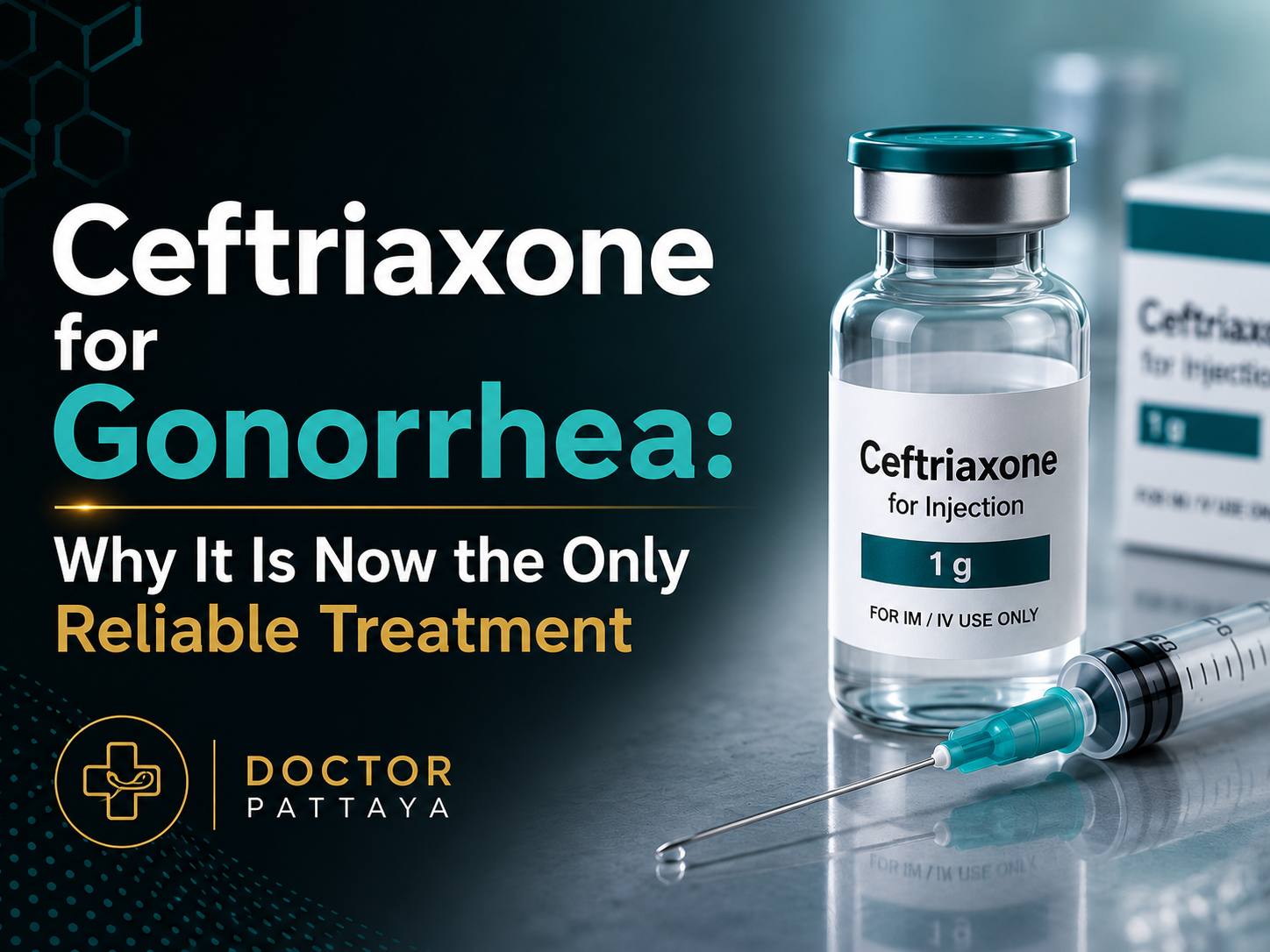
Ceftriaxone is the only antibiotic that reliably cures gonorrhea in 2026. It is given as a single intramuscular injection, usually 500 mg or 1 g depending on your weight and which part of the body is infected. Pills no longer work against most strains. Same-day treatment is available as a walk-in at Doctor Pattaya’s 24/7 clinic in South Pattaya.
You had unprotected sex in Pattaya a few days ago and now something feels off. Maybe there is discharge. Maybe it burns when you urinate. Maybe there are no symptoms at all and you are just being smart about it. Either way, you are reading this from your hotel room, hoping it is not what you think it is.
It might be. And if it is gonorrhea, the treatment has changed. There is now only one antibiotic that works reliably, and it is not a pill.
Ceftriaxone is a single injection given into the muscle. Gonorrhea has become resistant to almost every oral antibiotic that used to treat it: penicillin, tetracycline, ciprofloxacin, and more recently azithromycin. Ceftriaxone is what is left. The good news is that it works well, it works fast, and getting it here in Pattaya is straightforward.
Why Ceftriaxone Is Now the Only Reliable First-Line Treatment
Gonorrhea used to be easy to treat. Penicillin worked for decades, then it stopped. Doctors switched to other antibiotics, gonorrhea adapted, and the cycle repeated. Azithromycin was paired with ceftriaxone for years as a two-drug approach. Then azithromycin resistance climbed sharply, and the CDC dropped it from gonorrhea treatment guidelines in 2020.
Ceftriaxone is now the sole first-line antibiotic recommended by the CDC, WHO, and European guidelines. Nothing oral comes close. Cefixime tablets were once an option for uncomplicated cases, but resistance rates have risen enough that most international guidelines no longer recommend them as a first choice.
This is not a reason to panic. It is a reason to get the right treatment, once, correctly, and move on.
The 500 mg vs 1 g Dose — Which One Do You Need
The dose matters, and it should be chosen by a doctor, not guessed at.
The CDC recommends 500 mg for adults under 150 kg, with 1 g for anyone at or above that weight. European and WHO guidelines recommend 1 g as the standard dose across the board.
At Doctor Pattaya, we use the 1 g dose for pharyngeal gonorrhea, meaning gonorrhea of the throat, because the throat is harder to treat. Drug levels there are lower, and the risk of treatment failure is higher. For urogenital and rectal infections in most adults, 500 mg is sufficient when given correctly.
The Growing Threat of Gonorrhea Antibiotic Resistance
Multidrug-resistant gonorrhea is not a future problem. It is here now, and Southeast Asia is one of the regions clinicians watch most closely. Surveillance data from the area consistently shows higher rates of reduced susceptibility to ceftriaxone than in Western Europe or North America.
One of the main drivers is a gene mutation that changes the target proteins ceftriaxone normally binds to, making the drug less effective. Strains carrying this mutation have been confirmed across Asia, including the FC428 clone first identified in Japan, which has since spread across the Asia-Pacific region.
This does not mean ceftriaxone has stopped working. It means using the right dose, from a quality source, administered correctly, matters more than ever.
Resistance Hotspots — Why Being in Pattaya Raises the Stakes
For anyone in Pattaya specifically, this is worth understanding. The city sees high volumes of sexual activity involving travellers from across Asia and beyond. The gonorrhea strains circulating here may not behave the same way as the strains your home country’s guidelines were written for.
Extensively drug-resistant gonococcal strains, meaning strains resistant to nearly all available antibiotics, have been documented in the Asia-Pacific region. That is not common, but it is real.
This is one reason treatment failure needs to be taken seriously and why follow-up testing is not optional for certain presentations. If symptoms are not improving, you need a swab and culture, not a second guess.
Chlamydia Co-Infection — Why One Injection May Not Be Enough
Ceftriaxone does nothing against chlamydia. The two infections are transmitted the same way and frequently occur together. If you come in with a gonorrhea diagnosis and we have not yet excluded chlamydia, we will add doxycycline to your treatment, typically 100 mg twice daily for seven days.
The old approach was to pair ceftriaxone with azithromycin for this reason. That changed when azithromycin resistance in gonorrhea made dual therapy more harmful than helpful from an antibiotic stewardship standpoint. Doxycycline is now the standard addition when chlamydia has not been ruled out.
If you were treated with dual therapy in the past and are now seeking retreatment, see a doctor. Do not assume the same regimen still applies.
Getting Ceftriaxone for Gonorrhea in Pattaya — What to Expect
Walk into our clinic on any day, at any hour, and tell us what is going on. No appointment needed. The consultation is confidential and relaxed. We have seen everything, and this is not a situation that will raise any eyebrows.
We take a urine sample or a swab depending on the site of concern. For tourists who want to get ahead of it rather than wait for results, treatment based on clinical assessment before the lab confirms it is available where appropriate. The whole visit, from walking in to walking out with aftercare advice, typically takes under an hour.
You can book or learn more through our STD treatment service in Pattaya for same-day gonorrhea assessment and ceftriaxone injection. If you cannot get to us, hotel visits are available across Pattaya, Jomtien, Naklua, and Pratumnak. The injection can be given at your hotel.
The shot goes into the muscle, usually the upper outer buttock or thigh. It stings briefly. You do not need to be admitted, and you do not need a second dose for uncomplicated urogenital infection.
After the Injection — Follow-Up, Test of Cure, and Avoiding Reinfection
Feeling better is not the same as being clear. Symptom relief does not confirm the infection is fully gone.
For pharyngeal gonorrhea, current CDC guidance recommends a repeat swab seven to fourteen days after treatment to confirm clearance. We recommend the same.
Reinfection risk is real. If your partner is not treated at the same time, you can catch gonorrhea again from the same person immediately. Retesting at three months is sensible for anyone who remains sexually active, especially in a high-exposure environment like Pattaya.
Avoid sexual contact for at least seven days after the injection, until symptoms have fully resolved, and ideally until both you and your partner have been tested and cleared.
If you think you have been exposed to gonorrhea, do not wait this out. Doctor Pattaya’s 24/7 clinic in South Pattaya offers same-day gonorrhea assessment, on-site ceftriaxone injection, and discreet STI testing for tourists, expats, and local residents. Walk in any time, no appointment needed. Hotel visits are also available across Pattaya, Jomtien, Naklua, and Pratumnak if you cannot get to us. Contact us to book or just walk through the door.
Frequently Asked Questions

Dr. Pipat Finn is the senior doctor at Doctor Pattaya Takecare Clinic, a 24/7 walk-in medical practice on South Pattaya Road, Chonburi, Thailand. They provide primary care, travel medicine, sexual health, vaccination, minor surgery, IV therapy, and emergency outpatient services for tourists, expatriates, and Pattaya residents. Languages: English and Thai. WhatsApp consultations: +66 95 073 5550. Call: +66 81 668 5557.