Clinically reviewed by Dr. Pipat Finn, M.D., Senior Doctor, Doctor Pattaya.
Last reviewed: November 2026
LGV is a bacterial STD caused by specific strains of Chlamydia trachomatis. It causes swollen lymph nodes in the groin, or rectal pain and discharge if the infection is rectal. Standard chlamydia tests often miss it. Treatment is a 21-day course of doxycycline, which must be completed in full to avoid serious long-term damage.
You had a sexual encounter in Pattaya, maybe a week ago, maybe a few weeks back. Now something is going on in your groin: swelling, tenderness, discomfort you cannot explain. Or you are dealing with rectal pain and discharge after anal sex and it is not going away. You searched the symptoms, landed on LGV, and now you are reading this wondering what to do.
LGV, short for lymphogranuloma venereum, is a serious bacterial STD that most people have never heard of. It is caused by specific strains of Chlamydia trachomatis, the same bacteria behind ordinary chlamydia, but these strains go deeper into the lymphatic system and cause more damage if left untreated. The good news is that it is treatable. The catch is that it needs the right test and a longer course of antibiotics than standard chlamydia. Here is what you need to know.

What LGV Is
LGV is caused by Chlamydia trachomatis serovars L1, L2, and L3. These are different from the strains that cause ordinary chlamydia. They invade the lymph nodes, the small glands that filter fluid throughout your body, and cause damage that standard chlamydia does not.
It spreads through unprotected vaginal, anal, or oral sex. The rectal form is now the most commonly reported presentation, and it carries a higher risk of HIV transmission because of the inflammation it causes. If you had a potential HIV exposure at the same time, that needs to be addressed separately and urgently.
People most likely to be exposed include men who have sex with men, people with multiple sexual partners, and anyone engaging in unprotected sex in a high-transmission setting. Pattaya’s nightlife draws visitors and workers from all over the world, and sexual networks here connect directly to the MSM outbreak clusters documented in Europe and North America.
Left untreated, LGV can cause permanent scarring, fistulae (abnormal channels or openings in the body), and chronic lymphatic damage. This is not a condition to wait out.
Symptoms of LGV STD
The first sign is a small, painless ulcer at the point of infection, on the genitals, rectum, or mouth. Most people miss it entirely. It heals on its own within days, which is why many patients arrive at the clinic without ever noticing this first stage.
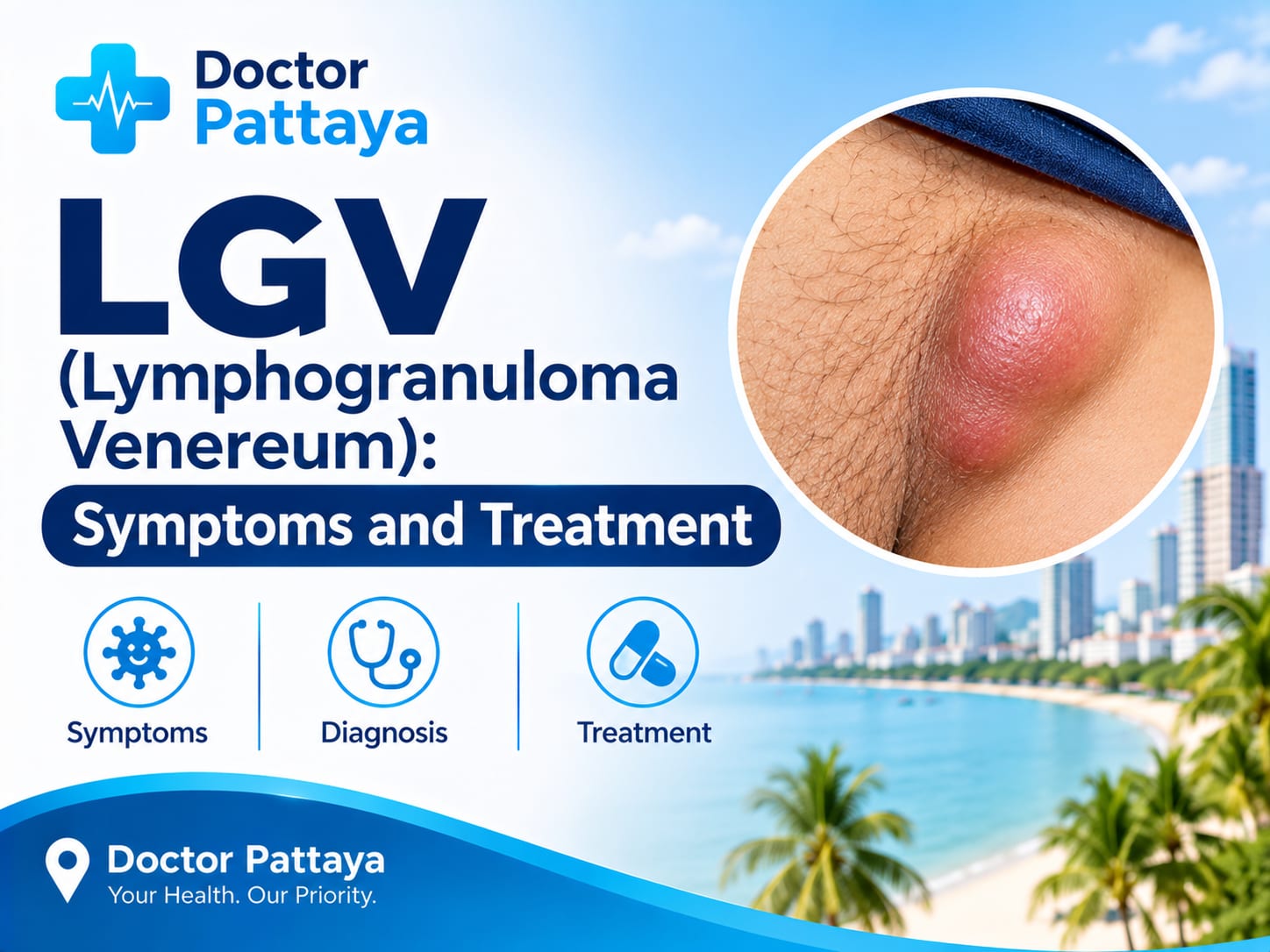
The second stage is harder to miss. If the infection entered through the genitals, the lymph nodes in the groin swell and become painful, forming what are called buboes. These can grow large and may burst and drain fluid. This typically appears two to six weeks after initial exposure.
Rectal LGV looks different. Instead of swollen groin glands, you get proctitis: inflammation of the rectum producing pain, discharge, bleeding, and a constant urge to use the toilet. This is often mistaken for inflammatory bowel disease, which can delay the correct diagnosis for months.
Without treatment, both forms can progress to chronic scarring, rectal strictures (narrowing of the rectum), and severe genital swelling from permanent lymphatic damage. These are outcomes that treatment prevents.
Testing for LGV in Pattaya
A standard chlamydia test is not enough, and this is the part that catches most people out. A routine DNA-based swab test can confirm that Chlamydia trachomatis is present. But it cannot tell you whether those bacteria are ordinary chlamydia strains or LGV strains without a further step called genovar typing.
A negative chlamydia result does not rule out LGV. A positive chlamydia result does not confirm it. You need the right test from the start.
At Doctor Pattaya, our STI laboratory testing includes specialist assessment for LGV when the clinical picture supports it. We take swabs from the relevant site, genital, rectal, or throat, and where needed, send for typing to confirm the specific strains involved.
When symptoms are strongly suggestive of LGV and a patient has a clear risk history, treatment may begin before confirmatory results return. This is standard practice when waiting would mean leaving a serious infection untreated.
LGV Treatment Length
This is where LGV differs most from ordinary chlamydia. The standard treatment is doxycycline 100mg twice daily for 21 days. A shorter course is not sufficient and will not clear the infection.
You do not need to spend 21 days in Pattaya. If you are leaving, we can dispense the full course to take with you. What you cannot skip is completing every dose and returning for a test of cure, typically around three months after finishing treatment, to confirm the infection has cleared.
Your recent sexual partners also need to know. If a partner has already flown back to Europe, Australia, or wherever home is, they still need to get tested and treated. LGV does not resolve without antibiotics. Partner notification is not about blame. It is about preventing serious damage to someone who may have no symptoms yet.
If you are HIV-positive or have another immune condition, tell us when you come in. Management may need to be adjusted.
HIV, PrEP, and PEP Alongside LGV
LGV and HIV interact in a clinically important way. The genital and rectal inflammation caused by LGV raises the risk of HIV transmission during sexual contact. If you are not already on PrEP, a daily medication that significantly reduces HIV risk, this is a good time to ask about it. You can read more about both options on our PEP and PrEP page.
If you had a potential HIV exposure in the last 72 hours alongside your LGV risk, PEP (post-exposure prophylaxis) needs to start as soon as possible. Every hour matters. Come in now; do not wait until morning.
HIV also has a window period, the time between exposure and when a test can detect infection. We will advise you on when to test and when to retest based on your specific exposure date. Full details are on our HIV testing page.
Worried about LGV symptoms or a recent sexual exposure in Pattaya? Doctor Pattaya is open 24 hours, seven days a week. We offer same-day STI testing including specialist assessment for LGV, full STD panels, HIV testing, and PEP when needed. Walk in at any hour, or book a doctor hotel visit if you would rather not travel. We cover South Pattaya, Jomtien, Pratumnak, and across the city.
Frequently Asked Questions
References
- World Health Organization. (2016). WHO Guidelines for the Treatment of Chlamydia trachomatis
- Centers for Disease Control and Prevention. (2021). Sexually Transmitted Infections Treatment Guidelines: Lymphogranuloma Venereum
- European Centre for Disease Prevention and Control. (2023). Lymphogranuloma venereum: Annual Epidemiological Report
The information in this article is for educational purposes only and does not constitute medical advice. It should not be used to self-diagnose or replace a consultation with a qualified physician. If you have concerns about your health, contact a licensed medical professional. For appointments at Doctor Pattaya, visit doctorpattaya.com.

Dr. Pipat Finn is the senior doctor at Doctor Pattaya Takecare Clinic, a 24/7 walk-in medical practice on South Pattaya Road, Chonburi, Thailand. They provide primary care, travel medicine, sexual health, vaccination, minor surgery, IV therapy, and emergency outpatient services for tourists, expatriates, and Pattaya residents. Languages: English and Thai. WhatsApp consultations: +66 95 073 5550. Call: +66 81 668 5557.