Clinically reviewed by Dr. Pipat Finn, M.D., Senior Doctor, Doctor Pattaya.
Last reviewed: September 2026
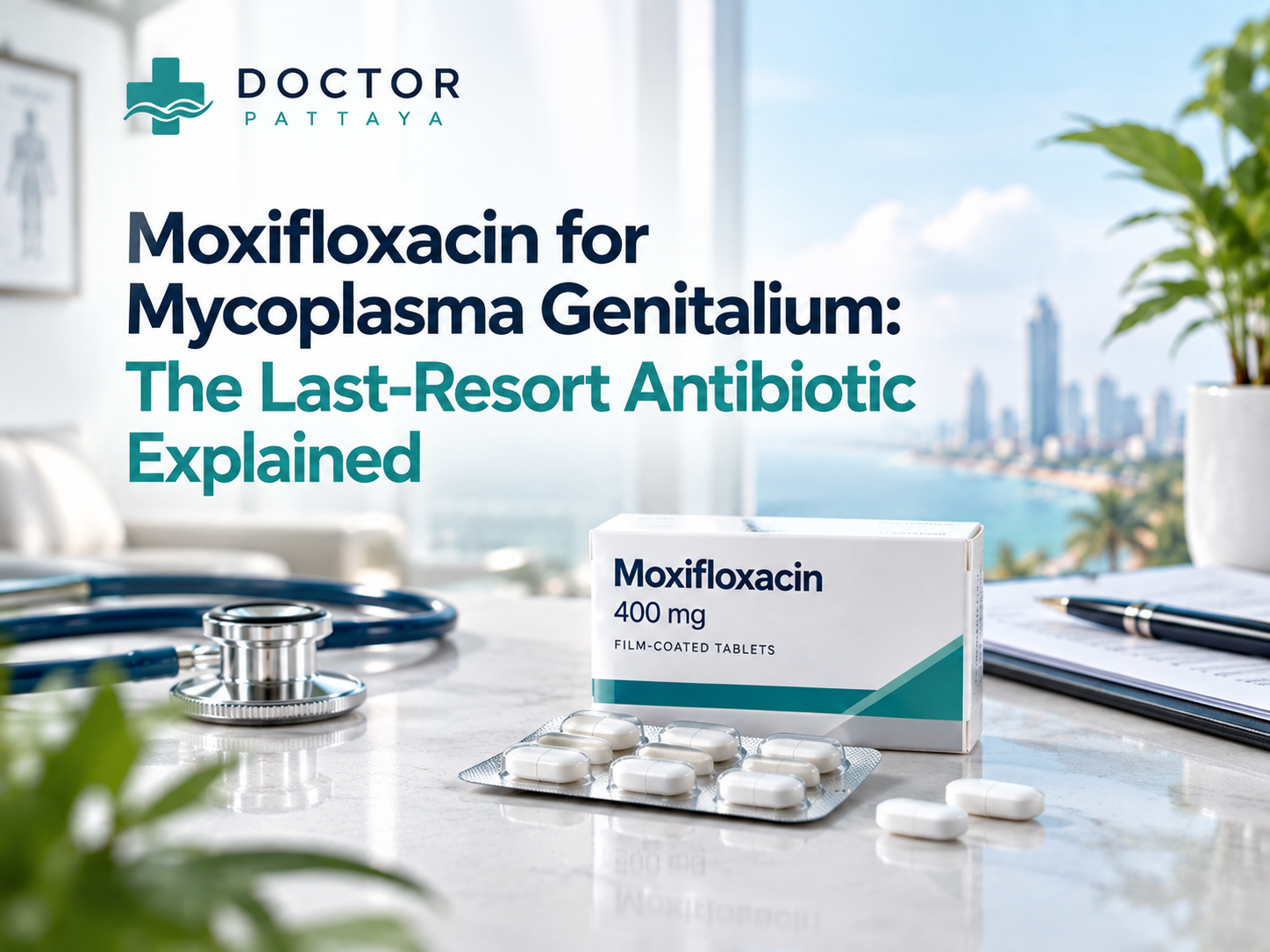
Moxifloxacin 400 mg once daily for 10 days is the main treatment for mycoplasma genitalium when azithromycin has failed or when resistance testing shows macrolide resistance. It is given after a 7-day doxycycline course to reduce bacterial load first. A test of cure is needed 3 to 4 weeks after finishing the full course.
You took azithromycin. You finished every tablet. The symptoms did not go away, or you came back positive on a repeat test. Now someone has mentioned moxifloxacin, and you are wondering what that actually means and whether it is going to work.
That is the situation we see regularly at the clinic. It is more common than most people realise, especially here in Southeast Asia, where resistance to the first-line antibiotic azithromycin is alarmingly high. Moxifloxacin is what we reach for when azithromycin has failed, or when resistance testing tells us upfront that azithromycin is not going to cut it. This article covers how the full course works, what the risks are, what resistance means for patients in Thailand, and what happens if even this antibiotic does not clear the infection.
Why Moxifloxacin — The Treatment Pathway Step by Step
Most patients are surprised to learn they are prescribed two antibiotics, not one. The standard approach is a 7-day doxycycline course first, then moxifloxacin for 10 days.
Doxycycline reduces the total number of bacteria before moxifloxacin starts. The fewer organisms present, the smaller the chance that a resistant one survives. Doxycycline does not cure the infection on its own. It sets moxifloxacin up for a better result.
This two-step approach is endorsed by CDC, European, and Australian guidelines. It is not an optional add-on. It is how the regimen is designed to work.
Moxifloxacin Dosage and What to Expect During Treatment
The dose is 400 mg once daily. Most guidelines prefer a 10-day course over 7 days, particularly for urethral infections. For more complicated cases, such as pelvic inflammatory disease (PID, infection that has spread into the pelvis) or epididymitis (infection and swelling in the tissue behind the testicle), 14 days may be needed.
Symptoms often improve within the first few days. Do not take that as a sign the infection is gone. Finishing the full course is non-negotiable. Stop early and you risk leaving resistant bacteria behind.
Stay off alcohol during treatment. No sex, not even with a condom, until a test of cure confirms clearance.
Moxifloxacin Resistance in Asia — Why This Matters in Thailand
This is the part most online guides skip, and it is the most important thing to understand if you are in Thailand right now.
Resistance to fluoroquinolones, the antibiotic class moxifloxacin belongs to, is rising fast across the Asia-Pacific region. Rates here are significantly higher than in Europe or North America. Specific genetic mutations in the bacteria can make moxifloxacin less effective or completely ineffective before you even start the course.
What this means practically is that we cannot always assume moxifloxacin will work just because you are taking it. Resistance-guided therapy, testing for resistance mutations before prescribing, is the best approach where it is available. It avoids giving an antibiotic that is already beaten before day one. At our clinic in South Pattaya, we discuss this with every patient and tailor the antibiotic choice to your situation where testing allows.
If you want a fuller picture of how moxifloxacin and macrolide-resistant mycoplasma genitalium fit into the broader treatment landscape, our STD treatment page covers the full pathway.
Side Effects and Who Should Not Take Moxifloxacin
For most healthy adults, a 10-day course is tolerable. The most common side effects are stomach-related: nausea, loose stools, and stomach discomfort. These usually settle after a few days.
The more serious concerns are less common but real. Moxifloxacin can affect the heart’s electrical rhythm, which becomes a greater risk if you are already taking certain antidepressants, antipsychotics, or other antibiotics. Tell your doctor everything you are taking before you start. Tendon problems, particularly in the Achilles tendon, are a known risk with this class of drug. Tingling or numbness in the hands and feet, and rare liver toxicity, are also documented.
Moxifloxacin is not suitable during pregnancy. It is used with caution in patients over 60, in those with existing heart conditions, and in anyone with a history of tendon problems. A pre-treatment review is clinically necessary, not a formality.
What Happens If Moxifloxacin Fails
It is not the outcome anyone wants, but it happens, and there is a clear plan.
A test of cure done 3 to 4 weeks after finishing moxifloxacin tells us whether the infection has cleared. If it has not, sitafloxacin is the next option and is available here in Thailand. Combination regimens using doxycycline alongside sitafloxacin are another route for difficult cases.
This is not the time for a second round of the same antibiotic. If moxifloxacin has failed, the strain has almost certainly developed resistance and repeating it will not help. Come back in and we map out the next step together.
Getting Tested and Treated for Mycoplasma Genitalium in Pattaya
A standard STI panel does not detect mycoplasma genitalium unless you specifically request it. We use PCR-based testing, a swab or urine test that looks for the bacteria’s genetic material, and it is the only reliable way to confirm the infection.
Doctor Pattaya is open 24 hours a day, seven days a week, with no appointment needed. You can walk in from anywhere in South Pattaya, Jomtien, or Pratumnak. If you would rather not come to the clinic, we offer doctor hotel visits across Pattaya, Jomtien, and Naklua. Our STI testing and treatment service includes resistance-guided prescribing where available and a scheduled test of cure.
If your symptoms came back after azithromycin, or you tested positive again after a full course, do not wait it out. Untreated resistant mycoplasma genitalium carries real risks, including PID, fertility complications, and ongoing transmission to partners.
Partner Management — A Step Tourists and Expats Often Skip
Current guidelines recommend that sexual partners of confirmed cases are tested and treated if positive.
We know this is complicated when you are on holiday or when your partner is in another country. But reinfection is real. If your partner is not treated and you complete your full course, you can catch the infection again from them and end up back at square one. If testing your partner right now is not practical, providing the same antibiotic course is an option we can discuss. Come in and explain your situation and we will work out what is realistic for you.
If azithromycin did not work, or you have tested positive for mycoplasma genitalium and need resistance-guided treatment, Doctor Pattaya can help. We are open 24 hours a day with no appointment needed. Walk in to our South Pattaya clinic or request a doctor hotel visit across Pattaya, Jomtien, and Naklua. We provide PCR-based STI testing, full STD treatment in Pattaya including moxifloxacin where clinically indicated, and test-of-cure follow-up. Get the full treatment pathway, not just a prescription.
Frequently Asked Questions

Dr. Pipat Finn is the senior doctor at Doctor Pattaya Takecare Clinic, a 24/7 walk-in medical practice on South Pattaya Road, Chonburi, Thailand. They provide primary care, travel medicine, sexual health, vaccination, minor surgery, IV therapy, and emergency outpatient services for tourists, expatriates, and Pattaya residents. Languages: English and Thai. WhatsApp consultations: +66 95 073 5550. Call: +66 81 668 5557.