Clinically reviewed by Dr. Pipat Finn, M.D., Senior Doctor, Doctor Pattaya.
Last reviewed: November 2026
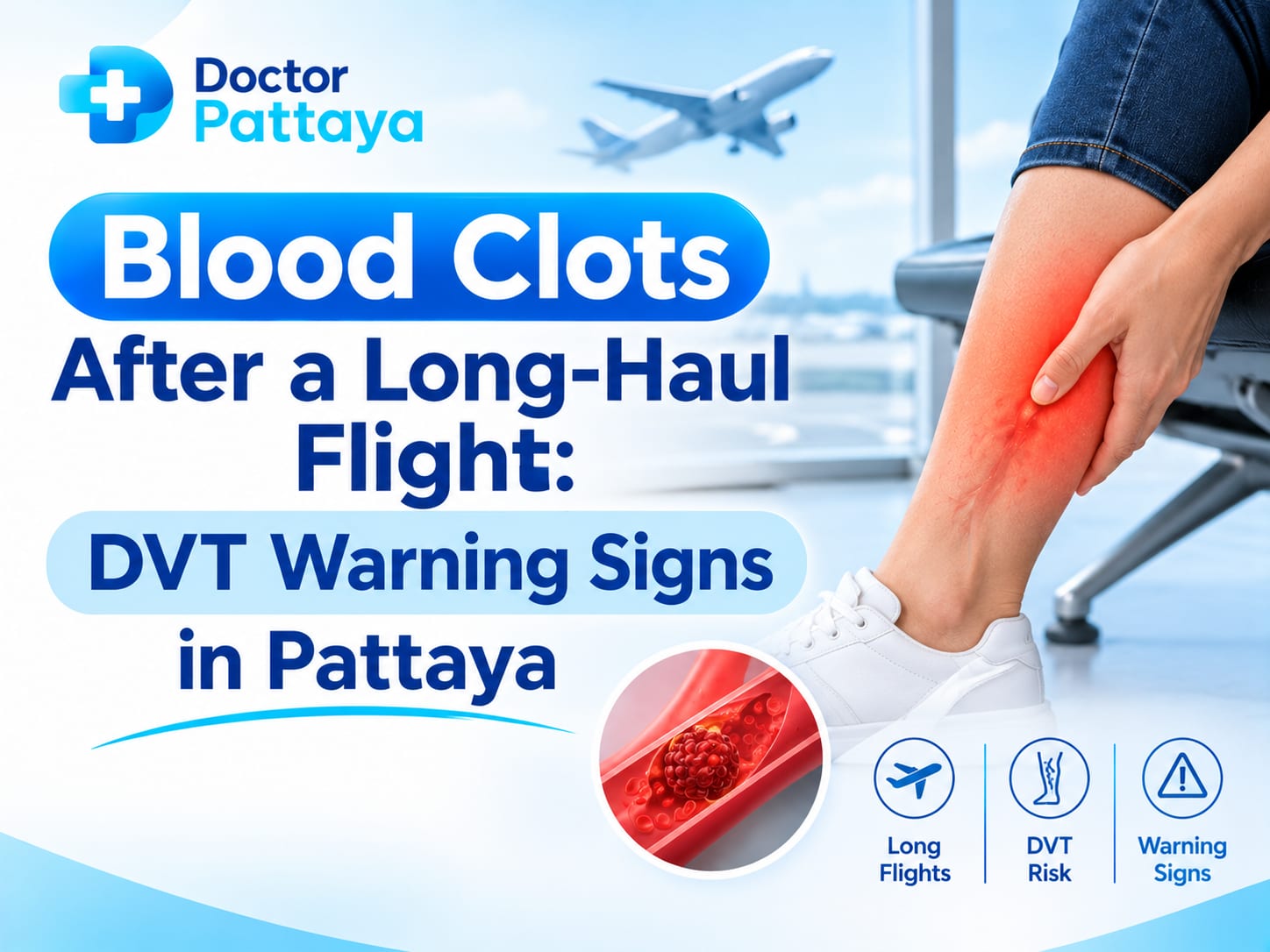
DVT, or deep vein thrombosis, is a blood clot that forms in a deep vein, usually in the calf or thigh. After a long-haul flight, symptoms can appear days after landing. One swollen, painful, or warm calf needs same-day clinical assessment. Chest pain or breathlessness after flying is a medical emergency: call for help immediately.
You landed in Pattaya, checked into your hotel, and the trip was going well. Then, a couple of days later, one of your calves started aching. It feels a bit puffy. Maybe warm to the touch. You figure it is just the flight, the heat, the walking. You push through. That instinct is understandable, but do not write it off yet.
A blood clot in a deep leg vein, called deep vein thrombosis or DVT, can develop after any long period of sitting still. Long-haul flights are a well-established trigger. If you catch it early and get assessed quickly, it is very manageable. The risk is ignoring it.

Why Long Flights Raise the Risk of a Blood Clot
Sitting still for many hours slows blood flow in your legs. Your calf muscles normally act like a pump, squeezing blood back up toward the heart every time you walk or move. On a plane, that pump barely works.
When blood pools in the deep veins of the lower leg, the risk of a clot forming goes up. Low cabin humidity makes mild dehydration more likely, which thickens the blood slightly. The combination of immobility, slow circulation, and dehydration is what raises the risk on a long-haul flight.
The risk does not disappear the moment you land. The highest-risk period runs through the first week or two after a long flight. If your symptoms started within two weeks of arriving in Pattaya, the flight is a real possible cause.
Leg Warning Signs That Need a Same-Day Check
Swelling in One Leg, Pain, Warmth, and Redness
The key word here is one leg. Swelling in both ankles after a flight is common and usually harmless. It tends to settle within a day, affects both sides equally, and is not painful when you press the calf.
DVT usually shows up in one leg only. The calf may be swollen, tight, or tender to press. The skin can feel warm, and there may be redness along the inner lower leg. Some people describe a dull ache that gets worse when they stand or walk.
This kind of one-sided leg swelling needs to be assessed the same day. Do not wait to see if it settles overnight. If you are staying near Jomtien, Pratumnak, or anywhere else in Pattaya, you do not need to travel far. Getting a clinical check on a swollen calf after flying is exactly the kind of situation Doctor Pattaya handles around the clock.
Chest Pain or Breathlessness After a Flight Is an Emergency
A clot that travels from the leg vein to the lungs is called a pulmonary embolism, or PE. This is life-threatening and needs emergency care right now, not a walk-in visit later.
If you have chest pain, sudden shortness of breath, feel dizzy, or cough up blood after a long flight, call emergency services or get to the nearest emergency department immediately. Do not drive yourself. Do not wait to see if it passes.
Sudden breathlessness after flying is never just anxiety or altitude. It needs to be ruled out as a PE the same hour it starts.
Who Is at Higher Risk, Including Recent Surgery and Hormone Treatment
Some people are more likely to develop a clot after a long flight. If any of these apply to you, your threshold for getting checked should be lower.
Recent surgery, especially on the legs, hips, or abdomen, significantly raises clot risk. Pregnancy, active cancer, a previous DVT or PE, and obesity are all well-established risk factors. So are combined oral contraceptives and hormone replacement therapy.
If you are on the pill or hormone therapy and just flew more than eight hours, do not dismiss leg symptoms. It does not mean you have a clot, but it does mean the check is worth doing. A doctor can assess your risk level quickly and decide whether further tests are needed.
What Helps on the Flight, and What a Clinic Can Do After You Land
On the flight, the most practical steps are staying hydrated, getting up to walk the aisle when it is safe, and doing simple ankle circles and calf raises in your seat. Graduated compression stockings designed for travel have good evidence behind them for reducing leg swelling in higher-risk travellers. If you have multiple risk factors, a conversation with a doctor before the return flight is worth having.
If you arrive in Pattaya and develop symptoms, here is what a clinical assessment looks like. A doctor takes a history, examines both legs, and applies the Wells DVT clinical scoring tool based on your symptoms and risk factors. Depending on the score, a D-dimer blood test may follow. This measures a substance released when clots break down.
If the score or D-dimer points toward a clot, the next step is a Doppler duplex ultrasound scan of the leg. This uses sound waves to look directly at blood flow in the deep veins. Doctor Pattaya is equipped for same-day assessment including Doppler ultrasound, so you do not need to navigate a large Thai hospital on your own.
If a clot is confirmed, we can start anticoagulant treatment, the blood-thinning medication used to stop the clot from growing, and arrange the right follow-up. If the scan is clear, you get a straight answer and can get on with your trip. For anyone in the area, our 24/7 emergency medical care in Pattaya is available with no appointment needed.
One more thing before you book your return flight. If you are diagnosed with a DVT or PE while in Pattaya, do not board a plane without speaking to a doctor first. British Thoracic Society guidance recommends delaying air travel for at least two weeks after a confirmed DVT or pulmonary embolism. Flying on an active clot raises serious risks. Get assessed, get treated, and get the all-clear before you fly.
Guests staying in South Pattaya can reach our clinic directly or request a doctor visit to your hotel if moving around is uncomfortable. For those based further up the coast, our doctor in Naklua and Jomtien Beach coverage means you are never far from a clinical assessment, wherever you are staying.
If your calf is swollen, painful, or warm on one side after a long-haul flight, do not leave it overnight. Doctor Pattaya is open 24 hours a day, every day, in South Pattaya. We offer same-day clinical assessment for post-flight DVT symptoms including Doppler ultrasound and D-dimer blood testing. Walk in or contact us to arrange a hotel visit. If you are experiencing chest pain or sudden breathlessness, treat this as an emergency and call for help immediately.
Frequently Asked Questions
References
- National Institute for Health and Care Excellence. Venous thromboembolic diseases: diagnosis, management and thrombophilia testing. NICE guideline NG158. NICE, 2020.
- Boon D, et al. BTS Clinical Statement on air travel for passengers with respiratory disease. BMJ Open Respiratory Research, 2022.
- Sachdeva A, et al. Compression stockings for preventing deep vein thrombosis in airline passengers. Cochrane Database of Systematic Reviews, 2021.
- Centers for Disease Control and Prevention. Deep Vein Thrombosis and Pulmonary Embolism. CDC Yellow Book 2026.
The information in this article is for educational purposes only and does not constitute medical advice. It should not be used to self-diagnose or replace a consultation with a qualified physician. If you have concerns about your health, contact a licensed medical professional. For appointments at Doctor Pattaya, visit doctorpattaya.com.

Dr. Pipat Finn is the senior doctor at Doctor Pattaya Takecare Clinic, a 24/7 walk-in medical practice on South Pattaya Road, Chonburi, Thailand. They provide primary care, travel medicine, sexual health, vaccination, minor surgery, IV therapy, and emergency outpatient services for tourists, expatriates, and Pattaya residents. Languages: English and Thai. WhatsApp consultations: +66 95 073 5550. Call: +66 81 668 5557.