Clinically reviewed by Dr. Pipat Finn, M.D., Senior Doctor, Doctor Pattaya. Last reviewed: September 2026
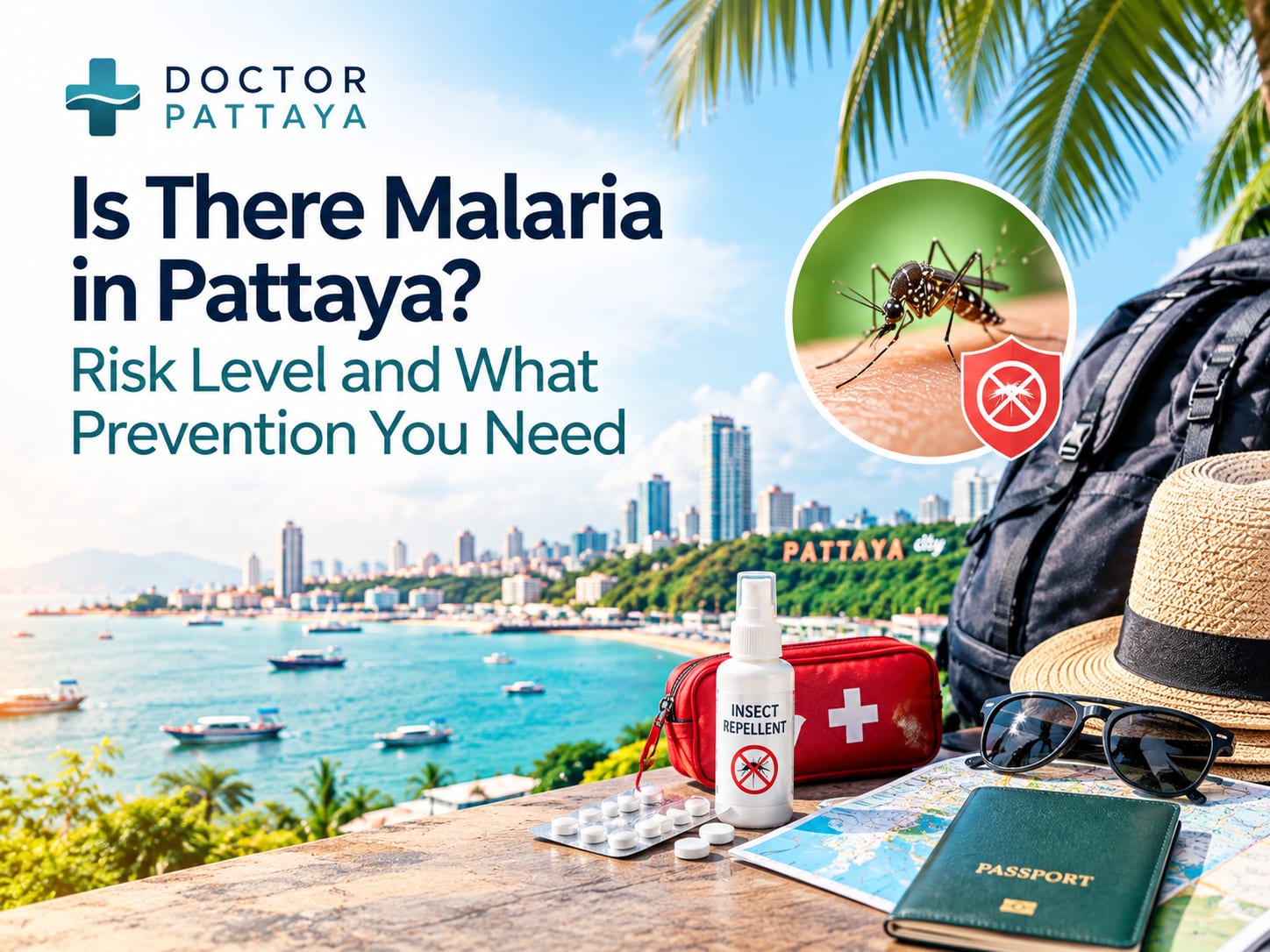
Pattaya city carries no malaria transmission risk according to CDC and WHO guidance. If you are staying in Pattaya, Jomtien, or Naklua, you do not need malaria tablets. The mosquito threat here is dengue, which is real and worth taking seriously. If your trip extends to forested border areas near Myanmar or Cambodia, that changes the picture completely, and a travel health consultation is worth having before you go.
You have been in Pattaya a few days, a mosquito got you on the beach at Jomtien last night, and now you are wondering whether to worry about malaria. That question comes through our door more often than you might think. Tourists read a general Thailand warning before they flew out. Long-term expats planning an upcountry trip are not sure whether their itinerary crosses into actual risk territory. The good news for most people reading this: if you are staying in Pattaya city, malaria is not your concern here.
The more useful question is what your whole trip looks like. Pattaya is a low-risk urban environment, but Thailand is a large country with genuinely high-risk border zones, and some of our patients visit both on the same holiday. Here is exactly where the risk sits, what to watch for while you are in Pattaya, and when a blood test or travel health consultation actually makes sense for your situation.
Is Pattaya a Malaria-Free Zone?
Yes. Pattaya city, Jomtien, Pratumnak, and the surrounding coastal areas of Chonburi province are considered malaria-free. The Anopheles mosquito, which transmits malaria, needs slow-moving water in forested or rural areas to breed. Urban Pattaya does not offer that habitat. This is why the CDC does not recommend antimalarial medication for visitors spending their trip in Pattaya.
What I tell every patient who asks is the same thing: the city itself is not the risk. The risk is where else you are going.
Where in Thailand Is Malaria Risk Actually Found?
Malaria in Thailand is concentrated in forested zones along the country’s borders. The highest-risk provinces sit along the Myanmar border: Mae Hong Son, Tak, Kanchanaburi, and Ranong. On the Cambodian side, Trat and Sa Kaeo carry documented transmission risk. Forested areas of Narathiwat, Yala, and Pattani near the Malaysian border are also flagged.
These are not tourist beach towns. They are rural, heavily forested, and often involve overnight stays where mosquitoes are active after dark. If your trip includes any of these provinces, even for one or two nights, the malaria conversation becomes relevant. Our travel health team at Doctor Pattaya can walk you through the right prevention for your exact itinerary rather than a one-size-fits-all answer.
What If Your Trip Extends Beyond Pattaya?
A lot of our patients base themselves in Pattaya but plan side trips: Khao Yai, a border crossing into Cambodia, a drive through Trat. The fact that you slept in Pattaya the night before does not lower your risk during two nights in a forest area near the Cambodian border.
Near the Thai-Cambodia border, there is an extra concern. Plasmodium falciparum, the most dangerous malaria parasite, has shown resistance to some standard antimalarial drugs in this region. That means not every option available at a pharmacy counter is the right one. Drug-resistant strains respond better to atovaquone-proguanil or doxycycline, which requires a prescription and a proper conversation about your full trip rather than a quick purchase off the shelf.
There is also Plasmodium vivax, the more common strain in Thailand. P. vivax can go dormant in your liver. Weeks or months after the initial infection clears, it can reactivate and make you ill again. If you were treated for malaria in Thailand and then flew home and felt sick again later, this is why. Make sure your doctor back home knows your travel history, specifically that you were in a risk area in Thailand. You can read more about where in Thailand malaria risk applies and how it compares to other fevers if you want a broader picture before your trip.
Dengue Is the Real Mosquito Threat in Pattaya
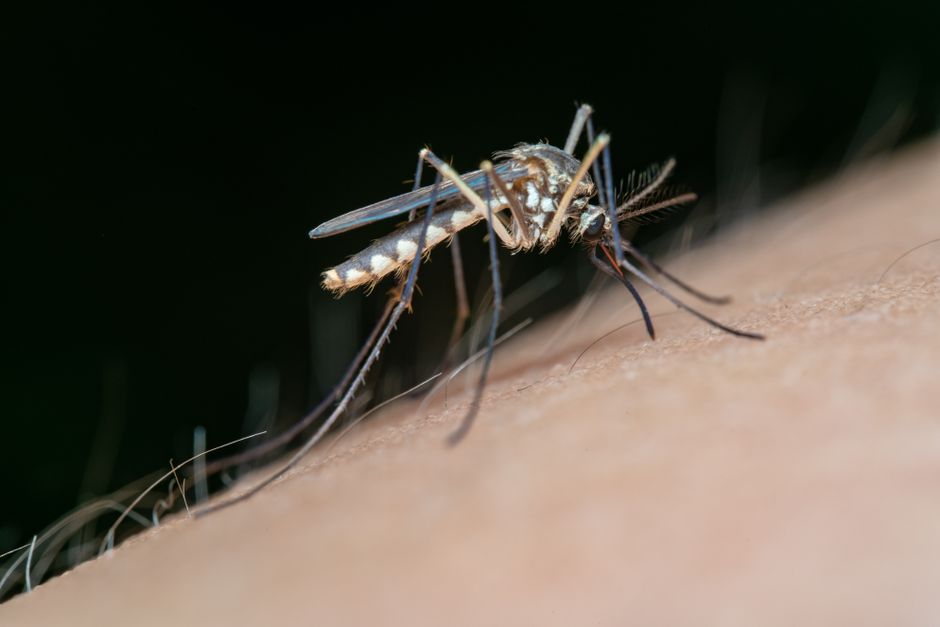
Here is what I actually want Pattaya visitors to be alert to: dengue fever. Unlike malaria, dengue is genuinely present in urban Pattaya and across Chonburi province. The mosquito behind it, Aedes aegypti, breeds in standing water around buildings and bites during the day. You do not have to go anywhere rural to encounter it.
We see dengue cases throughout the year, with peaks during and after the rainy season. The illness comes on fast: sudden high fever, severe headache, and intense joint and muscle pain. Some patients describe the joint pain as so sharp they can barely move. A rash often appears a few days in. If you feel this way in Pattaya, dengue is the first thing to rule out.
The practical protection advice is the same for both threats. Use DEET-based insect repellent consistently, cover exposed skin especially at dawn and dusk, and keep windows screened. For dengue specifically, daytime protection matters just as much as nighttime.
Malaria vs Dengue: How to Tell the Difference
You cannot reliably tell them apart just from how you feel. Both cause fever, chills, headache, and fatigue. The differences exist, but they overlap enough that self-diagnosis is not something I would recommend trying.
| Symptom | Malaria | Dengue |
|---|---|---|
| Fever pattern | Cyclical, comes and goes in waves | Sudden onset, sustained high fever |
| Joint and muscle pain | Mild to moderate | Severe, sometimes called breakbone fever |
| Rash | Uncommon | Common, appears after 2 to 4 days |
| Chills | Pronounced, episodic | Less prominent |
| Who is at risk in Pattaya | Those who visited rural border areas | Anyone in Pattaya city |
| Test needed | Blood test, rapid malaria RDT | Dengue NS1 antigen or antibody test |
If you have a fever and you have only been in Pattaya, dengue is far more likely. If your trip included forested or border areas, mention that immediately. A rapid blood test can differentiate the two the same day, and that result shapes the entire treatment approach.
When to Get Tested at a Pattaya Clinic
If you develop a fever in Pattaya, get a blood test rather than wait and see. Dengue can drop your platelet count quickly, and that needs monitoring. Malaria, if you have been in a risk area, needs specific treatment promptly, and the wrong drug for a resistant strain makes things worse.
At Doctor Pattaya, we run same-day blood tests for both. You walk in, we take a quick blood sample, and results are back while you are still here or shortly after. No appointment needed. If you are not sure whether you need testing at all, a short consultation will give you a clear answer in about ten minutes.
We also offer travel health consultations for anyone planning to travel beyond Pattaya. If you are an expat heading upcountry for a few days, or a tourist planning a border crossing, come in before you go. Bringing your travel itinerary helps us give you specific advice. The right antimalarial for rural Tak province is not the same as the right one for a few nights near the Cambodian border, and a one-sentence answer from a travel forum is not the same as a prescription from a doctor who knows the region.
Fever in Pattaya? Planning a trip upcountry or near the Thai border? Doctor Pattaya offers same-day blood testing for dengue and malaria, plus travel health consultations for anyone heading beyond the city. We are open 24 hours, walk-ins welcome, and we cover hotel visits across Pattaya, Jomtien, and Naklua. If something feels off, come in.
Do I need to take malaria tablets for a holiday in Pattaya?
No. If you are staying in Pattaya city, Jomtien, or Naklua, the CDC and WHO do not recommend antimalarial medication. The city carries no transmission risk. If your trip includes forested areas near the Myanmar or Cambodian border, that is a different situation, and a travel health consultation before you go is the right step.
I have a fever in Pattaya. Could it be malaria?
If you have not visited any rural or forested border areas in Thailand, malaria is very unlikely. Dengue is a far more probable cause of fever in Pattaya and should be checked first. Come in for a same-day blood test at Doctor Pattaya and we can tell you which one it is quickly, because the treatment for each is different.
I am based in Pattaya but planning a trip near Trat and the Cambodian border. Do I need malaria prevention?
Yes, potentially. Trat province, especially its forested and rural areas close to the Cambodian border, does carry malaria risk. A quick travel health consultation at Doctor Pattaya before you go will help us assess the specific risk for your itinerary and, if needed, prescribe the right preventive medication.
What is the difference between malaria and dengue in Pattaya?
Both are spread by mosquitoes, but different ones. Malaria comes from the Anopheles mosquito, which bites at night, and is only found in rural and forested border areas of Thailand, not in Pattaya city. Dengue comes from the daytime-biting Aedes mosquito and is genuinely present in urban Pattaya. A blood test is the only reliable way to know which one you have.
Can malaria symptoms appear weeks after leaving Thailand?
Yes, particularly with Plasmodium vivax, the dominant strain in Thailand. It can go dormant in the liver and reactivate weeks or even months after the initial infection. If you develop fever after returning home from a trip that included border or forested areas in Thailand, tell your doctor about your travel history straight away.
Are malaria tablets available at pharmacies in Pattaya, or do I need a prescription?
Some antimalarial medications are available over the counter in Thailand, but that does not mean all of them are right for your destination. Near the Cambodian border in particular, drug-resistant strains make the choice of medication important. A prescription from a doctor who knows the region ensures you get the right drug for the right area.

Dr. Pipat Finn is the senior doctor at Doctor Pattaya Takecare Clinic, a 24/7 walk-in medical practice on South Pattaya Road, Chonburi, Thailand. They provide primary care, travel medicine, sexual health, vaccination, minor surgery, IV therapy, and emergency outpatient services for tourists, expatriates, and Pattaya residents. Languages: English and Thai. WhatsApp consultations: +66 95 073 5550. Call: +66 81 668 5557.