Clinically reviewed by Dr. Pipat Finn, M.D., Senior Doctor, Doctor Pattaya.
Last reviewed: November 2026
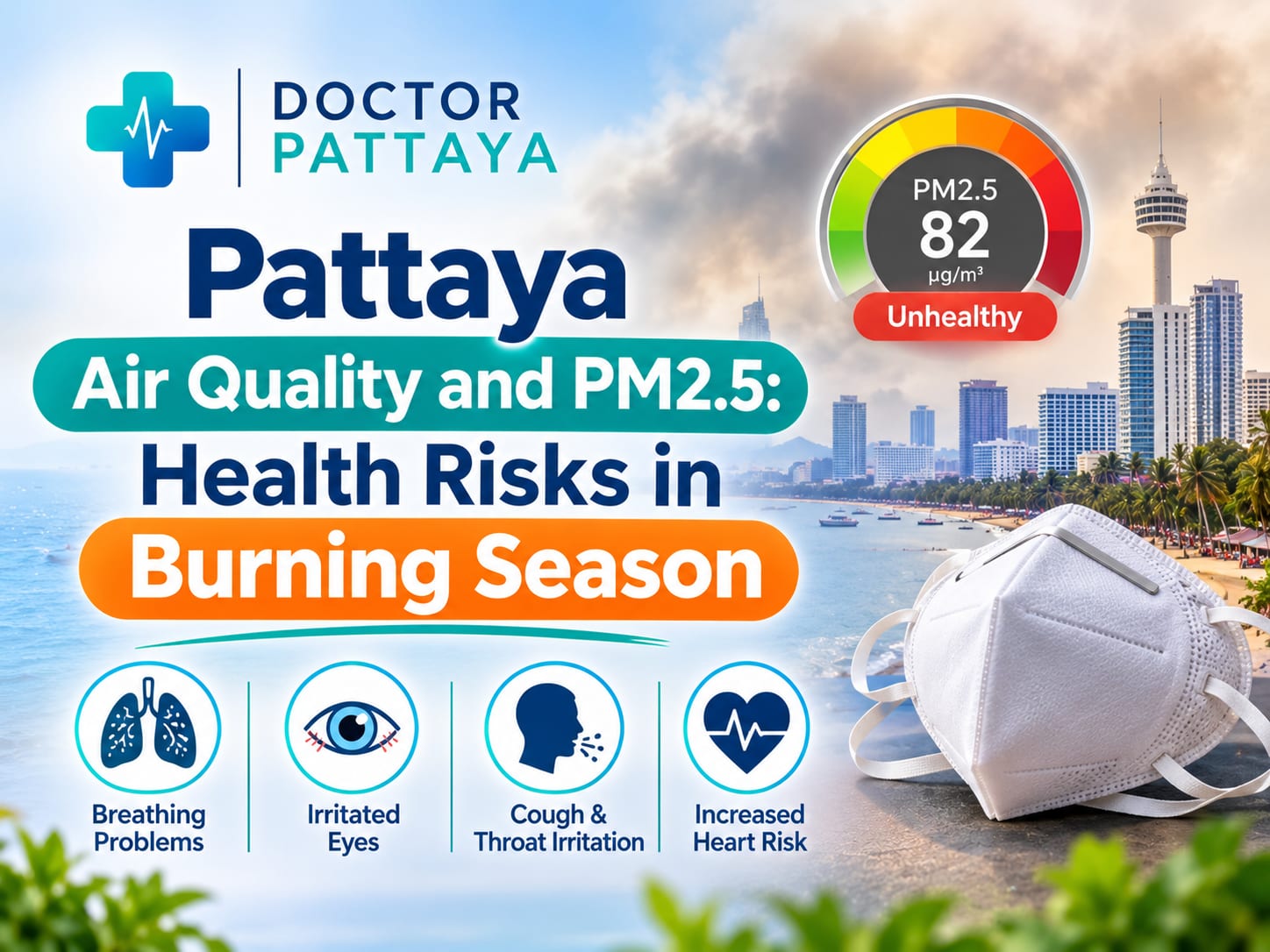
Pattaya air quality drops noticeably between December and February, driven by sugarcane burning in Chonburi province, vehicle exhaust, construction dust, and stagnant seasonal winds. PM2.5 is the main concern: these fine particles reach deep into your lungs and can trigger symptoms in anyone, not just people with existing conditions. Check Air4Thai or IQAir before outdoor activities, wear a well-fitted N95 mask on bad days, and come in if you develop chest tightness, shortness of breath, or eye irritation that does not settle indoors.
You planned a few days at Jomtien, maybe a long walk along the beach road or a morning run near Pratumnak Hill. Then you step outside and the air smells faintly of smoke, your eyes start to itch, and you wonder whether you should be worried. That is a fair question, and the answer depends on what the air is actually doing that day.
Pattaya sits in Chonburi province, which has its own pollution calendar. The worst months here are December through February. Knowing that, and knowing what your AQI reading actually means, puts you in a better position than most visitors and even some long-term expats.
When Pattaya Air Quality Drops
Pattaya is not a heavily industrial city, but the air is not clean either. The main sources during the cool dry season are sugarcane burning across Chonburi province, heavy road traffic on Sukhumvit and the bypass, construction dust, and sea breezes that stall rather than clear the air when wind patterns shift.
December through February is the worst window. Rain drops off, humidity stays low, and cooler air sits close to the ground. That traps pollutants at breathing level rather than dispersing them upward. Agricultural burning adds smoke to the mix, and on the worst days AQI readings can breach the threshold for sensitive groups for hours at a time.
April to September is generally better. Onshore winds pick up and rain washes the air. That does not mean zero risk, just a lower baseline. Check before you make plans rather than assuming.
For real-time readings, use Air4Thai, the Thai Pollution Control Department’s official app, or IQAir AirVisual. One important note: the two apps use different scales. Air4Thai uses the Thai AQI standard, while IQAir reports on the US EPA scale. The same air can appear as "Good" on one and "Moderate" on the other. IQAir tends to flag risk earlier, which is useful if you have a respiratory condition or are travelling with children.
How PM2.5 Affects Your Body
PM2.5 refers to fine particles smaller than 2.5 micrometres. Your nose and throat filter out larger particles reasonably well. PM2.5 is small enough to bypass that and reach deep lung tissue.
For healthy people, a single high-AQI day usually causes mild irritation: a cough, itchy eyes, a scratchy throat. For people with asthma or COPD, the same day can trigger a significant flare. The airways tighten, breathing becomes effortful, and in some cases a reliever inhaler alone is not enough.
PM2.5 also puts stress on the cardiovascular system through inflammation in blood vessels. People with existing heart disease or high blood pressure face a higher risk on bad air days. Eye and skin symptoms are common too, and often the first thing people notice. The same particles settle on the surface of your eyes, causing redness, burning, and itching. If you develop pink eye symptoms during a high-AQI period, pollution is a plausible trigger alongside infection, and a doctor can tell you which is more likely.
Who Is at Higher Risk
Children breathe faster than adults and their airways are still developing, so the same air quality affects them more. A family holiday in Pattaya during January or February is fine in moderate conditions. On days when AQI pushes into the unhealthy range, outdoor time should be cut short and indoor air should be filtered.
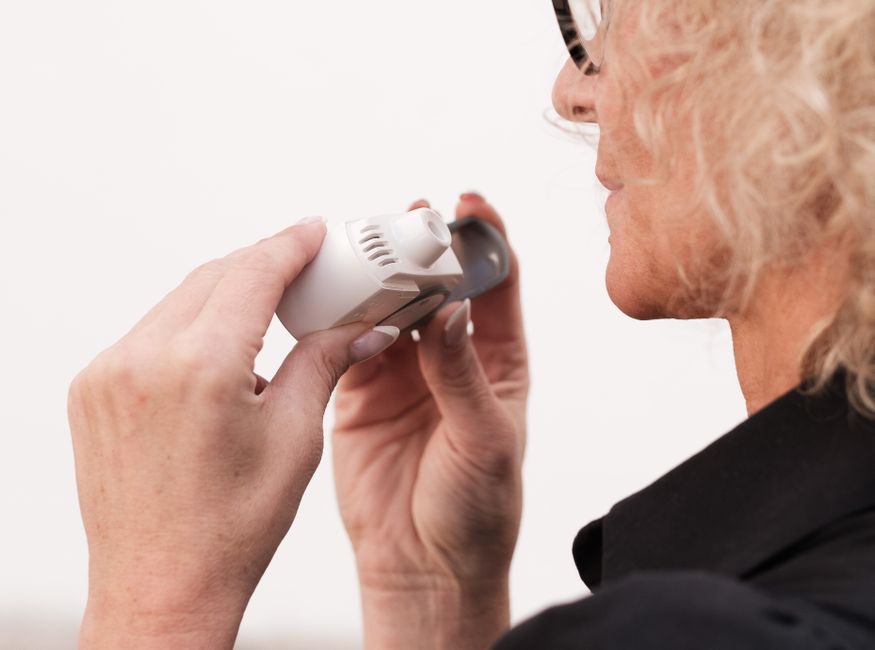
People with asthma should carry their reliever inhaler at all times during burning season, not leave it at the hotel. A peak flow meter is worth packing if you own one. A drop from your personal best reading is an early warning before symptoms become severe.
Pregnant women are also at higher risk from PM2.5 exposure. This is not a reason to cancel a trip, but it is a reason to check the AQI each morning and stay indoors when readings are elevated. COPD patients should not adjust or stop prescribed medications without speaking to a doctor first. If your usual medication is not managing symptoms on a bad air day, that is worth a clinic visit rather than waiting it out. Our travel health page covers more on who should take extra precautions in Pattaya.
Masks, Purifiers, and Indoor Air
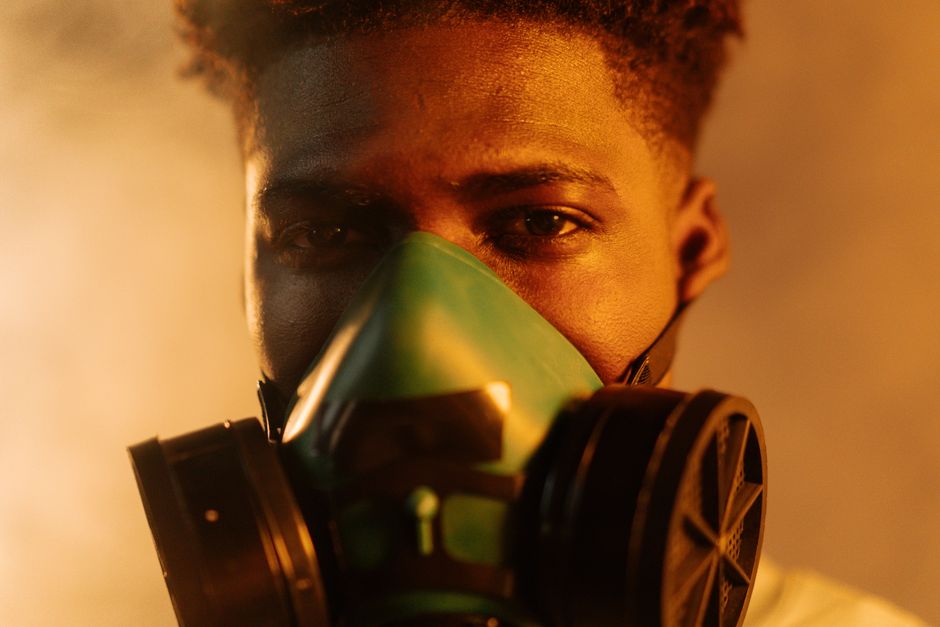
Not all masks are equal for PM2.5. A standard surgical mask offers minimal protection against fine particulate matter. You need an N95 or KN95 rated mask, fitted properly with no gap around the sides, nose, or chin. A loose-fitting N95 is far less effective than a well-fitted one. Disposable N95 masks are available at pharmacies across Pattaya.
Indoors, a HEPA air purifier makes a real difference. Look for a model rated H13 or above: at that standard, the filter captures 99.95% of particles at 0.3 micrometres, which is well below the PM2.5 threshold. For sizing, check the purifier’s CADR rating against the manufacturer’s recommended room size, and choose a model rated for a larger area than your room if possible. Keep windows and balcony doors closed on high-AQI days. Hotel air conditioning recirculates indoor air, which helps, but dedicated HEPA filtration is more effective.
A purifier reduces your exposure. It does not replace prescribed medication or clinical management for anyone with a diagnosed respiratory condition.
Symptoms That Need a Doctor
Mild symptoms on a high-AQI day, a scratchy throat, slightly itchy eyes, a light cough, usually settle once you get indoors and stay there. You do not need a clinic for that.
You do need to be seen if you have chest tightness that does not ease after moving indoors, shortness of breath at rest or with minimal activity, wheezing, or if your reliever inhaler has been used more than twice in 24 hours without much effect. These are signs the inflammation has gone beyond surface irritation.
Eye symptoms that persist despite being indoors, especially with discharge or significant pain, need an assessment. Pollution-triggered conjunctivitis and infection look similar and are treated differently. Getting that right matters.
At Doctor Pattaya, a same-day walk-in assessment for breathing symptoms includes listening to your chest, checking oxygen saturation, and measuring peak flow. If a bronchodilator is needed, a medication that relaxes and opens the airways, we can give it by nebuliser on site. If you have left your inhaler at home or your prescription is not recognised at a Thai pharmacy, come in and we will sort it out. Our asthma treatment page covers what to expect in more detail.
If you are staying in Jomtien or Naklua and moving around feels difficult, a doctor hotel visit is available across Pattaya so you do not have to travel when breathing is already a struggle. For ongoing respiratory concerns, our upper respiratory tract infection page may also be useful.
Breathing problems during a Pattaya holiday or a bad air week should not be left to sort themselves out. Doctor Pattaya is open 24 hours, seven days a week in South Pattaya. Walk in for a same-day chest assessment, peak flow check, nebuliser treatment, or inhaler prescription. Doctor hotel visits are available in Jomtien, Naklua, and across Pattaya. No appointment needed.
Frequently Asked Questions
References
- World Health Organization. WHO Global Air Quality Guidelines: Particulate Matter (PM2.5 and PM10), Ozone, Nitrogen Dioxide, Sulfur Dioxide and Carbon Monoxide. Geneva: WHO; 2021.
- US Environmental Protection Agency. Reconsideration of the National Ambient Air Quality Standards for Particulate Matter. Federal Register. 2024;89(45). Effective May 6, 2024.
- US Environmental Protection Agency. PM NAAQS Air Quality Index Fact Sheet. February 2024.
- Thailand Pollution Control Department. Air4Thai Real-Time Air Quality Monitoring.
- Brook RD, Rajagopalan S, Pope CA 3rd, et al. Particulate matter air pollution and cardiovascular disease: an update to the scientific statement from the American Heart Association. Circulation. 2010;121(21):2331-2378.
- IQAir. IQAir implements 2024 update to U.S. EPA Air Quality Index (AQI). IQAir Knowledge Base, 2024.
The information in this article is for educational purposes only and does not constitute medical advice. It should not be used to self-diagnose or replace a consultation with a qualified physician. If you have concerns about your health, contact a licensed medical professional. For appointments at Doctor Pattaya, visit doctorpattaya.com.

Dr. Pipat Finn is the senior doctor at Doctor Pattaya Takecare Clinic, a 24/7 walk-in medical practice on South Pattaya Road, Chonburi, Thailand. They provide primary care, travel medicine, sexual health, vaccination, minor surgery, IV therapy, and emergency outpatient services for tourists, expatriates, and Pattaya residents. Languages: English and Thai. WhatsApp consultations: +66 95 073 5550. Call: +66 81 668 5557.