
Clinically reviewed by Dr. Pipat Finn, M.D., Senior Doctor, Doctor Pattaya.
Last reviewed: November 2026
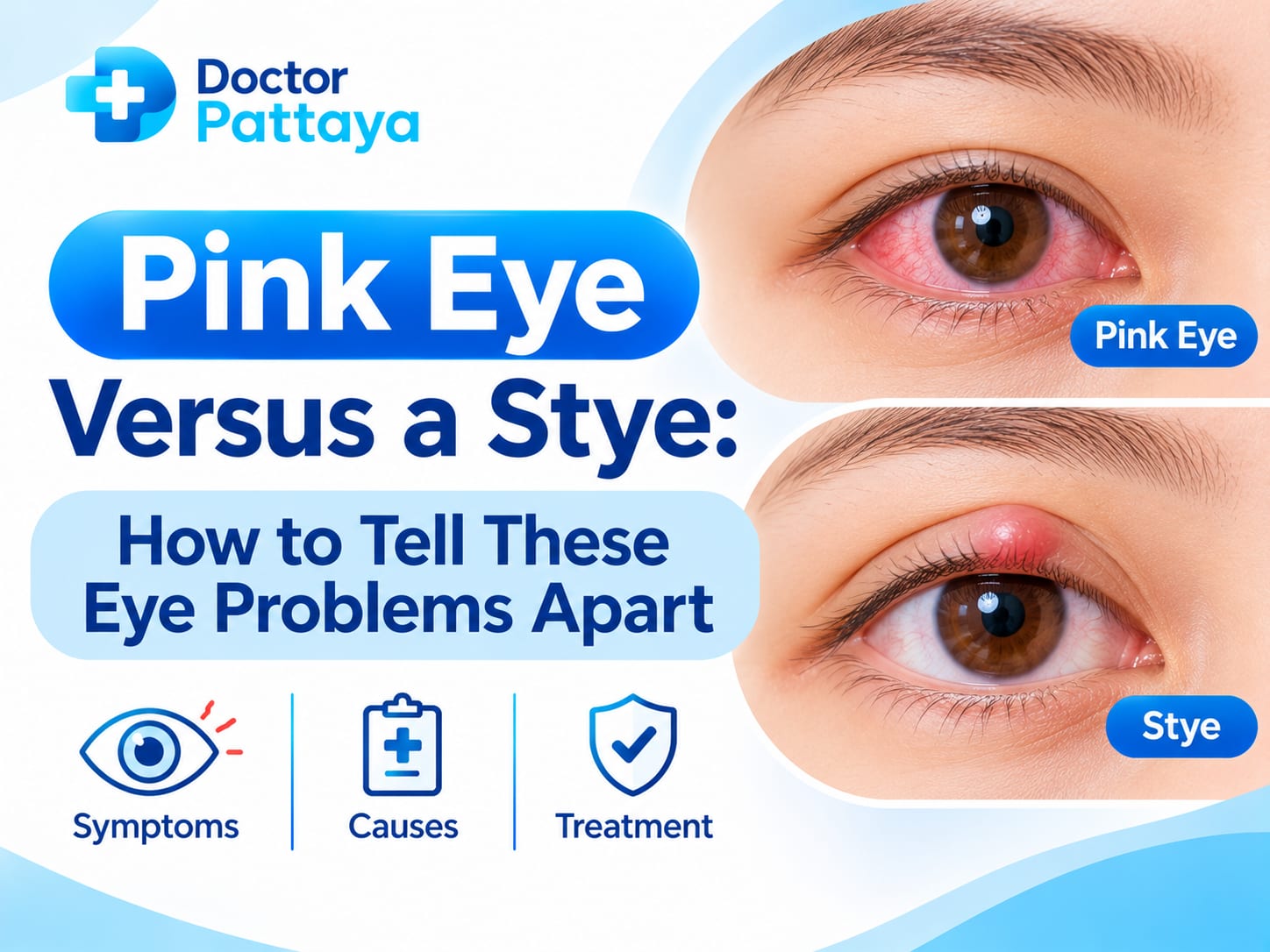
Pink eye (conjunctivitis) makes the white of your eye red and irritated. A stye is a tender bump on your eyelid, usually from a blocked gland or hair follicle. They need different treatment. Bacterial and viral pink eye is contagious. A stye is not, though good hygiene still matters.
You woke up this morning and something is off with your eye. Maybe it is crusty and stuck shut. Maybe there is a swollen lump on your lid. Maybe it just looks angry and you cannot figure out why. You are three days into your Pattaya trip and this was not part of the plan.
Take a breath. Both of these conditions are common and very treatable. But knowing which one you have changes everything about how you handle it. Getting it wrong means buying the wrong drops at a Pattaya pharmacy, sitting out beach days waiting for something to clear that never will, or missing a warning sign that needs same-day attention.

How Pink Eye and a Stye Look and Feel Different
Pink eye affects the surface of the eye itself. The white part looks red or pink, there is often discharge, and both eyes can be involved. It may feel gritty or itchy. Your eyelids might stick together in the morning from dried discharge.
A stye sits on the eyelid edge where your lashes grow. It is a localised, tender lump. The eye itself usually looks normal or only mildly irritated. The lump is the problem, not the whole eye surface.
There is a third thing worth knowing about: a chalazion. This starts as a stye but becomes a firm, painless lump deeper in the lid, caused by a blocked oil gland. A chalazion is not infected. Warm compresses may help early on, but one that hardens and stays often needs minor drainage at a clinic. Antibiotic drops will not fix it.
| Feature | Pink Eye | Stye |
|---|---|---|
| Location | White of the eye | Eyelid edge |
| Appearance | Diffuse redness and discharge | Localised bump, sometimes with a white tip |
| Pain level | Mild irritation, gritty feeling | Tender to touch |
| Discharge | Yes, watery or thick | Minimal or none |
| Both eyes? | Often | Rarely |
| Contagious? | Bacterial and viral types: yes | No |
What Is Contagious and What Is Not
Bacterial and viral pink eye spread easily. The pathogen travels on your fingers, on towels, on pillowcases. In a hotel room or shared villa, it can reach a partner within a day. Viral conjunctivitis is actually the most common infectious type, and it looks very similar to the bacterial kind.
Allergic conjunctivitis is not contagious at all. It comes from pollen, dust mites, or irritants. In Pattaya, sunscreen or pool chemicals getting into your eye can trigger it. The redness from a chemical irritant like this usually settles within a day or two with cool compresses and artificial tears.
A stye is not contagious the way pink eye is. It forms because a gland or eyelash follicle gets blocked, not because a pathogen passes between people. That said, the bacteria on the skin around it can transfer via shared towels or unwashed fingers and cause a stye to form on another eyelid. Wash your hands. Do not share towels.
Self-Care That Is Safe to Try First
For a stye, the most reliable home treatment is a warm compress. Hold a clean damp cloth gently over the closed eye for ten to fifteen minutes, three to four times a day. The warmth helps the blocked gland soften and drain on its own. Do not squeeze it, do not pop it, and do not try to drain it yourself.
For pink eye, the approach depends on the type. Viral conjunctivitis is managed with cool compresses and artificial tears. It clears on its own, usually within one to two weeks. Antibiotic drops do not help a viral infection. Buying drops at a Pattaya pharmacy without knowing the type is a common mistake that delays recovery.
Bacterial pink eye may respond to topical antibiotics such as fusidic acid eye drops, but these work best under guidance rather than off a shelf by guesswork. Preservative-free artificial tears are safe to use freely for any type and are available over the counter at any pharmacy here. The humidity, sun glare, salt air, and air-conditioned hotel rooms all stress the eye surface, and simple lubricating drops often help more than people expect.
Warning Signs That Mean You Need a Doctor Today
Pain, Light Sensitivity, Vision Change, and Spreading Redness
Most styes and cases of pink eye are uncomfortable, not dangerous. But certain signs mean you need a doctor the same day, not tomorrow.
If your vision is blurry or changed, come in that day. Vision change alongside a red eye can point to something affecting deeper eye structures. Significant pain inside the eye, not just surface irritation or lid tenderness, also warrants same-day assessment.
Light sensitivity that makes it hard to open your eye in a bright room is a sign to take seriously. So is redness spreading from a stye onto the cheek or surrounding skin. That pattern can indicate preseptal cellulitis, an infection moving into the tissues around the eye that needs prompt treatment. The guide on when to see a doctor for a red eye at Doctor Pattaya covers this in more detail.
If you have been treating pink eye at home for more than 48 hours and it is getting worse, come in. If a stye has not improved after seven days of warm compresses, or has hardened into a painless lump, get it assessed. Doctor Pattaya can handle minor in-clinic drainage for chalazions on the same visit, no referral needed.
Fever alongside any eye problem is a reason to come in that day. Do not manage eye symptoms and a fever at home.
Not sure if your eye needs a doctor or just some rest? Doctor Pattaya is open 24 hours a day, 7 days a week at our South Pattaya clinic. Walk in without an appointment, or if you are staying at a hotel in Jomtien, Naklua, or elsewhere in Pattaya, we can come to you. Our doctors assess pink eye and styes on the same visit, confirm whether you need antibiotic drops or something different, and get you back to your trip the same day. We also handle minor in-clinic procedures for styes and chalazions that are not resolving on their own.
Frequently Asked Questions
References
The information in this article is for educational purposes only and does not constitute medical advice. It should not be used to self-diagnose or replace a consultation with a qualified physician. If you have concerns about your health, contact a licensed medical professional. For appointments at Doctor Pattaya, visit doctorpattaya.com.

Dr. Pipat Finn is the senior doctor at Doctor Pattaya Takecare Clinic, a 24/7 walk-in medical practice on South Pattaya Road, Chonburi, Thailand. They provide primary care, travel medicine, sexual health, vaccination, minor surgery, IV therapy, and emergency outpatient services for tourists, expatriates, and Pattaya residents. Languages: English and Thai. WhatsApp consultations: +66 95 073 5550. Call: +66 81 668 5557.