
Clinically reviewed by Dr. Pipat Finn, M.D., Senior Doctor, Doctor Pattaya.
Last reviewed: November 2026
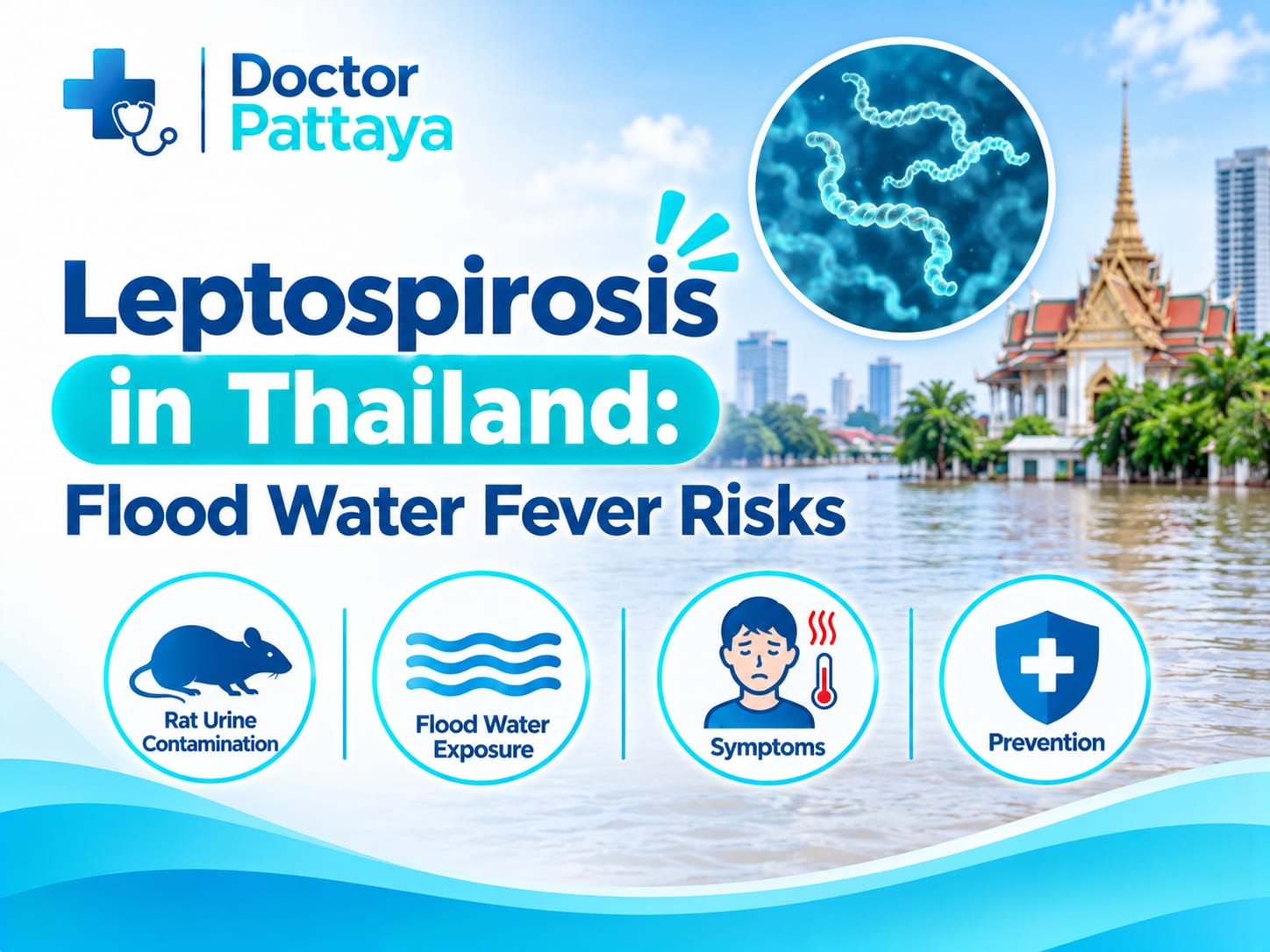
Leptospirosis is a bacterial infection spread through water or mud contaminated with the urine of infected animals, most commonly rats. In Thailand, risk rises sharply during and after heavy rain, when floodwater carries bacteria into streets, drains, and low-lying areas. Most cases are treatable with antibiotics, and catching it early makes a real difference. If you have waded through floodwater and now feel feverish, have muscle pain, or feel generally unwell, get checked the same day.
You were walking back after the rain, water up to your ankles on a flooded side street near Thepprasit Road or somewhere down in Jomtien, and you thought nothing of it. That was a few days ago. Now you have a fever, your calves ache like you ran a marathon you did not run, and you feel worse than any rough night out would explain. That combination, after floodwater contact in Thailand, is worth taking seriously today.
Leptospirosis in Thailand circulates year-round and cases climb every rainy season, particularly from July through October, when flooding pushes contaminated water into streets and open spaces. Pattaya’s low-lying streets, storm drains, and canal outlets around South Pattaya and Jomtien are exactly the kind of environment where risk is real. The good news is this is a bacterial infection, which means it can be treated. Getting tested and started on the right antibiotic early is what makes the difference.
How Leptospirosis Spreads
Leptospira bacteria live in the kidneys of infected animals, most commonly rats, and are shed into the environment through their urine. The bacteria survive well in warm, wet soil and freshwater, which is why Thailand’s rainy season is the peak danger window.
You do not need to wade through rice paddies to pick this up. Tourists and expats in Pattaya are exposed through ordinary flood contact: walking through water mixed with street drain overflow, standing in mud, or touching your face after contact with contaminated water. The bacteria enter through broken skin or mucous membranes. A small cut on your foot, a scratched ankle from a sandal strap, or simply the lining of your nose or eyes is enough of an entry point.
After heavy overnight rain, the low streets between Sukhumvit and the beach, storm canal outlets near Jomtien, and market drainage areas can all carry contaminated runoff. If you are staying near Bali Hai Pier, Pratumnak Hill, or in the Jomtien area and you have been caught in serious flooding, the risk is real enough to get assessed.
Symptoms to Watch For
Symptoms usually start between two days and four weeks after exposure, though most people feel ill within the first two weeks. The illness comes on fast: high temperature, severe headache, and muscle aches, particularly in the calves. That calf tenderness is a useful clinical clue and something a doctor will specifically check.
Early leptospirosis can look almost identical to dengue or scrub typhus. All three cause high fever, headache, and muscle pain. This is not a condition you can reliably identify from symptoms alone, and in Pattaya during rainy season, all three are circulating at the same time. A blood test is the only way to tell them apart.
What separates a mild case from a severe one is organ involvement. In Weil’s disease, the severe form of leptospirosis, the liver and kidneys can be affected. Signs include jaundice (skin or eyes turning yellow), very little urine output, coughing up blood, or confusion. Those are not wait-and-see symptoms. That is a go-now situation, straight to emergency care.

Leptospirosis Risk in Pattaya and Chonburi
The drainage infrastructure in parts of South Pattaya and Jomtien was not built for the volume of rainfall that now comes with the rainy season. After a heavy storm, streets flood fast and drain slowly. That standing water is not just rainwater: it carries runoff from drainage channels, street-level waste, and rat-contaminated soil. Rodent populations around markets, older residential streets, and canal areas in this part of Chonburi are well established.
For those who want to see a doctor without travelling across town, a hotel visit from Doctor Pattaya is available across Pattaya, Jomtien, and Naklua. If you are closer to the beach end of town, our doctor in Jomtien and Pratumnak Hill pages have everything you need to get in quickly.
Testing and Diagnosis
The gold-standard test for leptospirosis is the microscopic agglutination test, or MAT. The problem is it is often negative in the first week of illness, before your immune system has had time to build a detectable response.
A clinician does not just run one test and wait. What we look at first is a full blood count, liver function tests, and urine. PCR testing on blood is more reliable in the first few days of illness. At Doctor Pattaya, we can run a same-day blood panel and begin antibiotic treatment while results are pending, so you are not left without a plan.
If the clinical picture fits and your exposure history lines up, treatment may start before the final result comes back. Waiting for confirmation when you are getting worse is not the right call.
Antibiotic Treatment for Leptospirosis in Thailand
Doxycycline is the standard antibiotic for mild to moderate leptospirosis cases. Severe cases require IV antibiotics and hospital care. Starting treatment early reduces the risk of complications, so getting assessed promptly matters. Doxycycline should not be used in pregnancy or in children under eight years old; a doctor can advise on the right alternative in those cases.
One thing worth knowing: some patients starting antibiotics for leptospirosis experience a Jarisch-Herxheimer reaction, a sudden worsening of fever and chills in the first hours after the first dose. It passes, but if that happens, call your doctor immediately rather than stopping the medication on your own.
If you have recently walked through significant floodwater and have abrasions or cuts on your feet or legs, a doctor may consider preventive doxycycline. This is not recommended for every person who got their feet wet, but it is worth a conversation if your exposure was significant. That decision depends on the specifics of your situation and is better made with a clinician than a pharmacist. For general guidance, see our page on fever treatment and leptospirosis prevention for travellers.
Prevention
The clearest step is avoidance. If streets are flooded and you do not need to cross, do not. Waterproof footwear provides a physical barrier that flip-flops cannot. Rubber boots or sealed sandals make a real difference.
Cover any cuts or abrasions before going near floodwater. Use a waterproof dressing, not just a dry plaster. After flood exposure, wash your skin thoroughly with soap and water before touching your face or eyes.
For anyone with planned outdoor exposure, farm work, trekking after rain, or activities with significant freshwater or mud contact, speak to a doctor about preventive options before it happens. It is a short conversation that can save you a week of being unwell. If you have had a skin rash or bite after outdoor exposure in Pattaya, that is worth getting checked at the same visit.
Feeling feverish after floodwater exposure in Pattaya or Jomtien? Doctor Pattaya is open 24 hours a day, 7 days a week. We can run a same-day blood panel, assess your symptoms, and start antibiotic treatment on the same visit if needed. Walk in to our South Pattaya clinic, or book a doctor hotel visit across Pattaya, Jomtien, and Naklua.
Frequently Asked Questions
References
- Centers for Disease Control and Prevention. Leptospirosis. CDC Yellow Book 2024: Health Information for International Travel.
- Levett PN. Leptospirosis. Clinical Microbiology Reviews. 2001;14(2):296-326.
- World Health Organization. Human Leptospirosis: Guidance for Diagnosis, Surveillance and Control. WHO Press.
- Sriwongpan P et al. Spatio-temporal patterns of leptospirosis in Thailand: is flooding a risk factor? Epidemiology and Infection. 2015;143(10):2106-2115.
- Swissmedic. Jarisch-Herxheimer reaction during antibiotic treatment of spirochaetal infections. Vigilance News, 2021.
The information in this article is for educational purposes only and does not constitute medical advice. It should not be used to self-diagnose or replace a consultation with a qualified physician. If you have concerns about your health, contact a licensed medical professional. For appointments at Doctor Pattaya, visit doctorpattaya.com.

Dr. Pipat Finn is the senior doctor at Doctor Pattaya Takecare Clinic, a 24/7 walk-in medical practice on South Pattaya Road, Chonburi, Thailand. They provide primary care, travel medicine, sexual health, vaccination, minor surgery, IV therapy, and emergency outpatient services for tourists, expatriates, and Pattaya residents. Languages: English and Thai. WhatsApp consultations: +66 95 073 5550. Call: +66 81 668 5557.