
Clinically reviewed by Dr. Pipat Finn, M.D., Senior Doctor, Doctor Pattaya.
Last reviewed: November 2026
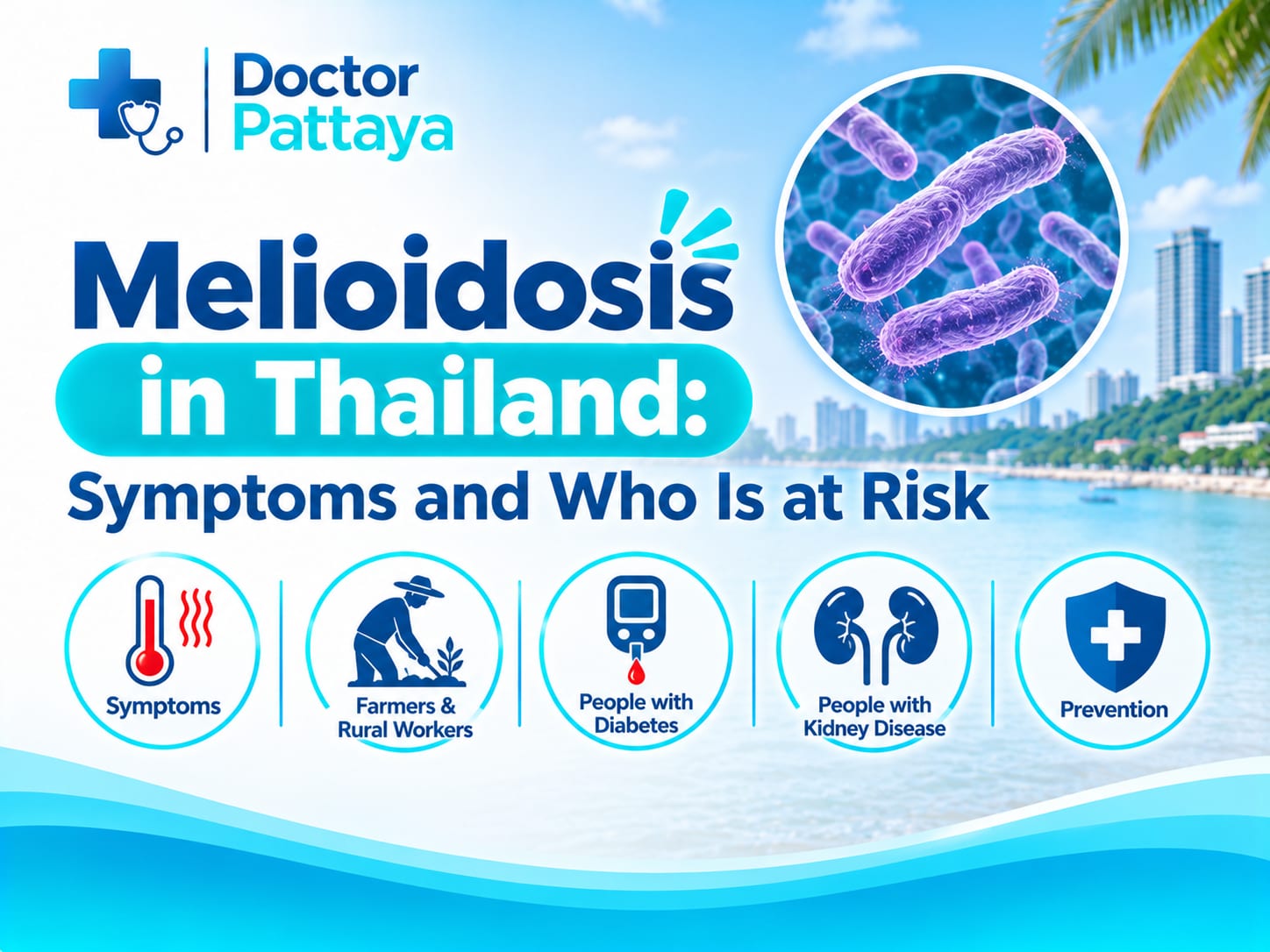
Melioidosis is a bacterial infection found in soil and stagnant water across Thailand, including Chonburi Province. Most healthy tourists face low risk. The highest risk is in people with diabetes, kidney disease, or a weakened immune system who have direct soil or water contact, especially during the rainy season. It is curable with the right antibiotics, but it needs to be caught early.
Picture this: a long weekend outdoors around Pattaya. An ATV tour on muddy tracks, a round of golf after heavy rain, or wading through a flooded street near Jomtien. A few days later you have a fever that will not shift, your body aches, and you feel worse than you did after the longest night. You think flu, dengue, maybe food poisoning after a beach dinner. Melioidosis probably does not cross your mind. That is exactly the problem.
This is one of those tropical infections that gets missed because its early symptoms look like half a dozen other things. It is not common in tourists, but the risk is not zero. The Eastern Seaboard, the region Pattaya sits in, is endemic territory. If you are diabetic, immunocompromised, or you have had skin or soil contact during outdoor activity here, read this carefully.

What Melioidosis Is
The bacterium that causes melioidosis lives in soil and stagnant water. It is widespread across Southeast Asia and present in Thailand year-round. The rainy season, roughly May to October, drives exposure up sharply. Flooded fields, muddy trails, and standing water all become potential sources.
The bacteria can enter your body through broken skin or an open wound, by inhaling contaminated dust or water droplets, or by swallowing contaminated water. The skin route is the most common for tourists and expats. A small cut from a motorbike accident, a blister from sandals, or a scrape from a beach activity can all serve as entry points if you are walking through wet or muddy ground.
A lot of people assume you have to work on a farm to be at risk. You do not. Any activity that puts broken skin in contact with soil or flood water carries some degree of risk, however small.
Who Is at Higher Risk in Pattaya
Most healthy adults visiting Pattaya face a low risk. Your immune system handles low-level exposures well.
The picture changes if you are diabetic. Diabetes is the single biggest risk factor and accounts for a large proportion of severe cases in Thailand. Kidney disease, liver disease, heavy alcohol use, and long-term steroid use or other immunosuppressant drugs also increase risk considerably.
Expats who handle garden soil regularly, particularly after rain, have a low but real exposure risk, especially with any of the conditions above. Travel-associated melioidosis in tourists is documented, usually linked to ATV tours on muddy tracks, golf on waterlogged courses, beach flooding after storms, or walking barefoot in areas outside Pattaya. If any of that happened before your symptoms started, tell your doctor.
Symptoms to Watch For
Melioidosis does not have one signature symptom. It can look like flu, pneumonia, a skin abscess, or a urinary infection. Fever is almost always present. Add muscle pain, headache, and fatigue and many patients, and many doctors, initially treat it as influenza or dengue.
The red flags that should prompt further investigation are: fever lasting more than three days after outdoor soil or water exposure; a skin abscess or unusual swelling without an obvious cause; unexplained weight loss over days to weeks; or a productive cough with chest pain. In severe cases the bacteria can enter the bloodstream and cause a rapidly deteriorating illness that needs urgent care.
Melioidosis can also mimic tuberculosis, particularly when it settles in the lungs. A cough that is not resolving, night sweats, and weight loss in someone who has spent time in rural Thailand all warrant a blood test, not just a course of standard antibiotics. If what your doctor is treating is not improving, say so and ask whether melioidosis has been ruled out. Our guide to flu symptoms and treatment in Pattaya covers the overlapping presentations worth knowing.
Diagnosis and Treatment for Melioidosis in Thailand
A blood culture is the standard way to confirm melioidosis. That means drawing blood and sending it to a lab to check for bacterial growth. Results typically take 48 hours or more, which is why clinical suspicion matters. A doctor who considers melioidosis early can initiate care before every result is back, if the clinical picture warrants it.
At Doctor Pattaya, we can draw blood and arrange cultures the same day. If we are concerned about a severe presentation, we will not wait for a culture result to act.
Treatment follows two phases. The first is an intensive phase using intravenous antibiotics, typically ceftazidime or meropenem, given in a clinic or hospital with IV access. This phase runs for a minimum of two weeks and can be longer depending on severity. The second is an eradication phase using oral antibiotics, usually trimethoprim-sulfamethoxazole, taken for three to six months to clear the infection completely.
That timeline has real practical implications if you are a tourist. Completing the full course in Thailand may not be possible. Flying home mid-treatment carries a real risk of relapse. Your travel insurance policy may become a critical factor. Discuss this with your doctor before making any decisions.
One point for long-term expats: melioidosis can lie dormant in the body for years without obvious illness. It can reactivate during a later serious illness, surgery, or when steroids or immunosuppressants are started. If you have had an unexplained severe illness in Thailand, mention it to any future doctor who treats you.
When to See a Doctor in Pattaya
Do not sit on a fever that has been going three days or more, especially after outdoor soil or water exposure. That is the threshold. You do not need every symptom on the list. Prolonged fever plus relevant exposure is enough to warrant a blood test.
Doctor Pattaya is open 24 hours a day, every day. Walk-in appointments are welcome. If you are staying in South Pattaya, Jomtien, or Naklua and cannot travel, we do hotel doctor visits across Pattaya so you do not have to leave when you are unwell.
If your symptoms include difficulty breathing, confusion, or a rapidly spreading skin infection, those are urgent. Go straight to our 24/7 emergency care service in Pattaya. Do not wait until morning.
Prevention That Actually Works in Pattaya
There is no approved vaccine for melioidosis anywhere in the world as of 2026. Prevention is entirely behavioural.
Wear closed shoes or sandals when walking on wet ground, particularly after rain or in flooded areas. Cover any open cuts, blisters, or wounds with waterproof dressing before any outdoor activity. Avoid walking barefoot in soil, mud, or standing water. If you are diabetic or immunocompromised and planning an outdoor trip involving soil contact, have a quick conversation with a doctor first.
If you sustain a wound outdoors in muddy or wet conditions, clean it thoroughly and get it properly dressed. Our wound care service in Pattaya is available any time. Proper early wound management reduces your risk of any soil-borne infection, melioidosis included.
At Doctor Pattaya, our 24/7 clinic in South Pattaya can assess your symptoms, arrange same-day blood tests, and talk through your options clearly. Walk-in appointments are welcome, and hotel visits are available across Pattaya, Jomtien, and Naklua. If you have had a fever for more than three days after outdoor activity involving soil or water in Thailand, do not dismiss it. Come in and let us find out what is going on.
Frequently Asked Questions
References
- Wiersinga WJ, Currie BJ, Peacock SJ. Melioidosis. New England Journal of Medicine. 2012;367(11):1035-1044.
- Centers for Disease Control and Prevention. Clinical Overview of Melioidosis. CDC, 2024.
- Sarovich DS, Ward L, Price EP, et al. Recurrent melioidosis in the Darwin Prospective Melioidosis Study: improving therapies mean that relapse cases are now rare. PLOS Neglected Tropical Diseases. 2020.
The information in this article is for educational purposes only and does not constitute medical advice. It should not be used to self-diagnose or replace a consultation with a qualified physician. If you have concerns about your health, contact a licensed medical professional. For appointments at Doctor Pattaya, visit doctorpattaya.com.

Dr. Pipat Finn is the senior doctor at Doctor Pattaya Takecare Clinic, a 24/7 walk-in medical practice on South Pattaya Road, Chonburi, Thailand. They provide primary care, travel medicine, sexual health, vaccination, minor surgery, IV therapy, and emergency outpatient services for tourists, expatriates, and Pattaya residents. Languages: English and Thai. WhatsApp consultations: +66 95 073 5550. Call: +66 81 668 5557.