Clinically reviewed by Dr. Pipat Finn, M.D., Senior Doctor, Doctor Pattaya. Last reviewed: September 2026
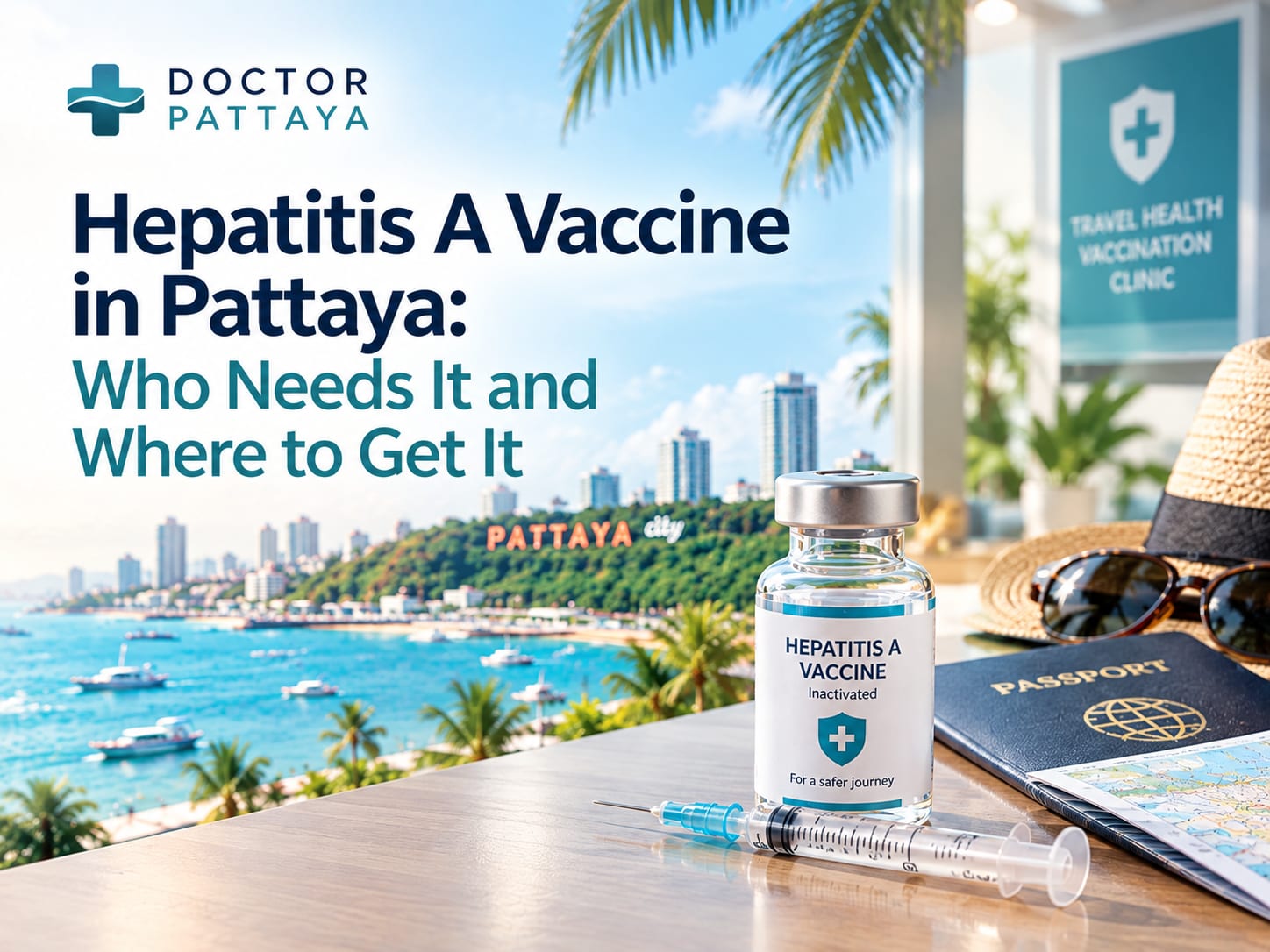
Hepatitis A spreads through contaminated food and water, and Chonburi province, where Pattaya sits, was confirmed as one of Thailand’s hardest-hit areas in the 2026 national outbreak. The vaccine is safe, highly effective, and available as a walk-in at Doctor Pattaya seven days a week. Even if you are already here, getting vaccinated today still gives you meaningful protection.
You have been in Pattaya three days. You have eaten your way down Beach Road, grabbed a few things from the night market, and had a brilliant time doing it. Nobody mentioned hepatitis A before you flew out, and it has not crossed your mind since. That is pretty normal. But Chonburi province, which is where Pattaya, Jomtien, Naklua, and Pratumnak all sit, was confirmed by Thai health authorities as one of the worst-hit areas in the country’s 2026 outbreak. The CDC lists this region specifically on its Thailand risk map. This is not a general travel warning copied from old guidelines. It is current, and it is local.
The good news is that the hepatitis A vaccine works extremely well. One dose gives you solid short-term protection, and a second dose six months later covers you for decades. Whether you are mid-holiday, a long-stay expat who never quite finished the course, or someone who ate something questionable last night and is now Googling at speed, here is exactly what you need to know.
Why Pattaya Carries a Real Hepatitis A Risk
Street food is one of the best things about this city. It is also one of the main ways hepatitis A moves through a population. The virus spreads when traces of infected stool contaminate food or water. That sounds dramatic, but it happens easily when hygiene is inconsistent across food carts, beach bars, and busy restaurant kitchens.
Chonburi province recorded some of the highest case counts in Thailand during the 2026 outbreak. Most generic travel health content treats all of Thailand as one uniform risk zone. It is not. The risk in Pattaya is specific, current, and worth taking seriously.
Who Should Get the Hepatitis A Vaccine in Pattaya
Most visitors should get this vaccine. That includes first-time tourists, long-stay expats who are not sure if they ever had both doses, and repeat visitors who eat and drink out regularly. If you fall into any of those groups, the answer is almost certainly yes.
A few groups should treat this as a priority rather than a maybe. Anyone with an existing liver condition, including fatty liver disease or hepatitis B, faces a higher risk of serious illness if they catch hepatitis A. People who are immunocompromised should also move this up the list. And anyone who has had unprotected sexual contact recently should consider vaccination as part of a broader travel health check, since oral-anal transmission is a real route.
Children travelling to Pattaya should be vaccinated too. The vaccine is approved from one year of age, and kids are reliably less careful about what goes in their mouths.
Dose Schedule and Timing for the Hepatitis A Vaccine
Two doses are given six to twelve months apart. After both, protection lasts around twenty-five years and possibly longer. A single dose alone still covers you for roughly one year, which is more than enough for a holiday or a long stay.
If you had your first dose years ago but never went back for the second, you are likely still protected short-term. You should complete the course when you can. Doctor Pattaya can check your records and top you up the same day.
Immunity begins to build about two weeks after the first dose. If you are vaccinated today and flying out in ten days, you will have partial protection before you leave. That is still better than nothing, and it is worth doing.
Common brands include Havrix and Avaxim for standalone hepatitis A vaccination. All are available at our clinic.
Should You Get the Combined Hepatitis A and B Vaccine?
This is worth thinking about, especially in the Pattaya context. Hepatitis B spreads through blood and body fluids, and the exposure routes here are real: tattoos, dental or medical procedures, and sexual contact are all relevant for visitors and expats in this city.
Twinrix combines both vaccines into one injection. The standard schedule runs three doses over six months. An accelerated schedule is also available if time is short. If your Pattaya trip or lifestyle involves any of those hepatitis B risk factors, the combined vaccine is a sensible choice.
If your trip is straightforward and your hepatitis B vaccination is already current, the standalone hepatitis A jab is enough. A ten-minute consultation at Doctor Pattaya will give you a clear answer based on your actual situation.
What If You Are Already in Pattaya and Have Not Been Vaccinated?
This is the most common scenario we see. Someone arrives, spends a week eating street food and drinking cocktails on Walking Street, and then Googles whether they should have had a vaccine before they came. The answer is yes. The better answer is: get it now anyway.
One dose given today still provides meaningful protection if you have not been exposed yet. And if you think you may have eaten something risky in the last few days, there is a window of up to fourteen days after exposure when vaccination may still prevent illness from developing. That window closes quickly, so do not sit on it.
Walk into Doctor Pattaya without an appointment. We are open every day and carry the vaccines in stock. Come in, we will do a brief consultation, confirm which vaccine is right for you, give you the jab, and issue a vaccination record you can take home or send to your travel insurer.
What to Expect at Your Appointment
No paperwork maze, no waiting weeks for a slot. Walk-in vaccination is available seven days a week. You will see one of our English-speaking doctors for a short consultation, usually five to ten minutes. We will confirm which vaccine suits you, check whether you have had previous doses, and give you the injection.
The jab itself takes seconds. Most patients feel nothing worse than a mild ache in the arm for a day or two. We will give you a written vaccination record, and if your travel insurer needs documentation, we can provide that too.
The full process from walking in to walking out is typically under thirty minutes. If you want to schedule your second dose before you leave Pattaya, we can arrange that during the same visit. If six months from now you are back in the UK, Australia, or elsewhere, your local clinic can administer the booster using the record we give you. You can read more about what our travel vaccinations cover if you want to check anything else before you come in.
Hepatitis A Symptoms to Watch For
Most people feel fine for two to six weeks after exposure. Then symptoms arrive, and they can hit hard. Fatigue, nausea, stomach pain, and loss of appetite usually come first. Yellowing of the skin and eyes follows in many cases. Urine can turn very dark, and stools can turn pale.
Symptoms usually pass on their own over a few weeks, but older adults and anyone with existing liver problems can become seriously unwell. There is no antiviral treatment once you have hepatitis A. Rest, fluids, and avoiding alcohol are the main steps. Prevention through vaccination is far better than managing the illness after the fact.
If you develop these symptoms after eating or drinking in Pattaya, come in. We can run blood tests to check your liver and confirm what is going on. You can also check our travel health page for a full list of conditions we screen for.
The hepatitis A vaccine is available as a walk-in at Doctor Pattaya, seven days a week, no appointment needed. Whether you are planning ahead before a trip, already in Pattaya and unvaccinated, or due for a booster, our English-speaking doctors can advise and vaccinate you the same day. We also offer the combined hepatitis A and B vaccine for travellers who want broader protection. Come in to South Pattaya, call ahead if you prefer, or ask your hotel concierge to point you our way.
Frequently Asked Questions

Dr. Pipat Finn is the senior doctor at Doctor Pattaya Takecare Clinic, a 24/7 walk-in medical practice on South Pattaya Road, Chonburi, Thailand. They provide primary care, travel medicine, sexual health, vaccination, minor surgery, IV therapy, and emergency outpatient services for tourists, expatriates, and Pattaya residents. Languages: English and Thai. WhatsApp consultations: +66 95 073 5550. Call: +66 81 668 5557.