Clinically reviewed by Dr. Pipat Finn, M.D., Senior Doctor, Doctor Pattaya.
Last reviewed: October 2026
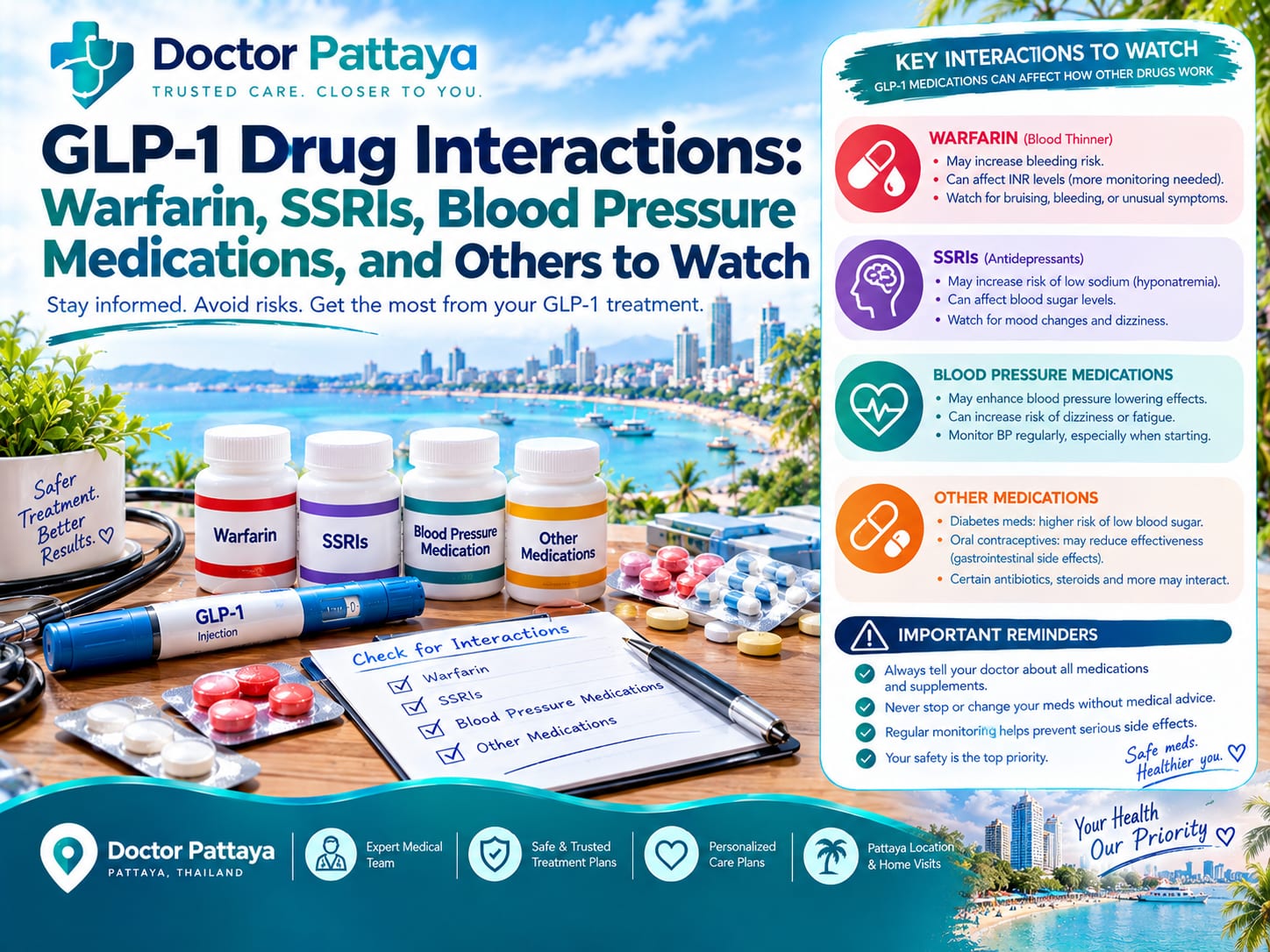
GLP-1 receptor agonists like semaglutide and tirzepatide do not use the liver’s cytochrome P450 enzyme system, which means they avoid the most common drug interaction pathway. However, they slow gastric emptying, which can affect how other oral medications are absorbed. Warfarin users need closer INR monitoring after starting a GLP-1. SSRIs are generally safe to combine, with some practical caveats. Blood pressure medications may need dose adjustment as weight falls.
You have been researching GLP-1 weight loss injections for a while, you are finally in Pattaya, and now you are looking at your medication list wondering whether any of it creates a problem. Maybe your GP back home mentioned warfarin and GLP-1s in the same sentence without finishing the thought. Maybe you are on an antidepressant and Googling whether that rules you out. Take a breath. The answer is almost never "you cannot use a GLP-1." The answer is nearly always "you can, with the right monitoring in place."
GLP-1 medications bypass the CYP450 system, the main way most drugs interfere with each other in your liver. That is genuinely good news for most patients on multiple medications. The interactions that do matter are real, but they are manageable. What follows is a plain-language guide to the ones worth knowing about, written for anyone starting or considering a GLP-1 in Pattaya, whether you are here for a week or you have lived here for years.

Why GLP-1s Are Lower-Risk for Drug Interactions and Where the Exceptions Are
Most drug interactions happen in the liver, where enzymes break down medications. GLP-1s do not rely on these enzymes, so they do not compete with warfarin, SSRIs, or blood pressure drugs at that level. That rules out a whole category of interaction that causes problems with other medications.
The real issue is gastric slowing. GLP-1 receptor agonists slow the rate at which your stomach empties. For most medications, this barely matters. For a small group of drugs where timing and absorption are critical, it does. That is where the exceptions sit.
GLP-1 Medication Interactions with Warfarin and INR Monitoring
This is the interaction that gets the most clinical attention, and for good reason. Warfarin has a narrow therapeutic index, meaning the gap between a dose that works and a dose that causes harm is small. Anything that shifts that balance needs watching.
Post-marketing evidence and case reports document INR instability after GLP-1 initiation in warfarin-treated patients. The proposed mechanism is indirect: reduced appetite from GLP-1 therapy lowers dietary vitamin K intake, and lower vitamin K strengthens warfarin’s effect, pushing INR upward. A Cureus case report documented an INR reaching 8.7 following tirzepatide dose escalation in a warfarin patient. That is a serious elevation, and it underlines why monitoring matters.
One point worth raising: semaglutide has formal pharmacokinetic studies examining its interaction with warfarin. Tirzepatide, as of this writing, does not. That means we are drawing on case reports and indirect evidence for tirzepatide. If you are on warfarin and considering tirzepatide specifically, raise that directly with your doctor.
What this means practically: check your INR before you begin, again after any dose escalation, and any time your appetite or eating habits change significantly. Do not wait for symptoms. You can find more detail on our GLP-1 drug interactions service page.

GLP-1 and SSRIs: What the Evidence Actually Shows
There is no known direct interaction between standard SSRIs like sertraline, escitalopram, or fluoxetine and GLP-1 receptor agonists. The liver enzyme pathways do not overlap. For most patients on an SSRI, adding a GLP-1 is not a contraindication.
The main practical issue is overlapping nausea. Both GLP-1s and SSRIs can cause nausea in the first few weeks. Starting both at the same time compounds this. A staggered start helps. If you are already stable on your SSRI, that is not a reason to wait.
Venlafaxine, which is an SNRI rather than a strict SSRI, adds a blood pressure consideration that pure SSRIs do not. Venlafaxine raises blood pressure at higher doses. GLP-1s lower it through weight loss. If you are on venlafaxine, mention it specifically at your consultation, not just as "an antidepressant."
Serotonin syndrome, a potentially serious reaction from excess serotonin activity, is not a recognised risk with GLP-1s. GLP-1 receptor agonists do not act on serotonin pathways. Any new or worsening mood changes after starting a GLP-1 should still be reviewed with your doctor. The FDA investigated a suicidality signal for GLP-1s. In January 2026, after reviewing data from over 90 clinical trials, the FDA concluded there was no causal relationship and asked manufacturers to remove the suicidal ideation warning from obesity-indication GLP-1 labels. Reporting any new or worsening mood changes to your doctor remains the right approach.
GLP-1 and Blood Pressure Medications: Managing Additive Effects
GLP-1 medications lower blood pressure as weight falls. Clinical trial data for tirzepatide show a reduction of approximately 7 to 8 mmHg systolic, largely driven by weight loss rather than a direct vascular effect. For someone already on an ACE inhibitor, ARB, or diuretic, this can add up to more of a drop than expected.
The risk is symptomatic hypotension: dizziness when standing, lightheadedness, or feeling faint. In Pattaya’s heat, this can come on faster than it would somewhere cooler. Dehydration from GI side effects in the early weeks of GLP-1 therapy adds to this. If you are also taking NSAIDs for a holiday injury, that combination of dehydration, diuretics, and NSAIDs raises kidney stress in a way worth flagging to your doctor upfront.
The response is not to stop your antihypertensives without advice. Monitor your blood pressure regularly during dose escalation and expect that your prescribing doctor may lower your antihypertensive doses over time as your weight falls. Never adjust these medications yourself.
Other Oral Medications Affected by Slowed Gastric Emptying
Two categories come up consistently in formal evidence: levothyroxine and oral contraceptives.
Levothyroxine absorption is sensitive to timing and what is in your stomach. GLP-1-induced gastric slowing can delay when levothyroxine peaks in your bloodstream. The practical recommendation from endocrinology guidelines is to take levothyroxine on an empty stomach, well before other medications. If you notice symptoms of under-replacement after starting a GLP-1, a thyroid function test is the right next step.
Available evidence, including a 2024 review in the Journal of the American Pharmacists Association, identified oral contraceptive absorption as a potential concern with GLP-1 gastric slowing, with tirzepatide showing the most evidence of reduced oral contraceptive exposure. Delayed absorption can theoretically reduce peak hormone concentrations. This does not mean oral contraceptives stop working, but if you rely on them as your primary contraception, discussing a back-up method or switching to a non-oral form during dose escalation is a sensible conversation to have.
What to Tell Your Doctor Before Starting a GLP-1 in Pattaya
A lot of patients arrive with their medication list on their phone, or in their head, or not at all. Here is what actually matters at the consultation.
Bring the name, dose, and frequency of every medication you take, including supplements and over-the-counter drugs. If you are on warfarin, bring your most recent INR result. If you do not have a recent one, that is the first thing to sort before starting. At Doctor Pattaya, this can be done the same day you come in.
If you are on blood pressure medication, let your doctor know which class it is. ACE inhibitor, ARB, beta-blocker, and diuretic all have slightly different profiles when combined with GLP-1 weight loss. If you are on thyroid medication, mention the timing of your morning dose. If you are on the pill, the absorption timing conversation is worth having now rather than later.
For anyone staying in Pattaya short-term, whether near Jomtien Beach or up near Naklua, the key question is what monitoring is realistic during your stay and what handover plan exists when you fly home. Starting a GLP-1 on holiday is manageable. Starting one on warfarin without a monitoring plan is not.
Who Needs the Closest Monitoring
Taking multiple regular medications does not disqualify you from GLP-1 therapy. It means the pre-treatment review matters more. The patients who need the closest watch are those on warfarin, those on antihypertensives starting at higher GLP-1 doses, those on levothyroxine with recent thyroid instability, and anyone on medications with a narrow therapeutic index that were not discussed at the original consultation.
If you started a GLP-1 elsewhere and are now in Pattaya noticing something feels off, whether that is dizziness, unusual bruising, or a change in how your regular medications feel, a walk-in review is the right move. If you are staying near Pratumnak Hill, you do not need an appointment. Just come in.
If you are on warfarin, an SSRI, blood pressure medication, or any other regular prescription and want to start a GLP-1 in Pattaya, Doctor Pattaya offers same-day GLP-1 consultations with full medication interaction review and on-site blood testing including INR. Walk in or call ahead. We cover South Pattaya, Jomtien, Pratumnak, and the wider area, including hotel visits if you cannot get to us. No appointment needed.
FAQ
References
- Patel K, et al. A Case of Pulmonary Hemorrhage, Supratherapeutic INR, and ANCA-Associated Vasculitis: Unmasking a Potential Link to Tirzepatide. Cureus, 2025.
- Trujillo JM, et al. The impact of tirzepatide and glucagon-like peptide 1 receptor agonists on oral hormonal contraception. Journal of the American Pharmacists Association, 2024.
- Dobrovolny R, et al. Blood pressure reduction and its cardiometabolic implications in tirzepatide-treated adults with obesity: a post hoc analysis of SURMOUNT-1. Heart, 2024.
The information in this article is for educational purposes only and does not constitute medical advice. It should not be used to self-diagnose or replace a consultation with a qualified physician. If you have concerns about your health, contact a licensed medical professional. For appointments at Doctor Pattaya, visit doctorpattaya.com.

Dr. Pipat Finn is the senior doctor at Doctor Pattaya Takecare Clinic, a 24/7 walk-in medical practice on South Pattaya Road, Chonburi, Thailand. They provide primary care, travel medicine, sexual health, vaccination, minor surgery, IV therapy, and emergency outpatient services for tourists, expatriates, and Pattaya residents. Languages: English and Thai. WhatsApp consultations: +66 95 073 5550. Call: +66 81 668 5557.