Clinically reviewed by Dr. Pipat Finn, M.D., Senior Doctor, Doctor Pattaya.
Last reviewed: August 2026
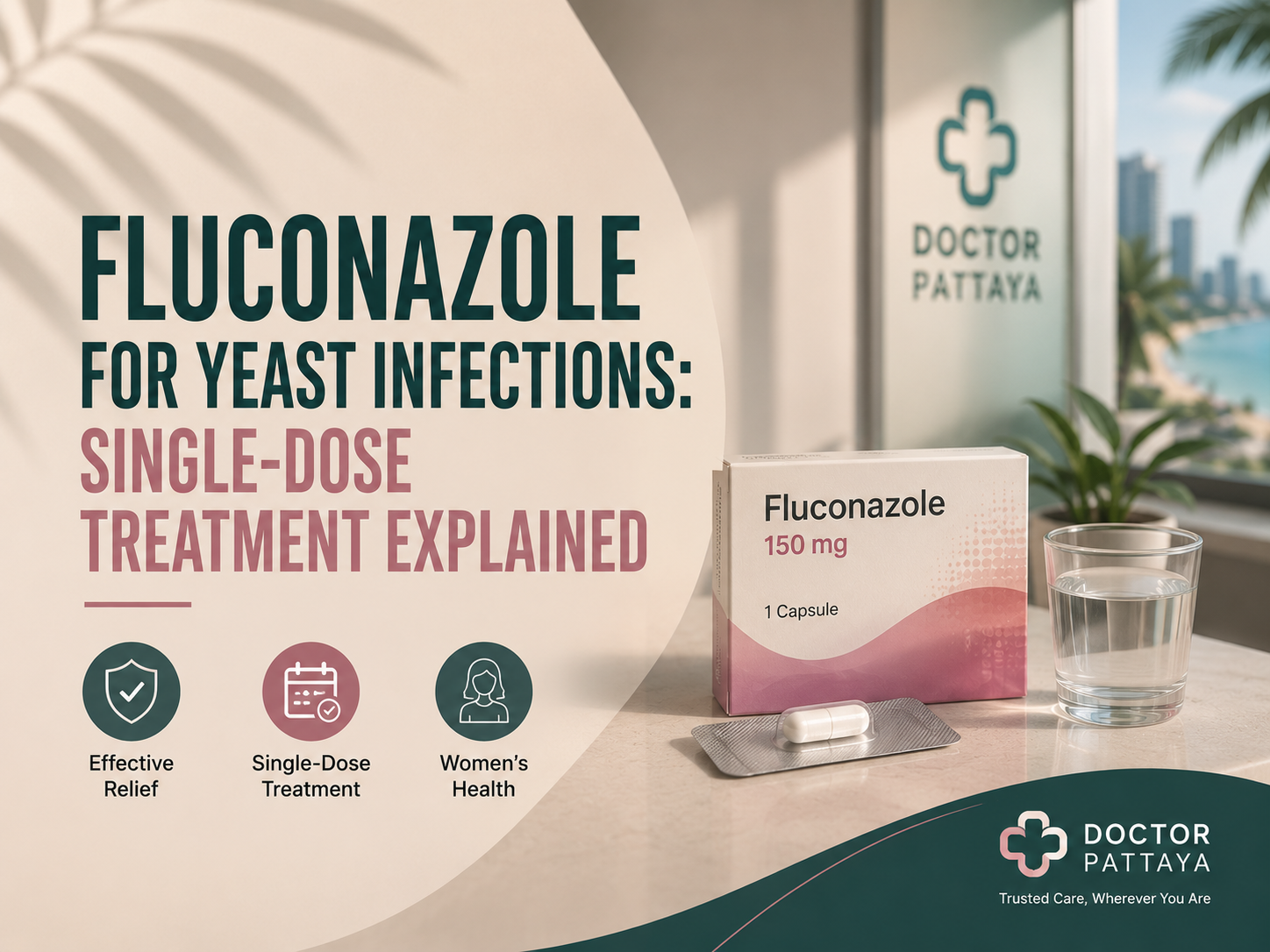
Fluconazole 150mg is a single oral tablet that treats most vaginal yeast infections within 24 to 72 hours. It targets the fungus directly and is available on prescription after a confirmed diagnosis. At Doctor Pattaya, we can confirm your diagnosis and prescribe fluconazole the same visit, any time of day or night.
You have been looking forward to this trip for months. Maybe it is your first week in Pattaya, or you are three weeks into an expat stretch and your body is finally protesting the heat. Either way, something feels off, and you already suspect what it is. A yeast infection on holiday is miserable, but it is also one of the most straightforward things we treat here.
Most vaginal yeast infections respond to a single 150mg fluconazole tablet. Symptoms ease within a day or two for most people. The slightly less good news: before you take anything, you want to be sure that is actually what you have. Several infections look almost identical to a yeast infection and need completely different treatment. Get that right first, and the rest is simple.

Why Yeast Infections Are More Common in Pattaya
The tropical climate here is genuinely hard on your body in ways you would not experience back home. Heat and humidity create the exact conditions that Candida, the fungus behind most yeast infections, thrives in. Add hours in a wet swimsuit after a day at Jomtien Beach, or long stretches in air-conditioned rooms with damp skin, and things tip further in the fungus’s favour.
Antibiotics are one of the biggest triggers we see at this clinic. A lot of tourists pick up traveller’s diarrhoea in the first few days and get a short antibiotic course for it. Those antibiotics do their job but also wipe out the good bacteria that keep Candida in check. A yeast infection two to four days later is an extremely common result. The same thing happens after antibiotics for a chest infection or a skin wound from a motorbike scrape.
Long-haul flights, disrupted sleep, and a diet that looks nothing like your usual routine all stress the immune system in ways that let Candida overgrow. For expats who have lived here for years, the trigger is often something else: a new antibiotic course, a hormonal change, or a period of stress. The climate is always in the background making things slightly easier for the fungus.
Yeast Infection or Something Else? Why Diagnosis Matters
This is the part I wish every patient read before walking into a pharmacy. Bacterial vaginosis, trichomoniasis, chlamydia, and gonorrhoea can all cause symptoms that feel like a yeast infection. Itching, discharge, and irritation are shared across all of them.
If you take fluconazole for bacterial vaginosis, nothing will happen. Fluconazole does nothing for bacteria, and the antibiotic you need for that condition does nothing for fungus. You lose a day or two, feel no better, and then have to start over. For an STI like chlamydia, the delay matters more.
This is why we check before we prescribe. The reassuring part: the check is fast. A clinical assessment, a look at the discharge, and a swab result often gives us a clear answer in the same visit. You are not waiting days to find out what is going on.

Getting a Confirmed Diagnosis at Doctor Pattaya
When you come in, we take a short history first. Where are you in your cycle, have you recently taken antibiotics, have you had this before. That alone narrows things down considerably. We then do a brief physical check and, where needed, a vaginal swab.
We look at the discharge under a microscope to confirm whether Candida is present, and we check vaginal pH, which helps us quickly distinguish a yeast infection from bacterial vaginosis. In most cases, we can confirm the diagnosis and hand you a prescription before you leave.
If we suspect an STI is also in the picture, we can run a full STD test at the same visit. You do not need a separate appointment. The whole process takes less than an hour for most patients.
Fluconazole 150mg: What It Does and How Quickly It Works
Fluconazole is an antifungal tablet. You take one dose and it keeps working for around two to three days. Most people notice real improvement within 24 to 48 hours. Itching often eases first. Discharge settles over the following day or two. By 72 hours, most mild to moderate infections are fully resolved.
Pattaya’s heat can keep things uncomfortable even as the infection clears. Stay dry, wear loose cotton underwear, and avoid tight swimwear while you recover. Some irritation for a few days after the fungus has gone is normal and not a sign that treatment has failed.
For a full explanation of how fluconazole single-dose treatment fits into broader sexual health care, our treatment page covers that in more detail.
Who Should Not Take Fluconazole
Fluconazole is safe for most adults, but there are real exceptions and your doctor needs to know about them before prescribing.
If you are pregnant, oral fluconazole is not recommended. Research has linked it to an increased risk of miscarriage and, at higher doses, to fetal developmental concerns. Topical antifungal cream is the safer option during pregnancy. If you are breastfeeding, the guidance is not one-size-fits-all and needs individual clinical review. Do not self-medicate in either situation.
Fluconazole also interacts with several common medications. If you take warfarin, statins, cyclosporine, or certain diabetes medications, fluconazole can raise their levels in the blood to a point that causes problems. It can also affect heart rhythm in people already vulnerable to that issue. Tell your doctor everything you are currently taking, including supplements.
Side Effects Worth Knowing About
Most people tolerate a single 150mg dose well. The most common side effects are mild: a headache, some nausea, stomach discomfort, or a brief bout of loose stools. These usually pass within a day.
Rarely, people have an allergic reaction. If you develop a rash, swelling, or difficulty breathing after taking fluconazole, seek medical attention immediately. Serious liver reactions are rare and generally associated with higher doses or longer courses, not a single tablet.
When One Dose Is Not Enough
For some people, one tablet clears things up and that is the end of it. For others, the infection comes back. If symptoms persist past 72 hours or return within a few weeks, a second 150mg dose taken 72 hours after the first is often the right next step.
Recurrent yeast infections, meaning four or more in a single year, are handled differently. Weekly fluconazole therapy for up to six months is a recognised approach that reduces how often infections return. Several of our long-term Pattaya expats manage this with us on an ongoing basis.
If standard treatment is not working, the cause may not be the most common Candida species. Some types do not respond to fluconazole and require a different antifungal. A swab culture can identify exactly what is involved if treatment fails. Our sexual health service handles this kind of follow-up without you needing to explain your history from scratch each time.
Fluconazole vs Topical Cream: Which Is Better?
Both work. The choice depends on your situation.
| Fluconazole 150mg (oral) | Topical cream (e.g. clotrimazole) | |
|---|---|---|
| Dose | Single tablet | Applied for 1, 3, or 7 days |
| Onset | 24 to 48 hours | 1 to 3 days |
| Convenience | Very high | Requires daily application |
| Prescription needed | Yes | Often available over the counter |
| Safe in pregnancy | No | Yes |
| Drug interactions | Yes | Minimal |
| Good for severe infection | Yes | Less effective |
For most tourists and expats who want a fast, straightforward solution, fluconazole is the preferred option. Topical cream is the right choice if you are pregnant, prefer not to take oral medication, or if fluconazole is not suitable for another reason.
Preventing Yeast Infections in Pattaya’s Climate
A few practical habits make a real difference here. Change out of wet swimwear promptly after being in the sea or pool. Staying in damp fabric for hours is one of the most consistent triggers we see among tourists. Cotton underwear breathes far better than synthetic fabric in this heat.
If you have just finished a course of antibiotics, a good probiotic for a week or two can help rebalance the bacteria that keep Candida in check. There is moderate evidence behind this and no real downside. Avoiding heavily scented soaps in the vaginal area also reduces irritation.
For expats on long-term antibiotic therapy for skin conditions or anything else, talk to your doctor about whether a concurrent antifungal makes sense. It often does.
If you think you have a yeast infection and want it confirmed and treated today, Doctor Pattaya is open 24 hours a day, seven days a week in South Pattaya. We see walk-in patients with no appointment needed. If you cannot come in, our doctors are available for hotel visits across Pattaya, Jomtien, Pratumnak, and Naklua. We confirm the diagnosis on the same visit and prescribe fluconazole if that is what you need. You do not have to spend your holiday guessing.
FAQ

Dr. Pipat Finn is the senior doctor at Doctor Pattaya Takecare Clinic, a 24/7 walk-in medical practice on South Pattaya Road, Chonburi, Thailand. They provide primary care, travel medicine, sexual health, vaccination, minor surgery, IV therapy, and emergency outpatient services for tourists, expatriates, and Pattaya residents. Languages: English and Thai. WhatsApp consultations: +66 95 073 5550. Call: +66 81 668 5557.