Clinically reviewed by Dr. Pipat Finn, M.D., Senior Doctor, Doctor Pattaya.
Last reviewed: August 2026
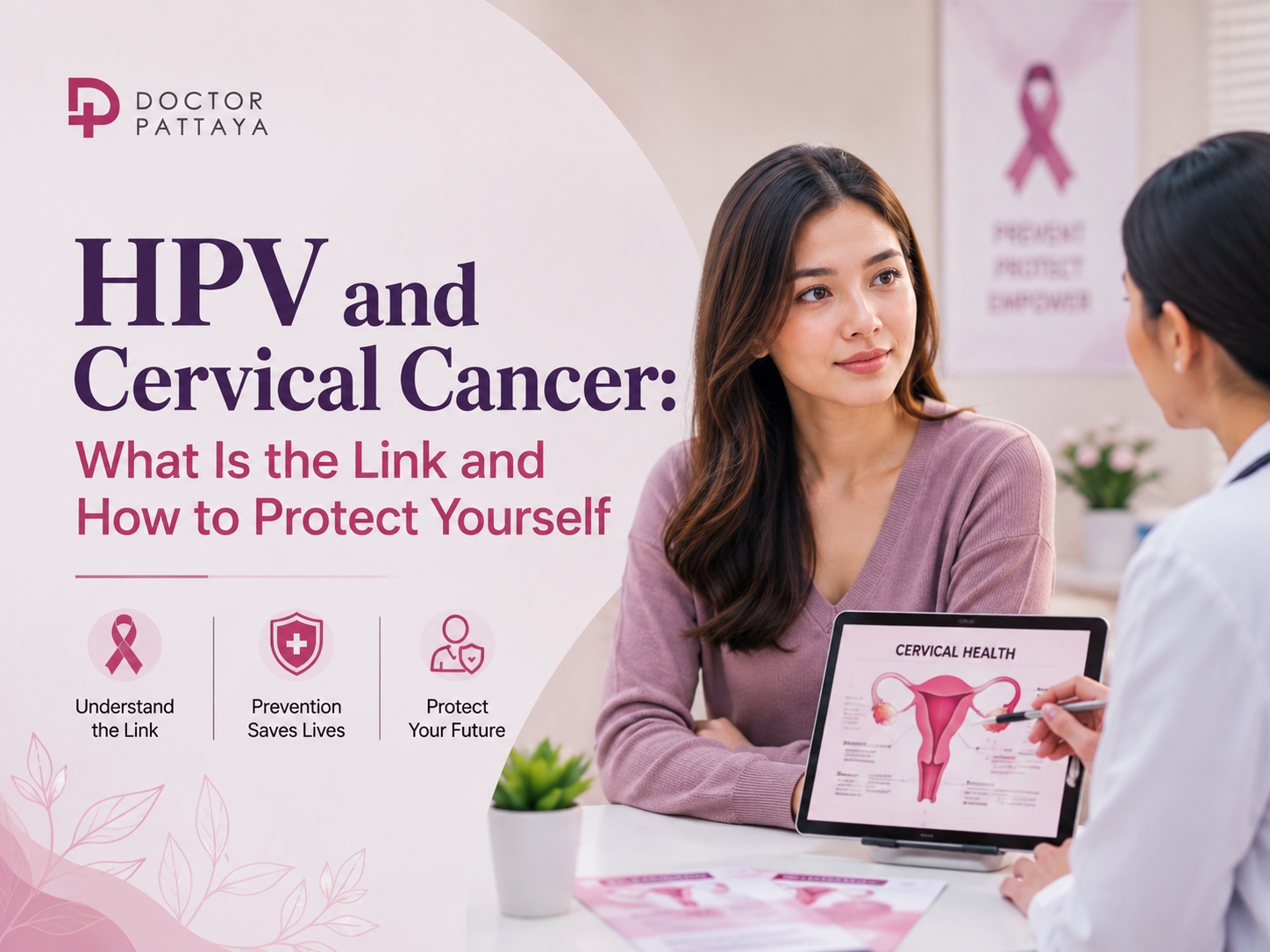
HPV, human papillomavirus, is the leading cause of cervical cancer worldwide. Most HPV infections clear on their own without causing harm. But persistent infection with high-risk strains, especially HPV 16 and 18, can slowly change cervical cells over years and eventually lead to cancer. Regular screening and vaccination are the two most effective ways to prevent this.
A lot of expat women I see at Doctor Pattaya tell me they have not had a Pap smear since leaving their home country. Some have never had one. Others came in because they recently tested positive for HPV and had no idea what that actually meant for their health. It happens constantly, whether someone is two weeks into a holiday or has lived here for years and just never got back into the routine they had back home.
HPV and cervical cancer are connected, but the connection is not as simple as "HPV equals cancer." Most women who have HPV will never develop cervical cancer. What matters is which strain you carry, how long it stays, and whether anyone is checking for early changes before they become a real problem. Here is what you need to know, and what you can do about it right now in Pattaya.

What Is HPV and Why Does It Matter for Cervical Health
HPV is the most common sexually transmitted infection in the world. There are over 100 types, and most of them are harmless. A smaller number, around a dozen, are classed as high-risk because they can, over time, cause cancer.
The two you hear about most are HPV 16 and HPV 18. Together, they account for the majority of cervical cancers. They do not cause symptoms. You cannot feel them. That is what makes them dangerous, and why screening matters so much.
How HPV Leads to Cervical Cancer
HPV does not cause cancer overnight. If an infection does not clear, the virus can slowly interfere with how cervical cells behave. Over years, this can lead to precancerous cell changes, sometimes called cervical dysplasia or CIN, where cells look and act abnormally but have not yet become cancer.
Left undetected and untreated, some of those changes can eventually cross into invasive cancer. The key word is "eventually." This process usually takes ten years or more. That gap is exactly why regular screening works so well at catching things early, long before they become serious.

Does HPV Always Lead to Cervical Cancer
No, and this is the misconception I spend the most time correcting. The vast majority of HPV infections are cleared by your own immune system, usually within one to two years. Your body handles it quietly and you never know it happened.
What we watch for is persistent infection. If a high-risk strain stays in your system and your immune system does not clear it, the risk of cervical changes increases over time. Even then, having persistent high-risk HPV does not mean cancer is inevitable. It means you need monitoring so that any early changes are caught and managed before they progress.
Who Is at Higher Risk and Why It Matters in Pattaya
Certain things make it harder for your immune system to clear HPV or make cervical changes more likely to progress. Smoking is one of the clearest. Immunosuppression, whether from HIV, long-term steroid use, or other conditions, raises the risk significantly. A long gap in screening history is also a real factor, because changes can develop undetected over years.
This last point matters a lot for the people I see here. Many tourists have never had a Pap smear, or had one years ago and lost track of follow-up. Long-term expats often fell out of the rhythm of home-country screening when they moved to Pattaya. Some assume that because they tested negative for other STIs, they would know if something were wrong. They would not. HPV almost never causes symptoms, and standard STI panels do not automatically include an HPV test.
Screening Options for HPV and Cervical Cancer
There are three main ways to screen for cervical cancer risk. A Pap smear collects cells from your cervix and checks them for abnormal changes. An HPV DNA test checks whether high-risk strains of the virus are actually present. A co-test does both at once, giving the clearest overall picture of your current risk.
At Doctor Pattaya, we offer all three. Results are handled confidentially. If something comes back abnormal, we talk you through what it means and what the next step is, including referral for colposcopy, a closer examination of the cervix, if that is needed. If you are on holiday and worried about timing, tourists on shorter stays are not left without a clear plan before they go.
Guidelines on which test suits you best depend on your age and history. A short consultation before we start is always worth it.
HPV-Related Cancers Beyond the Cervix
Cervical cancer gets most of the attention, but HPV causes other cancers too. These include cancers of the vagina, vulva, anus, penis, and throat. Throat and mouth cancers linked to HPV have been increasing in recent years and affect both men and women.
This means HPV vaccination and screening are not just women’s health issues. Men, people in same-sex relationships, and anyone who is sexually active can carry high-risk HPV and face related cancer risks. The vaccine protects against the most dangerous strains regardless of sex.
HPV Vaccination in Pattaya: Who Should Get It and When
The vaccine we use is Gardasil 9. It covers nine HPV strains, including 16 and 18, the two most strongly linked to cervical cancer, as well as strains that cause genital warts. It does not treat an existing infection. It prevents new ones.
The vaccine is most effective before any sexual exposure, which is why it is typically recommended in early adolescence. Catch-up vaccination is recommended up to age 45 in many guidelines, and evidence supports benefit for some people even beyond that. I see a lot of expats in Pattaya who were never vaccinated as teenagers and assume they have missed their chance. In most cases, they have not. Come in, tell me your history, and we can decide together.
If you have already tested positive for HPV, the vaccine may still offer partial protection against strains you have not yet been exposed to. It is worth a conversation. You can find out more about our approach to sexual health and protection on our STD treatment and sexual health page.
Getting Tested and Vaccinated at Doctor Pattaya
Walk-ins are welcome any time, around the clock. If you are at a hotel in Jomtien, Pratumnak, or Naklua and prefer not to travel, a doctor visit to your hotel is available. Everything is handled privately and without judgment.
A standard visit for HPV testing and cervical cancer screening at Doctor Pattaya includes a brief consultation, the swab or smear, and a clear explanation of results. If your result flags anything, you will not be handed a printout and sent on your way. We talk it through and plan the next step together, whether that is monitoring, referral, or vaccination. If you have been putting this off, now is a reasonable time to stop putting it off.
Doctor Pattaya offers confidential HPV testing, Pap smears, co-testing, and Gardasil 9 vaccination, available 24 hours a day, seven days a week. Walk-ins are welcome at our South Pattaya clinic, and doctor hotel visits are available across Pattaya, Jomtien, Pratumnak, and Naklua. Whether you are on holiday, new to the area, or a long-term expat overdue for a check, we are here when you need us. Visit our sexual health and STI care page to learn more or contact us directly.
Can I get an HPV test and Pap smear in Pattaya, and how long do results take?
Yes. Doctor Pattaya offers HPV DNA testing, Pap smears, and co-testing. Results are typically available within 24 to 48 hours. If you are on holiday and your result needs follow-up, we will explain your options clearly before you leave.
I have HPV. Does that mean I will get cervical cancer?
Almost certainly not. Most HPV infections are cleared by your immune system within one to two years without any treatment. The risk of cervical cancer comes from persistent infection with a high-risk strain over many years, and even then, regular screening catches early changes long before cancer develops.
Is it too late to get the HPV vaccine if I am over 26?
Not necessarily. Gardasil 9 is recommended up to age 45 in many guidelines and may still offer meaningful protection depending on your history. Book a quick consultation at Doctor Pattaya and we can work out whether vaccination makes sense for you.
What are the early signs of cervical cancer I should watch for?
Here is the uncomfortable truth: early cervical cancer and precancerous changes almost never cause any symptoms at all. By the time bleeding after sex, unusual discharge, or pelvic pain appears, the disease may already be more advanced. That is the strongest argument for getting screened before you notice anything.
Do condoms protect against HPV?
Condoms reduce the risk of HPV transmission, but they do not eliminate it. HPV spreads through skin-to-skin contact, including areas not covered by a condom. Vaccination combined with regular cervical screening is the most reliable protection available.
I tested negative for STIs recently. Does that mean I do not have HPV?
Not necessarily. Standard STI panels do not automatically test for HPV. You need a specific HPV DNA test or Pap smear to check for high-risk strains or abnormal cervical cells. If you have not had one of those, you do not know your HPV status.
Can men be affected by HPV and should they get vaccinated?
Yes. Men can carry high-risk HPV and are at risk of HPV-related cancers including penile, anal, and throat cancers. Gardasil 9 is recommended for men as well as women. Come in and we can talk through your personal history and whether vaccination is right for you.

Dr. Pipat Finn is the senior doctor at Doctor Pattaya Takecare Clinic, a 24/7 walk-in medical practice on South Pattaya Road, Chonburi, Thailand. They provide primary care, travel medicine, sexual health, vaccination, minor surgery, IV therapy, and emergency outpatient services for tourists, expatriates, and Pattaya residents. Languages: English and Thai. WhatsApp consultations: +66 95 073 5550. Call: +66 81 668 5557.