Clinically reviewed by Dr. Pipat Finn, M.D., Senior Doctor, Doctor Pattaya.
Last reviewed: November 2026
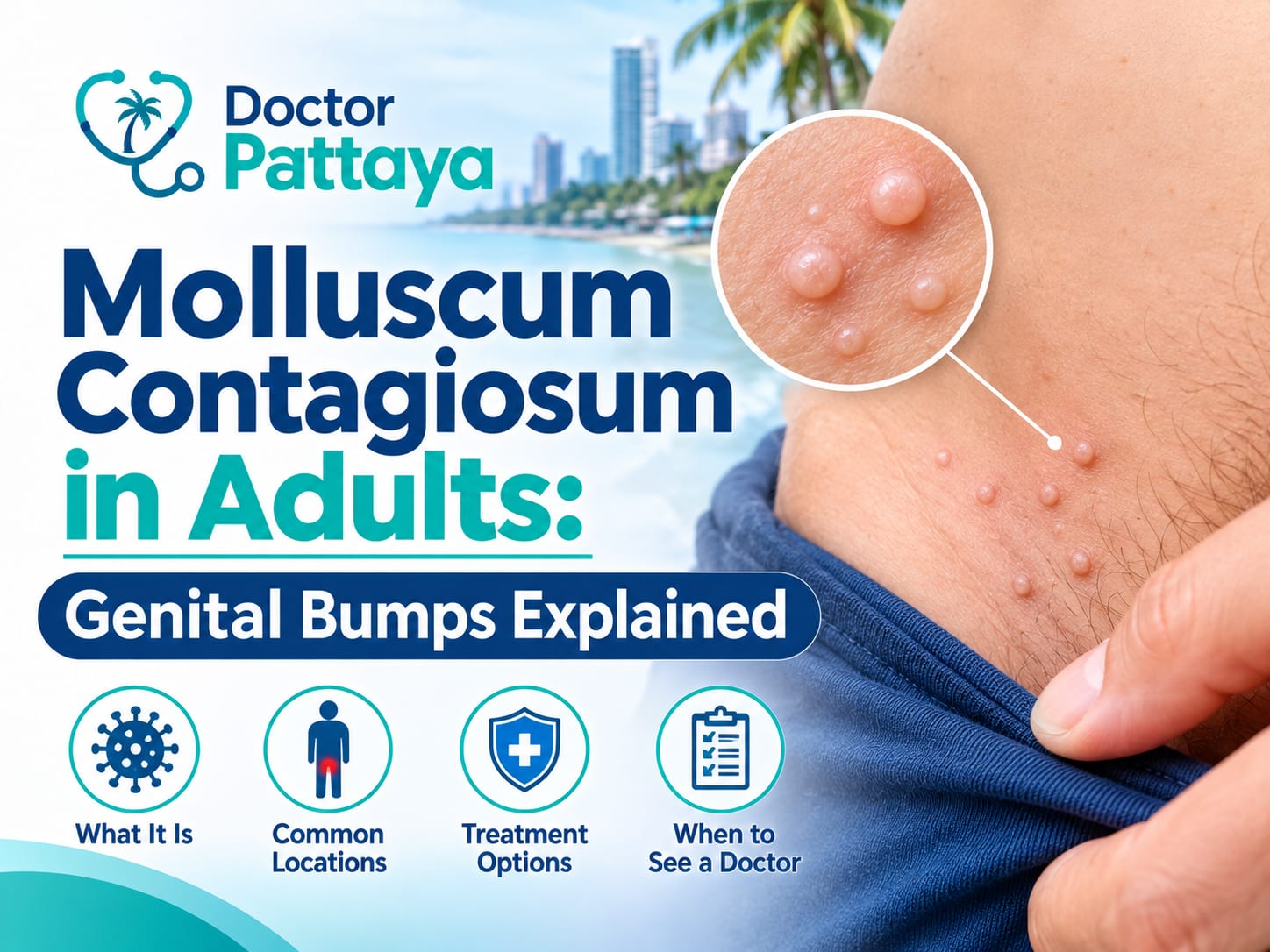
Molluscum contagiosum is a viral skin infection that causes small, pearly, dome-shaped bumps on or around the genitals in adults. It spreads through direct skin-to-skin contact, including sexual contact. It can clear on its own over months, but treatment removes lesions faster and reduces the risk of spreading it to a partner. If you have genital bumps, a same-day assessment will confirm the diagnosis and rule out other infections.
You noticed something a few days after a night out near Walking Street, or maybe it showed up a couple of weeks into your stay and you have been Googling it ever since. Small bumps, slightly shiny, sitting just above or around the genitals. No pain, no discharge, but they are there, and you want to know what they are.
Molluscum contagiosum is a viral skin infection. In adults, genital molluscum is usually sexually transmitted. The good news: it is treatable, it is not dangerous, and you can get it sorted the same day at Doctor Pattaya without an appointment. The less convenient news: because it shows up in the same area as other infections, you should get a proper look and an STI screen at the same visit.

What Molluscum Looks Like
The bumps are small, typically a few millimetres across. They are flesh-coloured or slightly pearly, dome-shaped, and firm. The feature that sets them apart from almost everything else is a tiny dimple in the centre, called central umbilication. Not every lesion shows it clearly, but when you see it, it is hard to mistake.
In adults, you usually find them on the lower abdomen, inner thighs, groin, shaft of the penis, labia, or pubic area. They do not usually appear on the palms or soles. They rarely hurt or itch, though some people notice mild irritation.
Pearly penile papules, a normal anatomical variation in some men, can look similar at first glance. So can early herpes or folliculitis. A doctor who sees these regularly can tell the difference quickly, and a clinical assessment is always the right call before assuming what you have.
Molluscum Versus Genital Warts
Genital warts and molluscum are both viral, both sexually transmitted, and both show up in the same area. That is where the similarity ends.
Genital warts are caused by certain strains of HPV. They tend to be flatter, irregular in shape, and sometimes rough or cauliflower-like in texture. They do not have the central dimple that molluscum does. Warts can recur after removal, because HPV can persist in surrounding tissue even after the visible lesion is gone.
Molluscum bumps are rounder, smoother, and more uniform. New ones can appear if the virus spreads to nearby skin, but a fully removed or resolved lesion does not come back. If you are unsure which you have, the answer is the same: get it looked at. Our page on molluscum vs genital warts explains how we distinguish the two.

How Molluscum Contagiosum Spreads in Adults
In adults, genital molluscum spreads mainly through sexual contact, direct skin to skin. You do not need penetrative sex. Close contact with affected skin is enough.
It also spreads through autoinoculation. That means touching or scratching active lesions and then touching another part of your body. Shaving around active molluscum is a real risk here: the blade can carry the virus across the groin and thighs. Avoid shaving over active lesions until they are treated or resolved.
Condoms reduce but do not eliminate the risk, because molluscum can affect skin that a condom does not cover.
Why Genital Molluscum Warrants an STI Check
Molluscum showing up on the genitals means there was skin-to-skin sexual contact. That same contact is the route for other infections too. Getting tested at the same visit is clinically sensible, not excessive.
At Doctor Pattaya, we recommend an STI screen alongside any genital molluscum assessment. Our confidential STD testing service covers a full panel including chlamydia, gonorrhoea, syphilis, herpes, hepatitis B, hepatitis C, and HIV. If you are a tourist with a limited stay, doing this in one visit saves you coming back. If you are an expat who has been putting it off, now is a practical time.
For anyone with a potential HIV exposure in the last 72 hours, that is a separate urgency. PEP needs to start quickly. Our PEP and PrEP page has the details, and we can discuss this at the same visit.
Treatment Options for Molluscum Contagiosum
Molluscum does clear on its own. In healthy adults, the immune system eventually clears it without treatment. The timeline, however, typically runs to months.
If you are on a two-week holiday, that timeline is not useful. If you are an expat who does not want visible genital lesions or wants to avoid passing them to a partner, waiting is not always the right call. Treatment removes what is there now and reduces spread.
The three main in-clinic options are cryotherapy, curettage, and cantharidin. Cryotherapy uses liquid nitrogen to freeze each lesion, causing a brief stinging sensation. Curettage involves scraping the lesion out under local anaesthetic, so discomfort is minimal. Cantharidin is a topical agent applied in clinic that causes the lesion to blister and detach, with some localised irritation for a few hours after.
All three carry a small risk of temporary skin darkening or scarring, which your doctor will walk through with you before any procedure.
If you have many lesions, or if your immune system is weakened for any reason, treatment is more pressing. This includes people living with untreated HIV, those on immunosuppressive medications, and anyone with a condition that reduces immune function. In these cases, early treatment and a full clinical review matter.
What Happens If You Leave It Untreated
Leaving molluscum untreated is a valid choice for a healthy adult who is not sexually active and is not concerned about spread. The virus will clear eventually.
For most adults in Pattaya, that is not the full picture. Untreated molluscum stays contagious. It can spread to a partner. It can spread across your own groin and thighs, especially if you shave that area. And it leaves open the question of whether something else is going on alongside it.
Get it assessed. A short visit to Doctor Pattaya, whether you walk in or we come to your hotel in Jomtien or Naklua, gives you a confirmed diagnosis, a treatment plan if you want one, and a clear answer on whether anything else needs checking. You can also find a doctor near Pratumnak Hill if you are staying in that part of town.
If you have noticed small genital bumps and want a straight answer today, Doctor Pattaya is open 24 hours, seven days a week, with no appointment needed. We see tourists, expats, and local residents for genital skin concerns, same-day STI screening, and in-clinic molluscum treatment including cryotherapy and curettage. Hotel visits are available across Pattaya, Jomtien, and Naklua. Walk in or book a hotel visit through doctorpattaya.com.
Frequently Asked Questions
References
- Centers for Disease Control and Prevention. Clinical Overview of Molluscum Contagiosum. CDC, 2024.
- NHS. Molluscum contagiosum. NHS, 2023.
- Drugs.com. Cantharidin (Topical) Monograph. Drugs.com, 2024.
- Tyring SK et al. Recurrence of genital warts in pre-HPV vaccine era after laser treatment. Arch Gynecol Obstet. 2019.
The information in this article is for educational purposes only and does not constitute medical advice. It should not be used to self-diagnose or replace a consultation with a qualified physician. If you have concerns about your health, contact a licensed medical professional. For appointments at Doctor Pattaya, visit doctorpattaya.com.

Dr. Pipat Finn is the senior doctor at Doctor Pattaya Takecare Clinic, a 24/7 walk-in medical practice on South Pattaya Road, Chonburi, Thailand. They provide primary care, travel medicine, sexual health, vaccination, minor surgery, IV therapy, and emergency outpatient services for tourists, expatriates, and Pattaya residents. Languages: English and Thai. WhatsApp consultations: +66 95 073 5550. Call: +66 81 668 5557.