Clinically reviewed by Dr. Pipat Finn, M.D., Senior Doctor, Doctor Pattaya.
Last reviewed: August 2026
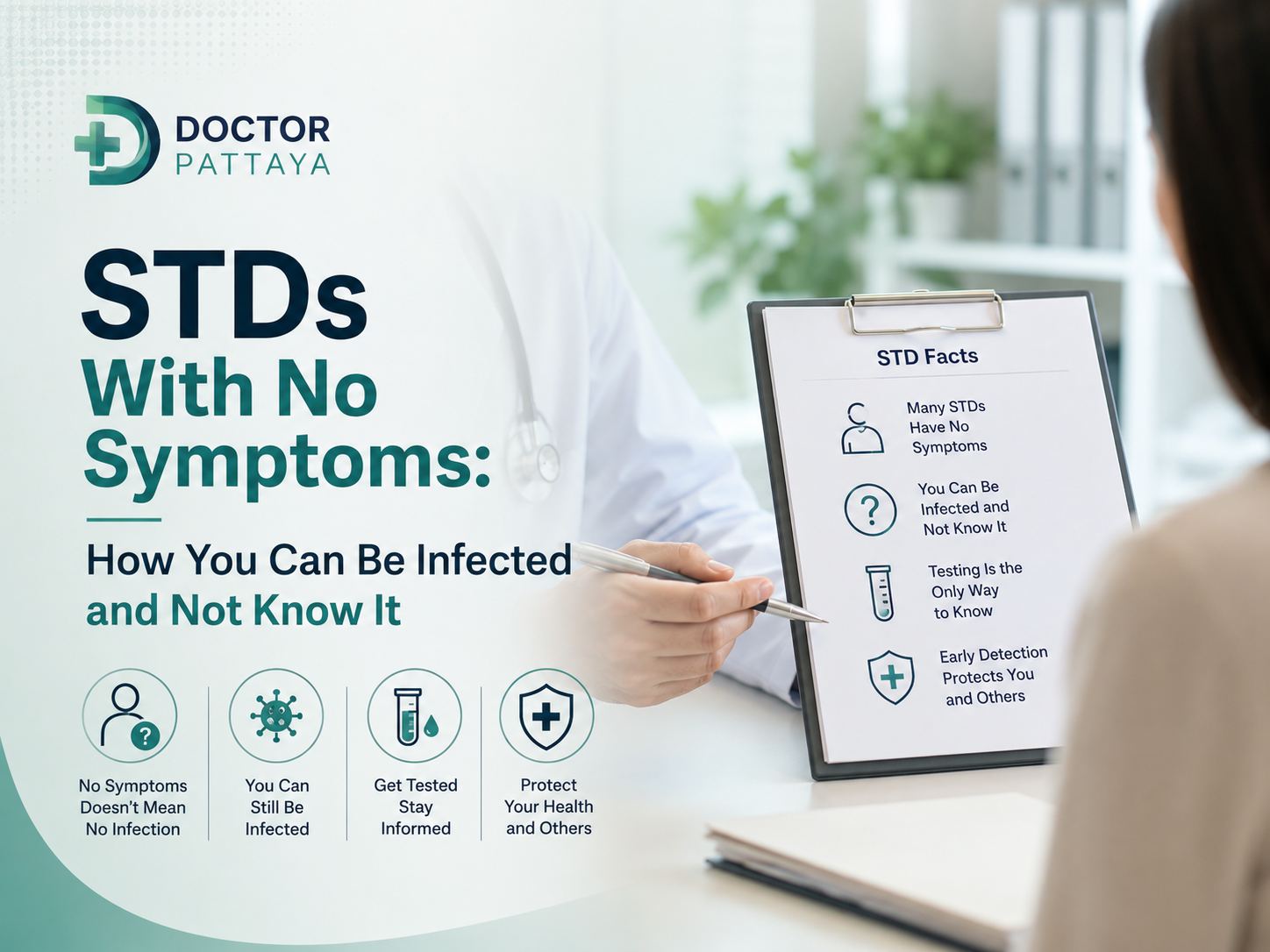
Many STDs produce no symptoms at all, sometimes for months or years. Chlamydia, gonorrhea, herpes, HPV, and early HIV can all be present without any signs. You can carry and transmit these infections without knowing. The only way to be sure is to get tested.
You feel fine. No discharge, no sores, no burning, nothing unusual. So you figure you are in the clear. That is the most dangerous assumption you can make about sexual health. Some of the most common STDs are built to stay quiet. They do not announce themselves. They just spread and, over time, cause damage.
I see this constantly in Pattaya. A tourist comes in before flying home, almost embarrassed to ask for a test because they feel perfectly well. Or an expat who had a regular partner for months, no symptoms, assumes they are fine, then tests positive. Feeling healthy is not the same as being infection-free. If there is any chance of recent exposure, the only thing that tells you the truth is a test.

Which STDs Can Have No Symptoms at All
This is the list that surprises most people. These are not rare infections. They are among the most common ones we test for.
Chlamydia
Chlamydia is probably the most common silent STD we see. Most people who have it notice nothing. No pain, no discharge, no discomfort. It can sit quietly in the body for months and cause real damage to the reproductive system the whole time.
Gonorrhea
Gonorrhea used to be known for obvious symptoms. It still is, sometimes. But a significant number of cases, especially in women, produce no symptoms at all. Antibiotic-resistant gonorrhea is increasingly common in Southeast Asia, which makes early detection and proper treatment more important than ever.
Herpes (HSV-1 and HSV-2)
Most people with herpes never have a classic outbreak. The virus stays dormant and can shed from the skin without causing any visible sores. That means you can transmit it to a partner even when you feel completely normal and have nothing to see or feel.
HPV
The vast majority of HPV infections cause no symptoms at all. Many clear on their own, but certain strains can lead to genital warts or, over years, cervical cancer in women. There is no HPV test available in routine practice for men. For women, cervical screening is the way to catch it early.
HIV
Early HIV can cause a brief flu-like illness or nothing at all. After that, the virus can remain silent for years while still being transmissible. Knowing your status matters, especially after any higher-risk exposure.
Syphilis
Early syphilis sometimes causes a painless sore that heals on its own. Many people never notice it. The infection then enters a latent stage with no symptoms but continues to progress internally, and if left untreated, it can eventually damage the heart, brain, and nervous system.
Trichomoniasis
Trichomoniasis is one of the most under-discussed STDs. A large proportion of people who have it experience no symptoms. It is fully treatable, but most people never know to ask for the test.
Can You Transmit an STD When You Feel Completely Fine
Yes. This is the part that really matters.
With bacterial infections like chlamydia and gonorrhea, you can spread them through sexual contact whether or not you have symptoms. With herpes, the virus can be active on the skin surface without visible sores, and this happens regularly between outbreaks. With early HIV, transmission risk can be significant even before any symptoms appear.
Feeling fine does not create a barrier to transmission. The absence of symptoms is not the absence of infection.

Why Silent STDs Are Especially Dangerous If Left Untreated
The risk is not just about how you feel today. It is about what builds up quietly over time.
In women, untreated chlamydia and gonorrhea can cause pelvic inflammatory disease, which is an infection of the uterus and fallopian tubes. This can lead to chronic pain, infertility, or ectopic pregnancy, where a fertilised egg implants outside the womb. Ectopic pregnancy is a medical emergency. In men, the same infections can cause epididymitis, a painful swelling behind the testicles, and can affect fertility.
HIV progresses to AIDS without treatment. Untreated syphilis can cause serious neurological and cardiovascular damage years later. HPV can lead to cervical cancer over time, which is why regular cervical screening matters.
Having one untreated STD also makes it easier to contract others, including HIV. This is not a reason to panic. It is a reason to test.
STD With No Symptoms: Men Versus Women
The risk is not equal, and it is worth knowing why.
Women are more likely to have completely silent infections with chlamydia and gonorrhea. The anatomy makes it easier for these bacteria to infect the cervix and upper reproductive tract without producing obvious signs. By the time symptoms appear, if they ever do, PID may already have caused damage. Men are somewhat more likely to notice something, but not always. Rectal and throat infections from gonorrhea and chlamydia are common in both sexes and almost always produce no symptoms at all.
How Soon After Exposure Should You Get Tested
Testing too early can give a false negative because the infection has not yet multiplied enough to be detected. The window depends on what you were exposed to.
| Infection | Earliest Reliable Test Window |
|---|---|
| Gonorrhea | 2 to 7 days after exposure |
| Chlamydia | 7 to 21 days after exposure |
| HIV (NAAT test) | 10 to 33 days after exposure |
| HIV (antibody test) | 23 to 90 days after exposure |
| Syphilis | 21 to 90 days after exposure |
| Herpes (HSV antibody) | 12 to 16 weeks for full accuracy |
| Hepatitis B | 6 weeks after exposure |
If you are in Pattaya and unsure about timing, come in and talk to us first. At Doctor Pattaya, we can look at the specific exposure and recommend the right test at the right time, so you are not leaving with a false result that gives you the wrong reassurance.
Why Feeling Fine on Holiday Is Not a Green Light
This is something I want to say clearly, because it comes up every single week here in Pattaya.
A lot of tourists have a sexual encounter, feel completely normal the next day, and decide there is nothing to worry about. The logic feels sound. But the infections that cause the most long-term harm are exactly the ones that cause no symptoms. You fly home, life gets busy, you do not think about it again. Then months later, something prompts testing. By then, the window for certain interventions, like PEP for HIV, has long closed, treatment has been delayed, and in some cases, you have unknowingly passed an infection to someone else.
If you had any unprotected sex during your time here, the sensible move is to get tested before you fly home. It takes less than an hour. If everything comes back clear, you leave knowing that for certain rather than hoping.
How We Test for STDs With No Symptoms at Doctor Pattaya
The tests are straightforward. For chlamydia and gonorrhea, we use a nucleic acid amplification test, known as a NAAT, which picks up very small amounts of bacteria. Depending on the exposure, we may swab the genital area, throat, or rectum, as well as or instead of a urine sample. For HIV, syphilis, and hepatitis, we use a blood draw.
Most results are back within 24 to 48 hours. Everything is completely confidential. We do not share anything with hotels, insurance companies, employers, or anyone else unless you specifically ask us to.
Doctor Pattaya is open 24 hours, seven days a week, with no appointment needed. You can walk in to our South Pattaya clinic, call us, or book a doctor hotel visit across Pattaya, Jomtien, Naklua, and Pratumnak. If you are anxious about getting tested, that is normal. We see this every day. There is no judgment here. Our sexual health and STD treatment page covers the full range of testing and treatment options we offer.
Who Should Get Tested and How Often
If you are sexually active and have had any unprotected sex, you should get tested. That applies whether you have symptoms or not.
For most sexually active adults with multiple partners, annual testing is a reasonable baseline. If you have more frequent casual partners, testing every three to six months is sensible. If you are in a new relationship and considering stopping condom use, both partners testing beforehand is the right approach.
For expats living in Pattaya long-term, I recommend building a routine sexual health check into your regular health maintenance, the same way you would a blood pressure check or a dental visit. It does not have to be a big event. It is just part of looking after yourself.
Worried about a recent exposure? Not sure if you need testing? Doctor Pattaya offers confidential, same-day STD screening with no appointment needed, 24 hours a day, seven days a week. We test for chlamydia, gonorrhea, syphilis, HIV, herpes, hepatitis, and more. Walk in to our South Pattaya clinic, call us, or book a hotel visit anywhere in Pattaya, Jomtien, or Naklua. Visit doctorpattaya.com or call us now.
Frequently Asked Questions

Dr. Pipat Finn is the senior doctor at Doctor Pattaya Takecare Clinic, a 24/7 walk-in medical practice on South Pattaya Road, Chonburi, Thailand. They provide primary care, travel medicine, sexual health, vaccination, minor surgery, IV therapy, and emergency outpatient services for tourists, expatriates, and Pattaya residents. Languages: English and Thai. WhatsApp consultations: +66 95 073 5550. Call: +66 81 668 5557.