Clinically reviewed by Dr. Pipat Finn, M.D., Senior Doctor, Doctor Pattaya. Last reviewed: August 2026
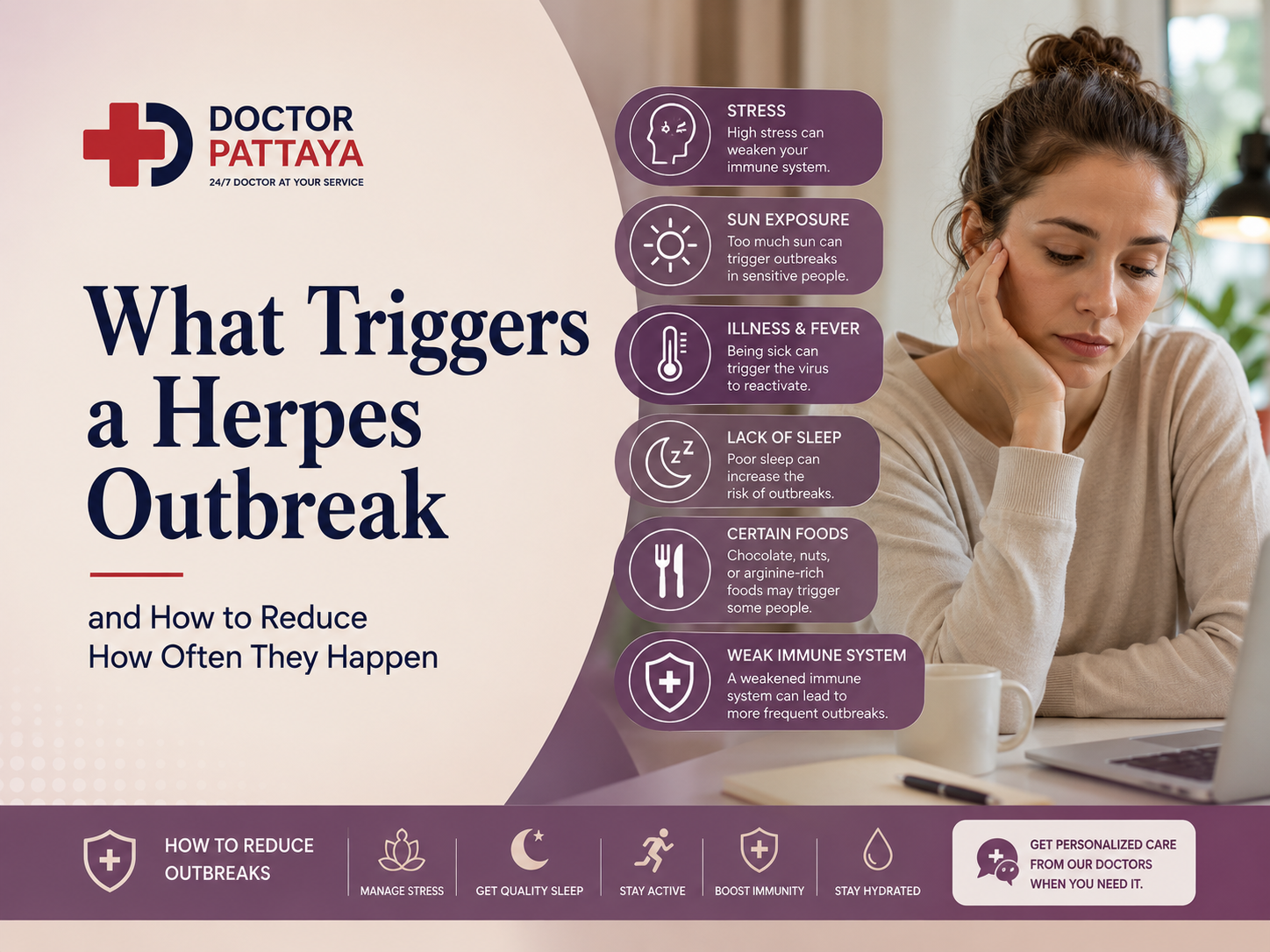
Herpes outbreaks are triggered when the dormant virus reactivates, usually because something has lowered your immune defences. The most common triggers include stress, illness, lack of sleep, UV exposure, alcohol, hormonal changes, and physical friction. Knowing your personal triggers and acting early, including taking antiviral medication at the first warning sign, can significantly reduce how often outbreaks happen and how bad they get.
You were three days into a good holiday. Beach, food, a few late nights. Then came that familiar tingling, and now you are sitting in your hotel room in Pratumnak wondering what set it off this time.
We see this regularly at Doctor Pattaya. Someone who has managed their herpes perfectly well at home arrives here, and within a few days, a week of sun, alcohol, broken sleep, and travel fatigue stacks up all at once. The result is an outbreak mid-trip. The good news is that most outbreaks can be cut short if you act quickly, and once you understand what sets yours off, you can reduce how often it happens.

Why the Herpes Virus Reactivates
Once you have HSV, either type 1 or type 2, the virus stays in your body permanently. It sits quietly in your nerve cells, doing nothing, for weeks or months at a time. Your immune system is what keeps it there. When that system gets stretched, the virus travels back to the skin surface and causes an outbreak.
Stress, sunburn, fever, and poor sleep all lower your immune defences through similar pathways. They are not separate, unrelated risks. They work through the same door, and herpes knows how to use that.
One thing many people do not realise: even with no visible sores, the virus can still pass to a partner. This is called asymptomatic shedding, and it happens when you feel completely fine. It is worth keeping in mind even between outbreaks.
The Main Herpes Outbreak Triggers
Stress and Sleep Deprivation
Stress is the trigger I hear about most in clinic. It does not have to be dramatic. A long-haul flight, a new relationship, a packed social schedule before the holiday even starts. Your immune system runs on sleep, and cutting it short repeatedly gives the virus an opening.
Travel compounds this. Jet lag shifts your sleep cycle. Your body is managing a new time zone, a new environment, and often a busier few days than usual, all at once.
Fever and Illness
Any illness that raises your body temperature can trigger a reactivation. This includes a cold, a stomach bug, or a flu. If you feel unwell and have a history of herpes outbreaks, start watching for early warning signs straight away.
UV Exposure and Sunlight
UV radiation is a well-established trigger for oral herpes. Long days at Jomtien Beach or by a pool in the Pattaya heat without lip SPF is a real risk if you carry HSV-1. High sun exposure also contributes to immune fatigue more broadly, which matters for both types.
Hormonal Changes
Many women notice outbreaks tied to their menstrual cycle. Hormone levels shift in the days before a period, and for some people, that is enough to tip the balance. If your outbreaks follow a monthly pattern, tell your doctor. It changes the conversation about suppressive therapy.
Physical Friction
Friction to the genital area can irritate the skin enough to trigger a reactivation. This includes sex without adequate lubrication, tight clothing, prolonged cycling, or irritation from waxing. Loose, breathable underwear and appropriate lubrication reduce this risk.

Pattaya-Specific Triggers: Holidays, Heat, and the Nightlife Factor
This is where Pattaya is genuinely different from sitting at home. A typical week here stacks multiple triggers on top of each other, and that is the real problem.
Tropical UV intensity near the water delivers a much higher load than most visitors are used to. Heat and humidity increase skin moisture and friction in skin folds, adding another physical stressor on top.
Then there is alcohol. Heavy drinking suppresses immune function, dehydrates the skin and mucosal surfaces, and wrecks sleep quality. When those three effects hit every night for several days in a row, the cumulative pressure on your immune system is significant.
Travel fatigue and jet lag round it out. Arriving from Europe or Australia and immediately heading into a full social schedule does not give your body time to settle. None of this means you cannot enjoy Pattaya. It means knowing your risk points so you can manage them.
Spotting the Warning Signs Before an Outbreak Starts
Most people get early warning signs twelve to seventy-two hours before any blisters appear. These include tingling, burning, itching, or a dull nerve ache at or near the usual outbreak site. Some people also notice swollen glands or a vague flu-like feeling.
This window matters. If you have antiviral medication available, starting it at this stage rather than waiting for blisters can significantly reduce how severe the outbreak gets and how long it lasts. Think of your antivirals like a fire extinguisher: you want them within reach before you see the flames.
If you are travelling without antivirals, contact a clinic as early as possible. A prescription started at the tingle stage is far more effective than one started three days later.
How to Track Your Personal Triggers
Not everyone shares the same triggers, and working out your own pattern is genuinely useful. After each outbreak, note the date it started, your sleep quality in the days before, alcohol intake, any illness, sun exposure, stress level, and where you were in your cycle if relevant.
After three or four outbreaks, patterns become clear. You might find you are fine all year except when you travel. You might notice yours follow a period or a heavy work week. That information changes what you do about it and helps a doctor recommend the right approach for you.
Reducing Outbreak Frequency: Antivirals, Lifestyle, and Suppressive Therapy
Consistent sleep, moderate alcohol, SPF lip protection in strong sun, and managing stress all reduce outbreak frequency. These are not dramatic changes. They are maintenance, and the evidence supports them.
Antiviral medication is the other side. There are two approaches, and the difference matters. Episodic antivirals are taken at the start of an outbreak, ideally at the prodrome stage, and suit people who get outbreaks infrequently. Daily suppressive therapy is a low-dose antiviral taken every day regardless of symptoms. It is recommended for people with six or more outbreaks per year, those with an uninfected partner, or anyone whose outbreaks significantly affect daily life.
The right choice depends on your outbreak frequency, your lifestyle, and your relationship situation. It is not complicated, but it does need a proper conversation. Doctor Pattaya can review your history and prescribe either approach in a single confidential appointment, including same-day walk-ins. If you want to read more about reducing how often herpes outbreaks happen, that is a good place to start.
When to See a Doctor in Pattaya
If this is your first suspected outbreak, get seen. A clinical assessment can confirm the diagnosis quickly, and starting treatment early makes a real difference. Do not wait three days hoping it resolves on its own.
If you already have a diagnosis and are on antivirals, a walk-in works well for a prescription top-up, a change in management, or if an outbreak is unusually severe or not settling as expected. Our sexual health service at Doctor Pattaya is confidential. The clinic is open 24/7 in South Pattaya, and hotel visits are available across Pattaya, Jomtien, and Naklua if you cannot get in.
Come in, get sorted, and get back to your holiday.
Having a herpes outbreak on holiday does not have to derail your trip, and frequent outbreaks do not have to be your normal. Doctor Pattaya’s clinic is open 24/7 in South Pattaya, with confidential walk-in appointments for herpes assessment, antiviral prescriptions, and suppressive therapy. Hotel visits are available across Pattaya, Jomtien, and Naklua. If you are having an outbreak now or want to talk about reducing how often they happen, come in or call us today.
Frequently Asked Questions

Dr. Pipat Finn is the senior doctor at Doctor Pattaya Takecare Clinic, a 24/7 walk-in medical practice on South Pattaya Road, Chonburi, Thailand. They provide primary care, travel medicine, sexual health, vaccination, minor surgery, IV therapy, and emergency outpatient services for tourists, expatriates, and Pattaya residents. Languages: English and Thai. WhatsApp consultations: +66 95 073 5550. Call: +66 81 668 5557.