Clinically reviewed by Dr. Pipat Finn, M.D., Senior Doctor, Doctor Pattaya.
Last reviewed: September 2026
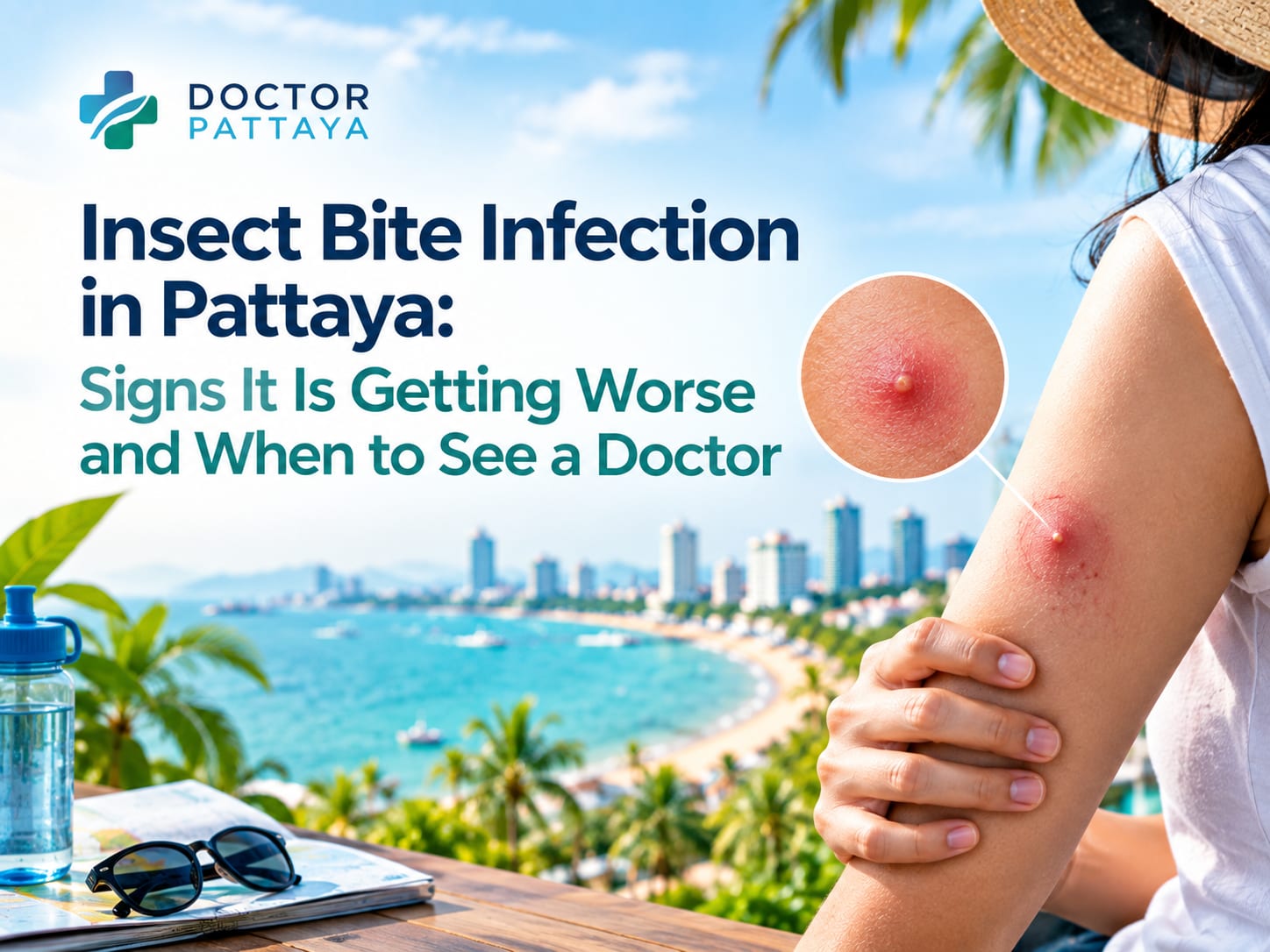
An insect bite in Pattaya can go from minor nuisance to spreading skin infection faster than you might expect. The key warning signs are redness that keeps growing, pain that worsens after 48 hours, pus or fluid at the bite site, and red streaks tracking away from the wound. If you notice any of these, get it looked at the same day. Doctor Pattaya is open 24/7 for exactly this kind of walk-in.
You woke up this morning with a bite you do not remember getting. Maybe it happened last night at a beach bar in Jomtien, over a sunset drink near Pratumnak Hill, or during a long dinner on the hotel terrace. It was small and itchy at first. Now it is red, a little swollen, and you are not sure whether that is normal or something worth worrying about.
Here is what I tell patients who come in with exactly this situation: most bites in Pattaya stay minor. But some do not, and the ones that turn nasty tend to do it fast in this climate. The heat and humidity here mean a scratched or broken bite can pick up bacteria and escalate within 24 to 48 hours. Knowing which signs to watch for, and when to stop waiting and come in, could save you several days of your holiday.
Why Insect Bites Get Infected Faster in Pattaya’s Climate
Pattaya is hot all year and humid for most of it. That matters for bite infections more than most people realise.
When you scratch a bite and break the skin, bacteria get in. Here, the heat and moisture let bacteria multiply quickly on the skin surface. You are also sweating constantly, which keeps the bite site warm and moist. Moist, warm, broken skin is exactly what bacteria need to take hold.
If you have been at the beach, in the pool, or walking around in open sandals, the exposure risk goes up further. Clean any bite early. That one step makes a real difference here.
Common Biting Insects in Pattaya and Why Each One Matters
Not every bite behaves the same way, and a few insects in Pattaya deserve specific mention.
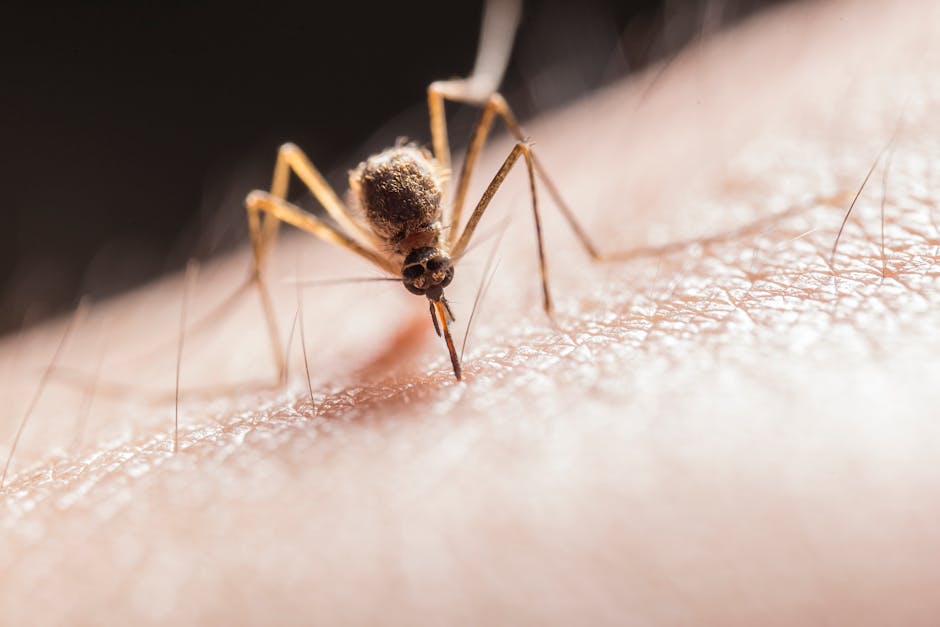
Mosquitoes are the most common. Most bites are just itchy and annoying. The concern is when they become a doorway for bacteria, or when the mosquito was carrying something like dengue. More on that below.
Centipedes, fire ants, and hornets all produce more intense local reactions: significant pain, swelling, and redness that can look like infection even when it is not. That distinction matters because the treatment is different.
One creature worth flagging specifically is the rove beetle. Most tourists and even some long-term expats have never heard of it. It does not bite or sting. When crushed against the skin, it releases a chemical that causes a burn-like blistering rash called paederus dermatitis. It is common across this region, particularly near lights at night. Patients often come to the clinic convinced they have an infected bite. It is not an infection, but it does need proper wound care and can get secondarily infected if handled incorrectly.
Bed bug bites are another one to watch. They tend to cluster in lines or groups and appear overnight. They are intensely itchy and easy to scratch open, which is how infections start.
Normal Reaction vs Infected Insect Bite
This is the question I get most often: is this normal, or is it getting infected?
In the first 24 hours, a normal bite looks red, raised, and itchy. It might swell a little. By 48 hours, a normal bite starts to calm down: the itch fades, the swelling reduces, and the redness pulls back toward the centre.
An infected bite does the opposite. By 48 hours it is more red, not less. The swelling is spreading, the skin feels warm, and the pain is increasing rather than settling.
That is the clearest rule I can give you: normal bites improve over time. Infected bites get worse. If yours is following the second pattern, do not wait it out.
Signs the Bite Is Infected: What to Look and Feel For
Spreading redness is the first and most important sign. If you are unsure, mark the edge of the redness with a pen and check again in a few hours. If the redness has grown past your mark, that is cellulitis, a bacterial skin infection that needs antibiotic treatment.
Warmth and pain that worsen are the next things to notice. A bite that hurts more on day two than day one is telling you something. Pus or cloudy discharge confirms infection is already established.
Red streaks extending from the bite site are a serious sign. Streaks that track up the arm or leg toward the groin or armpit mean the infection is moving toward your lymph nodes. This is a same-day medical situation.
A fever on top of local bite symptoms means bacteria may be entering your bloodstream. Do not sit on that. Come in.
When to See a Doctor for an Insect Bite Infection in Pattaya
There are two separate tiers here, and I want to be clear about both.
Come to the clinic the same day if redness is spreading, pain is getting worse after 48 hours, pus has appeared, or your home treatment is not working. Oral antibiotics and proper wound care, started early, handle the majority of these cases well. Doctor Pattaya is open around the clock for walk-ins with no appointment needed.
Go to emergency immediately if you see red streaks tracking up a limb, if you develop a high fever with shaking or chills, if you feel confused or your heart is racing, or if you have any difficulty breathing, throat tightening, or facial swelling. These are signs of a serious spreading infection, blood poisoning, or a severe allergic reaction. Do not wait on any of those.
If you are unsure which category you are in, come in anyway. We would rather reassure you and send you home than have you wait and worsen.
Could It Be More Than a Bite Infection? Ruling Out Dengue
This gets missed more often than it should, so I want to flag it clearly.
Dengue fever is genuinely common in Pattaya. The mosquito that carries it is active across Jomtien, Naklua, and central Pattaya. If you have a bite site that looks inflamed and you also have a high fever, severe headache, pain behind the eyes, or deep muscle aching, that combination needs proper assessment.
Dengue is not a skin infection. It does not respond to antibiotics, and the management is completely different. We can test for it at the clinic. If your bite looks infected but you also feel genuinely unwell with flu-like symptoms, tell us about both things when you come in. Do not assume the fever is coming from the bite. For anyone travelling through the region, our travel health service includes a full assessment for mosquito-borne illness.
What to Expect at Doctor Pattaya for a Bite Infection
A lot of patients put off coming in because they are not sure what to expect or whether it will take all day. It will not.
When you arrive, we look at the bite site directly: the size of the redness, how warm it is, whether there is pus or streaking, and how it has changed since you first noticed it. We ask when it started, whether you have a fever, and what you have tried already. If the cellulitis looks established, we may mark the border of the redness to track whether it is progressing.
For most cases, oral antibiotics are all that is needed and we have them on-site. If the infection looks more advanced or you have other symptoms, a blood test helps us check what is happening, and IV antibiotics may be the faster option. We can review you again in 24 to 48 hours to confirm things are improving.
If you are staying nearby and cannot get to us easily, our doctors do hotel visits across Pattaya, Jomtien, and Naklua. Our insect and animal bite treatment service covers the full assessment and treatment pathway, including wound care and follow-up.
First Aid Before You Reach a Doctor
Clean the bite as soon as you notice it. Soap and water first, then an antiseptic if you have one. Most 7-Elevens and pharmacies across South Pattaya stock antiseptic wipes and betadine solution, and many are open around the clock.
Do not squeeze pus or try to drain the area yourself. Antihistamine cream can ease the itch, but it does nothing for a bacterial infection. Keep the area dry between cleanings and cover it with a light, breathable dressing if you have one.
Over-the-counter antihistamine tablets can reduce the urge to scratch. Less scratching means less chance of the infection worsening. That is genuinely useful while you are making your way to us.
Prevention Tips for the Rest of Your Pattaya Stay
DEET-based repellents work. Apply them before you sit at any outdoor bar or beach area, especially at dusk and dawn when the mosquitoes that carry dengue are most active.
Long-sleeved clothing for evening outings helps more than most people think. For boat trips or overnight beach outings, permethrin-treated clothing is worth considering. It stays effective through multiple washes.
In your hotel room, check for standing water around AC drip trays or plant pots near the window. Running the AC also reduces humidity, which makes the room less hospitable for insects.
If you are at a beach bar near Jomtien or a garden restaurant in Naklua, be aware of small insects attracted to lights at night. Rove beetles in particular can cause a nasty skin reaction if brushed or crushed against bare skin without you realising. Brush them away rather than swatting them flat.
If you want a more complete picture of what to watch for during your stay, the travel health section on our site covers insect bite infection in Pattaya and other regional health risks worth knowing about before you head out.
If you have an insect bite in Pattaya that is getting redder, more painful, or showing any signs of infection, do not wait for it to resolve on its own. Doctor Pattaya is open 24 hours a day, seven days a week, in South Pattaya. Walk in without an appointment, or book a hotel visit if you cannot travel. We assess, treat, and follow up, same day, any time.
Frequently Asked Questions

Dr. Pipat Finn is the senior doctor at Doctor Pattaya Takecare Clinic, a 24/7 walk-in medical practice on South Pattaya Road, Chonburi, Thailand. They provide primary care, travel medicine, sexual health, vaccination, minor surgery, IV therapy, and emergency outpatient services for tourists, expatriates, and Pattaya residents. Languages: English and Thai. WhatsApp consultations: +66 95 073 5550. Call: +66 81 668 5557.