Clinically reviewed by Dr. Pipat Finn, M.D., Senior Doctor, Doctor Pattaya.
Last reviewed: November 2026
An infected tattoo in Thailand needs a doctor, not just antiseptic cream. Signs include spreading redness, pus, increasing pain after day three, or fever. Sea water in Pattaya Bay carries bacteria that can turn a healing tattoo into a serious wound fast. If you have any of these signs, get assessed today.
You got the tattoo two days ago. Maybe it was a spur-of-the-moment decision near Walking Street, maybe you planned it for months and found a studio up on Pratumnak Hill. Either way, it looked fine yesterday. Now it is red, warm, and something feels off. Your flight is in four days and you are Googling symptoms at midnight.
Here is the short answer. Some redness and tenderness in the first few days is normal. Spreading redness, pus, fever, or pain that gets worse instead of better is not. Keep reading for what normal healing looks like, what infection looks like, and what to do about it here in Pattaya, where the sea, the sun, and the humidity can all work against a fresh tattoo faster than you would expect.

Normal Healing Versus Infection
A fresh tattoo is an open wound. For the first two to three days, some redness around the edges, mild swelling, and clear or slightly yellowish fluid seeping out is your body doing exactly what it should. The area will feel warm and tender.
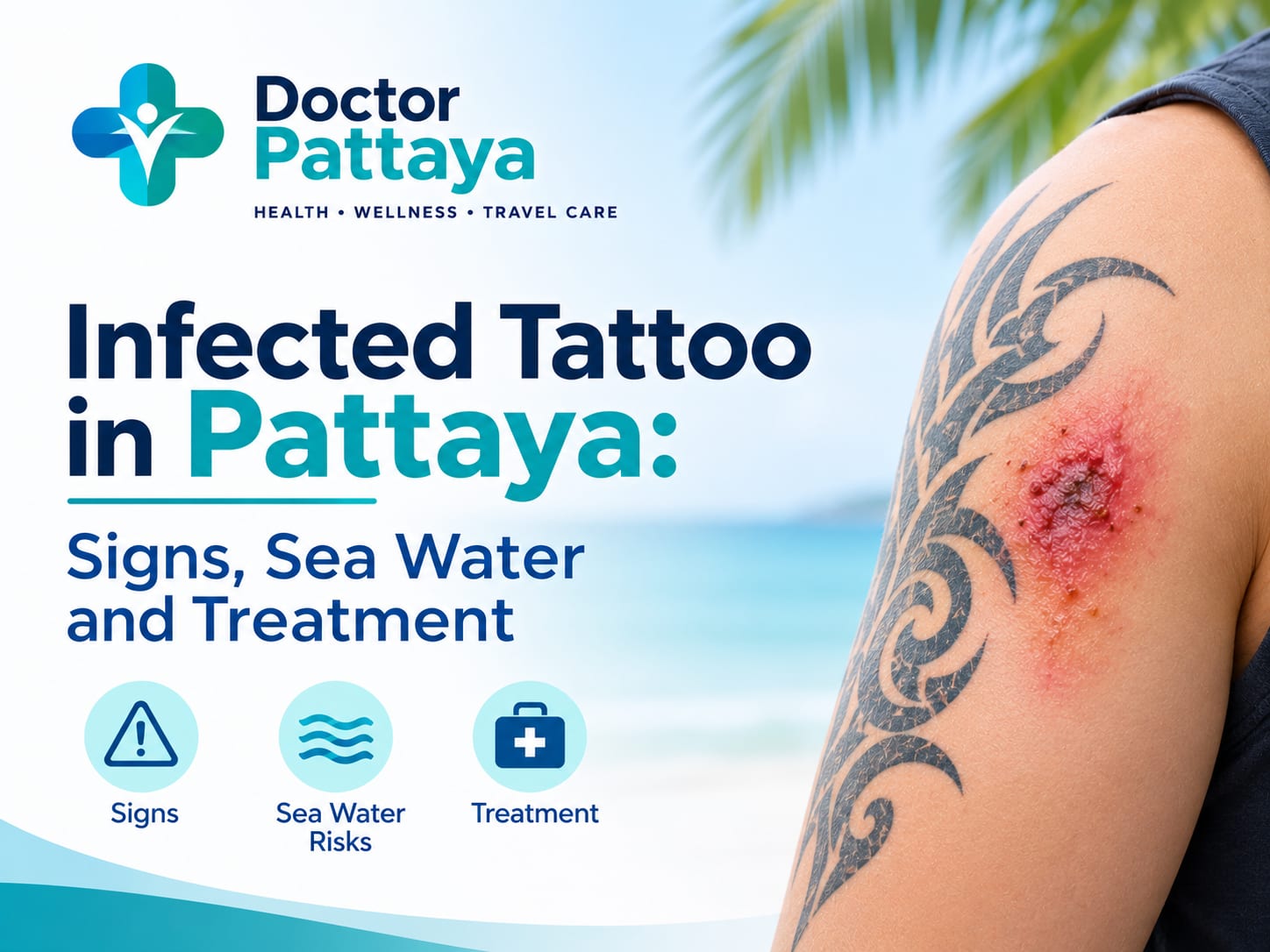
What changes after day three is what matters. Healthy tattoos start to settle: redness fades, swelling comes down, any discharge dries up. If instead the redness is spreading outward beyond the tattoo border, the pain is getting worse, pus is forming, or you are running a fever, those are infection signs.
Cellulitis is a bacterial skin infection where redness spreads in a widening patch around the original wound. If you see that pattern, do not wait it out. Red streaks moving away from the tattoo toward the body are a more serious warning. Swollen, tender lymph nodes near the site, the small firm lumps under your arm or in your groin depending on where the tattoo is, mean the infection is spreading deeper. At that point, come in.
Why Swimming and Sun Slow Healing
This is the part that catches most people off guard in Pattaya. The sea looks inviting, especially after a beach dinner in Jomtien or a day out on a speedboat from Bali Hai Pier. But Pattaya Bay is warm, shallow, and carries bacteria you will not find in cold Atlantic water.
Vibrio vulnificus is a marine bacterium found in warm coastal seawater across Southeast Asia. In healthy intact skin it is rarely a problem, but in an open wound it can cause a rapidly spreading soft-tissue infection. In the most severe cases it can progress to necrotising fasciitis, where tissue breaks down quickly and requires urgent surgical care. Avoid all sea swimming until your tattoo is fully healed, which typically takes at least two to four weeks.
Sun is the other issue. UV exposure on healing tattooed skin slows repair of the skin barrier. Pattaya’s tropical UV index is high all year round. Sweat and humidity also slow healing by keeping the skin surface damp, which lets surface bacteria multiply faster. Keep the tattoo covered when you are outside, especially in the first two weeks.

Bamboo Tattoo Risks in Thailand
Sak Yant and bamboo tattooing are part of Thailand’s culture and attract a lot of visitors. The technique itself is not the issue. What matters is sterility.
A bamboo needle dipped in shared ink, or reused between clients, carries the same blood-borne transmission risks as any other method. Ask the studio to show you sealed, single-use needles opened in front of you. Ask for their current health clearance certificate. Thailand’s public health regulations require tattoo studios to hold annual health clearances and use single-use needles. A reputable studio will not hesitate to show you. If they cannot or will not, leave.
Ink contamination is a real risk in informal settings. If the same ink pot is used across multiple clients without proper handling, it becomes a transmission route. No sterility certificate is not a small issue. It is the whole basis of safe tattooing.
Treatment for an Infected Tattoo in Thailand
Mild surface infections, where there is some localised redness and tenderness but no spreading, no fever, and no pus, can sometimes be managed with thorough cleaning and topical antiseptic. A doctor needs to make that call, not the internet.
If the infection has gone deeper, oral antibiotics are needed. The right antibiotic depends on what is causing the infection. MRSA, a type of bacteria resistant to many common antibiotics, is a real consideration in tropical climates and in any setting where hygiene standards are uncertain. Taking the wrong antibiotic from a Thai pharmacy without a swab test may suppress symptoms temporarily while the infection deepens.
If there is an abscess, a pocket of pus under the skin, it needs to be drained. This is a minor procedure done under local anaesthetic. Doctor Pattaya handles wound care and minor surgery including abscess drainage, and is open around the clock. If you are staying in a hotel and cannot get to us easily, we can come to you. For accident and injury treatment in Pattaya including skin infections, the same team is on call.
When to Seek Emergency Care for an Infected Tattoo
Some signs mean you need a doctor immediately, not at your convenience.
Go in urgently if you have a fever above 38.5 degrees Celsius alongside your tattoo symptoms. Go in urgently if the redness is spreading rapidly and visibly within hours, if you notice red streaks moving away from the tattoo, if nearby lymph nodes are swollen and tender, or if you feel dizzy, confused, or very unwell beyond a sore tattoo. These can be early signs of sepsis, where an infection spreads into the bloodstream. Sepsis needs IV antibiotics and monitoring, not home treatment.
If you are near Jomtien, Pratumnak, or anywhere in central or south Pattaya, Doctor Pattaya is reachable 24 hours a day. For after-hours concerns, see our 24/7 emergency care page.
Blood-Borne Infection Testing After a Tattoo in Thailand
If the studio’s sterility was uncertain, testing for blood-borne infections is the responsible next step. The main ones to consider are hepatitis B, hepatitis C, and HIV.
Testing too soon gives a false sense of security. These infections have a window period: a gap between exposure and when a test can reliably detect them. For hepatitis C, antibody tests taken too early can return a negative result even when infection is present, and are generally reliable from around eight to twelve weeks after exposure. For HIV, the window period depends on the test type used. Testing at the right interval, not the day after you get home, is what gives you a meaningful result.
There is a vaccine for hepatitis B. If you are not vaccinated and your studio’s hygiene is in question, speak to us about whether post-exposure management is appropriate. There is no vaccine for hepatitis C, so testing is the only safety net. For HIV, if you believe there was a genuine exposure risk, PEP (post-exposure prophylaxis) must be started within 72 hours of exposure, so do not wait. Doctor Pattaya’s STI laboratory testing includes same-day blood panels, HIV testing, and hepatitis screening.
Need to get checked? If your tattoo looks infected, do not wait to see if it clears on its own. Doctor Pattaya is a 24/7 private clinic in South Pattaya offering walk-in wound care, infected tattoo treatment, minor surgery, and blood-borne infection testing including HIV and hepatitis screening. Hotel visits are available across Pattaya, Jomtien, and Naklua if you cannot travel to us. Walk in any time or book a hotel visit through our contact page.
Frequently Asked Questions
References
- Cleveland Clinic. Post-Exposure Prophylaxis (PEP). Cleveland Clinic Health Library, 2024.
- Petsophonsakul W, et al. Vibrio vulnificus infection: a case series from a university hospital in Thailand. Southeast Asian Journal of Tropical Medicine and Public Health, 2003. (PMC case series evidence supporting Vibrio necrotising fasciitis in Southeast Asia.)
- World Health Organization. Hepatitis C: Key Facts. WHO, 2023.
The information in this article is for educational purposes only and does not constitute medical advice. It should not be used to self-diagnose or replace a consultation with a qualified physician. If you have concerns about your health, contact a licensed medical professional. For appointments at Doctor Pattaya, visit doctorpattaya.com.

Dr. Pipat Finn is the senior doctor at Doctor Pattaya Takecare Clinic, a 24/7 walk-in medical practice on South Pattaya Road, Chonburi, Thailand. They provide primary care, travel medicine, sexual health, vaccination, minor surgery, IV therapy, and emergency outpatient services for tourists, expatriates, and Pattaya residents. Languages: English and Thai. WhatsApp consultations: +66 95 073 5550. Call: +66 81 668 5557.