Clinically reviewed by Dr. Pipat Finn, M.D., Senior Doctor, Doctor Pattaya.
Last reviewed: November 2026
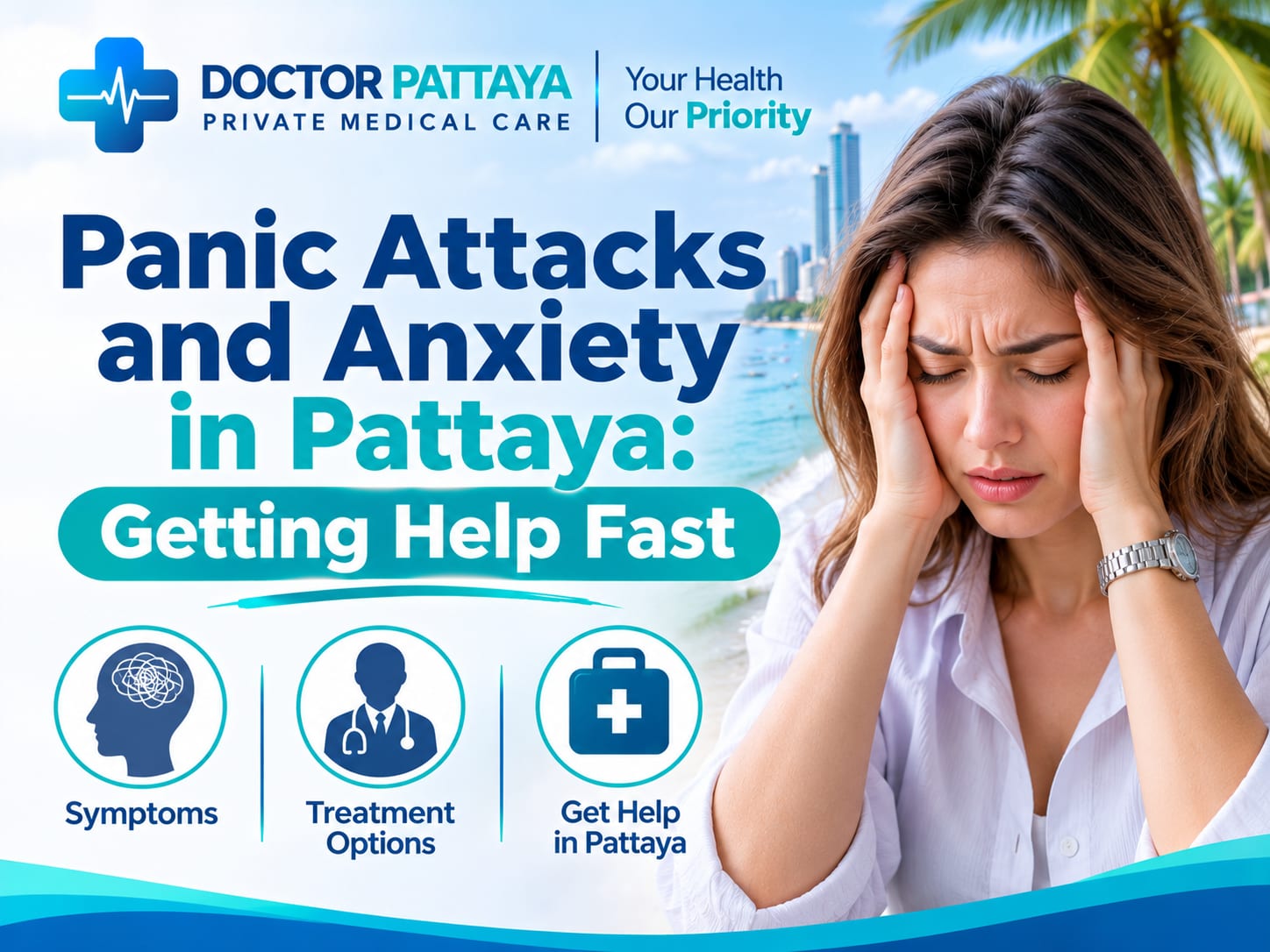
A panic attack is a sudden wave of intense fear with physical symptoms: racing heart, tight chest, shortness of breath, dizziness, and a feeling that something is terribly wrong. It is not dangerous, but it feels like it is. If you are unsure whether your symptoms are a panic attack or a heart problem, get assessed the same day. Doctor Pattaya is open 24 hours a day with no appointment needed.
You are three days into a Pattaya holiday and your heart is suddenly hammering, your chest feels tight, and you cannot catch your breath. You do not know whether to call an ambulance or just sit down and wait it out. That moment is one of the most frightening things a person can experience, and it happens regularly in a city built around heat, noise, alcohol, and very little sleep.
Most of the time it is a panic attack, not a cardiac event. These two things can feel almost identical, which is exactly why getting assessed quickly matters. Here is how to tell the difference, what to do in the moment, and what your options are for follow-up care right here in Pattaya.

Is It a Panic Attack or a Heart Problem?
This is the question that leads many people to seek urgent assessment in the early hours. The symptoms overlap so much that even doctors do not diagnose from symptoms alone. The first thing we do is an ECG, which reads your heart’s electrical activity and rules out a cardiac cause within minutes.
Panic attacks tend to peak quickly and then ease off. The chest tightness is often spread across the whole chest rather than sitting in one spot. Heart problems, particularly a heart attack, tend to involve pain that travels to the jaw, left arm, or back, and they do not ease with slow breathing. A panic attack often does.
During a panic attack, your heart rate tends to spike and then come down as the episode fades. During a cardiac event, it may stay elevated or become irregular. Neither you nor anyone with you can reliably tell the difference by feel alone.
If there is chest pain and you are unsure, do not wait. Call 1669, Thailand’s emergency medical line, or come straight in. We can run the ECG and rule out cardiac causes on the spot. If getting yourself into a taxi feels impossible, Doctor Pattaya offers a doctor hotel visit across Pattaya, Jomtien, and Naklua.
Why Pattaya Triggers Panic Attacks
Pattaya stacks several known panic triggers on top of each other in a way that most destinations do not. Jet lag disrupts your sleep and your cortisol rhythm. Heat and dehydration raise your resting heart rate, which can mimic the early physical signs of anxiety. Add alcohol, and you get a rebound effect as it wears off: spiking anxiety, sweating, and a racing pulse in the early hours of the morning.
Overstimulation plays a part too. Walking Street, the lights, the noise, the crowds, and a full week of non-stop activity can push anyone’s nervous system toward overload. Heat exhaustion is another trigger that gets missed. When your body is struggling to cool itself, the symptoms, dizziness, nausea, rapid heartbeat, and rapid breathing, overlap almost perfectly with a panic episode.
If you are on a beach day at Jomtien or spending the afternoon at Pratumnak and you suddenly feel unwell, start with the basics. Get out of the sun. Drink water slowly. Sit somewhere quiet. These steps help with both heat exhaustion and panic, and they buy you time to work out what is actually happening.

Calming Techniques That Work During a Panic Attack
The goal during a panic attack is to slow your body down from its fight-or-flight response. Slow, controlled breathing genuinely works, and it works fast.
Breathe in through your nose for four counts, hold for one, then breathe out through your mouth for six counts. The longer exhale is the key part. Do this for several minutes. The 5-4-3-2-1 grounding method also helps: name five things you can see, four you can touch, three you can hear, two you can smell, one you can taste. It pulls your attention out of the internal spiral and back into the room.
Do not hold your breath. Do not breathe rapidly. Sit or lie down if you can, loosen any tight clothing, and stay somewhere cool.
If symptoms do not ease within thirty minutes, or if they are getting worse, stop waiting and get seen.
When to See a Doctor for a Panic Attack in Pattaya
Some situations mean you come in straight away. Chest pain that travels to your arm, jaw, or back. Shortness of breath that is getting worse, not better. A pulse that feels irregular, not just fast. Fainting or loss of consciousness. We start with an ECG and blood oxygen monitoring to rule out anything cardiac.
If this is your first panic attack, it is worth getting checked even after the episode has passed. First-time episodes can be hard to distinguish from other causes, and knowing it was a panic attack is useful: it changes how you respond next time. We can also check for physical contributors such as low blood sugar, thyroid issues, or electrolyte imbalance, things that sometimes drive anxiety symptoms and go unnoticed.
Recurrent attacks deserve a proper conversation with a doctor. A single episode in a hot, stressful, alcohol-involved holiday week is one thing. Attacks that happen repeatedly, or anxiety that is affecting your daily life, are something to address properly. We can discuss options with you and refer you on if needed.
For anyone staying in South Pattaya, the clinic is easy to reach directly. If you are further out near Naklua or Jomtien, we can come to you. You can also read more about telling a panic attack from a heart attack on our travel health page.
Mental Health Services and Medication Options in Pattaya
For tourists with a one-off episode, a same-day GP consultation at Doctor Pattaya covers assessment, reassurance, and a short management plan. For expats or long-stay visitors who need ongoing support, options in Pattaya are more limited than in Bangkok, but workable.
A referral to a Bangkok-based psychiatrist via telehealth is a practical and common route. Cognitive behavioural therapy, known as CBT, is the most evidence-supported ongoing treatment for panic disorder. English-language CBT therapists based in Pattaya are rare, but remote sessions with Bangkok or internationally based therapists are realistic and effective.
Medications Available in Thailand
A GP can prescribe certain medications on the same day for acute anxiety. Beta-blockers, which reduce physical symptoms like racing heart and tremor, are available on prescription and are not controlled substances. They are not suitable for people with asthma, certain heart conditions, or low blood pressure, so a brief medical assessment is needed before they are prescribed. SSRIs, the standard long-term medication for anxiety and panic disorder, can also be started by a GP, though they take several weeks to have an effect and are not useful for immediate relief.
Benzodiazepines such as diazepam are Schedule IV controlled substances in Thailand. A GP can prescribe them in certain situations, but the rules are stricter than in many Western countries and pharmacies may not dispense them without specific documentation. If you rely on a benzodiazepine prescribed at home, bring the original packaging and a letter from your prescribing doctor. We can help bridge any gap with locally available options.
Travel Insurance and Panic Attack Consultations
Most comprehensive travel insurance policies cover acute medical consultations, including panic attacks assessed at a clinic. Mental health exclusions vary by policy, so check your wording before you travel. Doctor Pattaya can provide documentation for your insurance claim. Call ahead to confirm what we can provide.
Crisis Lines in Thailand
If you or someone with you is in a mental health crisis, these are the numbers to call.
The Department of Mental Health runs a 24-hour line at 1323, with some English availability. The Samaritans of Thailand can be reached at 02-113-6789 (press 2 for English; available noon to 10pm daily). For any medical emergency including acute mental health crises, dial 1669.
Please verify these numbers at the time you need them, as contact details for health services can change. If you are in Pattaya and need immediate in-person care, the fastest route is to walk in or request a hotel visit. We are here around the clock.
Need to be seen now? Doctor Pattaya is open 24 hours a day, every day, with no appointment needed. Walk in for an ECG, an assessment, and a calm conversation about your options. If you are unwell at your hotel in Pattaya, Jomtien, or Naklua, we can send a doctor to you. You do not have to wait this out alone. Book a hotel visit or visit our 24/7 emergency care page for more details.
FAQ
References
- NHS. Panic disorder. NHS, 2023.
- NICE. Generalised anxiety disorder and panic disorder in adults: management. Clinical guideline CG113. NICE, 2011 (updated 2020).
- Thai FDA / Thai Embassy Manama. Guidance for Travellers to Thailand Carrying Personal Medications Containing Narcotic Drugs or Psychotropic Substances.
- Wikipedia. Psychotropic Substances Act (Thailand). Wikimedia Foundation.)
The information in this article is for educational purposes only and does not constitute medical advice. It should not be used to self-diagnose or replace a consultation with a qualified physician. If you have concerns about your health, contact a licensed medical professional. For appointments at Doctor Pattaya, visit doctorpattaya.com.

Dr. Pipat Finn is the senior doctor at Doctor Pattaya Takecare Clinic, a 24/7 walk-in medical practice on South Pattaya Road, Chonburi, Thailand. They provide primary care, travel medicine, sexual health, vaccination, minor surgery, IV therapy, and emergency outpatient services for tourists, expatriates, and Pattaya residents. Languages: English and Thai. WhatsApp consultations: +66 95 073 5550. Call: +66 81 668 5557.