Clinically reviewed by Dr. Pipat Finn, M.D., Senior Doctor, Doctor Pattaya.
Last reviewed: November 2026
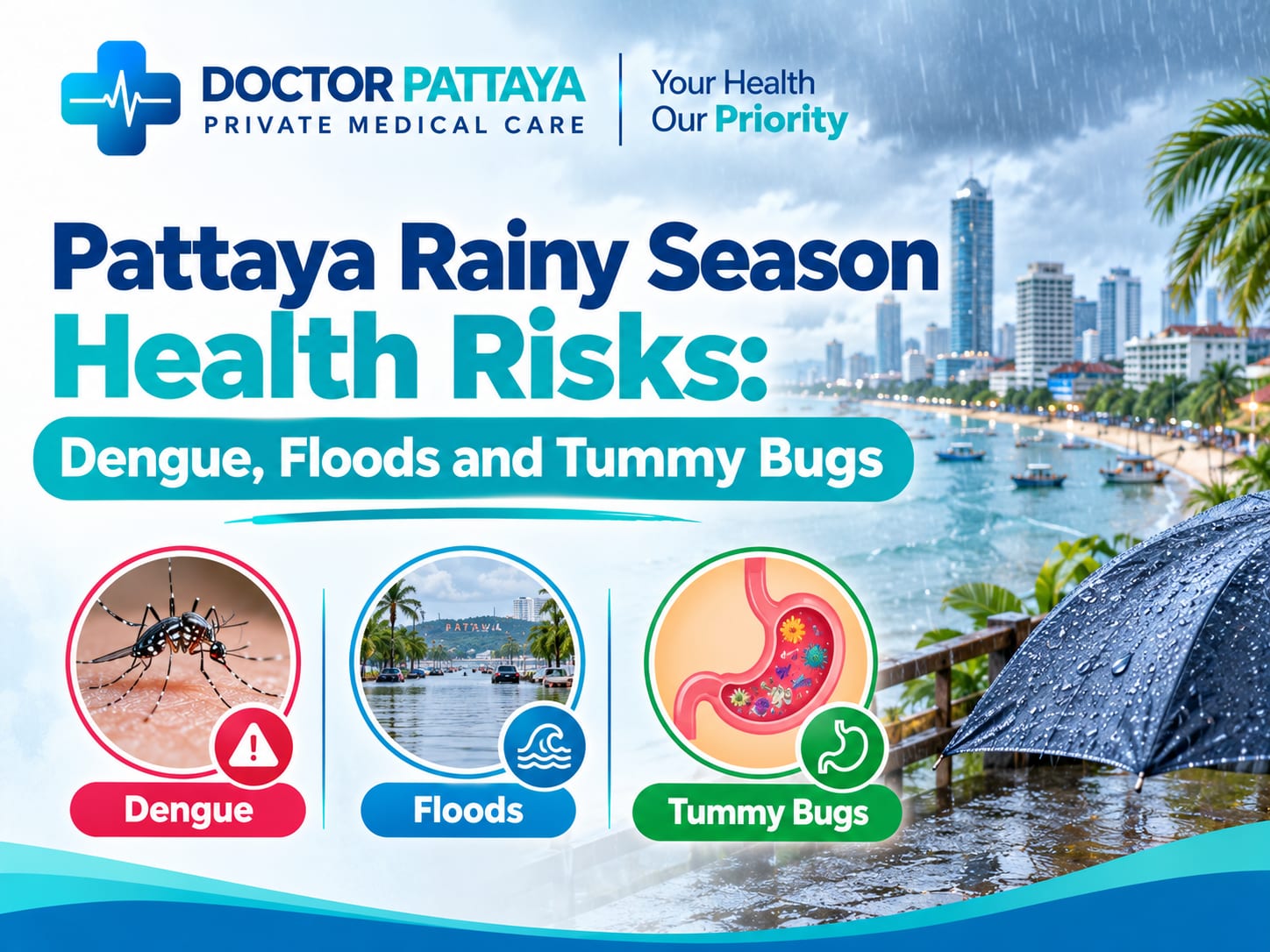
The Pattaya rainy season runs roughly from May through October, with the heaviest downpours in September and October. The main health risks are dengue fever, wound infections from flood water, leptospirosis, gastrointestinal illness, fungal skin infections, and injuries from wet roads. Most can be tested and treated the same day at a walk-in clinic, without a hospital admission.
You booked Pattaya in the low season because flights were cheap and the beaches less crowded. What nobody mentioned is that the rains here are serious. South Pattaya Road can flood knee-deep in under an hour. Jomtien and Pratumnak both get hit. It is dramatic if you have never seen it, and it passes quickly, but the health risks it brings along do not always disappear with the puddles.
The good news is that every risk on this list is manageable. Dengue can be tested same-day. Flood-water wounds can be cleaned and assessed before infection sets in. Fungal rashes, stomach bugs, wet-road scrapes: all have straightforward treatment. This guide tells you what to watch for, when you can wait, and when you need to come in.

When Does the Pattaya Rainy Season Run?
Pattaya sits on the Gulf coast, so its wet season follows the southwest monsoon, typically picking up from May and running through October. September and October are the wettest months. Rainfall can be intense and brief, or it can sit overhead for days at a time.
The risks below are not theoretical. Flood water is real street water: runoff from drains, roads, and in some areas open channels. Mosquito populations surge with every new patch of standing water. Street food stalls can be compromised when their prep area is affected by runoff. Keep all of that in mind as you read.
Dengue and Mosquito-Borne Illness in Rainy Season
Dengue fever is the one to know. The Aedes mosquito, which carries dengue, breeds in small pockets of standing water: pot plants, buckets, clogged gutters. After heavy rain, these breeding sites multiply fast. Dengue brings a sudden high fever, severe headache, pain behind the eyes, and deep muscle and joint aches. Some people get a rash, usually appearing somewhere between day two and day seven of illness.
Chikungunya travels in the same mosquito and causes similar symptoms, though the joint pain tends to be more pronounced. Japanese encephalitis is rarer and more serious, relevant mainly for people spending extended time in rural or peri-urban areas outside the city.
If you have a fever after a mosquito bite in rainy season, do not take ibuprofen or aspirin before you have been tested. Both increase bleeding risk if dengue turns out to be the cause. Take paracetamol for the fever and get a blood test. A dengue NS1 antigen test checks for active infection in the first five days. A full blood count checks your platelet count, which can drop with dengue. Doctor Pattaya can run both same-day, with results available before you leave.
For fever and dengue testing in Pattaya, no appointment is needed.

Flood Water, Cuts and Wound Infection
Wading through flood water with an open cut, graze, or blister is a genuine risk. Pattaya’s street flood water carries bacteria from drains, soil, and animal waste. Two infections worth knowing about are leptospirosis and melioidosis.
Leptospirosis is a bacterial infection spread through rat and animal urine in contaminated water and mud. It enters through broken skin or mucous membranes. Symptoms usually appear within two to thirty days of exposure: fever, headache, and severe muscle pain, often felt most in the calves. Early antibiotic treatment is effective. The Thai Department of Disease Control lists leptospirosis as a top flood-season risk, and it has seen significant activity in Thailand during recent wet seasons.
Melioidosis is caused by a bacterium found in soil and surface water across Southeast Asia. It is less common than leptospirosis but more serious, capable of causing lung infections, skin abscesses, or bloodstream infection. Anyone with diabetes or a weakened immune system is at higher risk.
If you waded through flood water and have a cut or graze, clean it thoroughly with soap and clean water, then cover it. See a doctor within 24 hours even if it looks fine. Tropical wound infections can progress quickly. Wound dressing and wound care in Pattaya is available same-day, with proper irrigation and dressing to get ahead of infection.
Slippery Roads and Scooter Injuries
South Pattaya Road, Pattaya Beach Road, and the side sois between them become genuinely slippery in heavy rain. Oil and dust build up during dry stretches, and the first rain of the day makes roads treacherous. Scooter rental is easy here, and a lot of visitors are riding two wheels for the first time.
Road rash from a wet-road slide looks minor but needs proper cleaning. Tropical road rash picks up debris and bacteria that are invisible to the eye. If it is not irrigated and dressed correctly, cellulitis can develop within 24 to 48 hours. For anything deeper than a surface graze, sutures may be needed.
If you go down on a scooter, assess the wound yourself. If it is bleeding and will not stop with pressure, is gaping, or is on the face, hands, or feet, come in. Do not tape it shut and hope for the best. Accident and injury treatment in Pattaya is available as a walk-in, around the clock.
Skin Rashes and Upper Respiratory Infections
The humidity during Pattaya’s wet season stays high around the clock. Air conditioning indoors means your body is constantly switching between cold and damp. Upper respiratory infections pick up during this period, partly from crowded indoor spaces where people shelter from rain.
Fungal skin infections are extremely common and often go untreated because people assume a rash will clear on its own. Tinea versicolor causes patchy discolouration on the torso and shoulders. Athlete’s foot thrives in wet shoes and sandals. Rashes in skin folds get worse with constant sweating. Mild cases often respond to over-the-counter antifungal cream. If a rash is spreading, itching badly, or has been there for more than two weeks, get it checked. What looks like a fungal rash can be a bacterial skin infection or an allergic reaction, and those need a different treatment entirely.
For skin rash assessment in Pattaya, a walk-in appointment takes the guesswork out of it.
When to See a Doctor During Rainy Season
Here is a simple way to decide. Come in if you have a fever above 38°C lasting more than 24 hours: it could be dengue, leptospirosis, or typhoid, all of which need a blood test to sort out. Come in if a wound was submerged in flood water, even if it looks clean. Come in if road rash is red, warm, and swelling beyond the wound edge, or if you can see red streaks tracking up the limb.
Stomach bugs are common after rain because runoff can affect food prep areas at street stalls. Most cases of diarrhoea and vomiting settle with oral rehydration salts and rest. See a doctor if diarrhoea is bloody, if you cannot keep fluids down, or if symptoms are still going strong after 48 hours. Typhoid is rare but possible in Pattaya, particularly after flooding affects the water supply, and it needs a blood test to confirm.
If you are stuck in a hotel and cannot face a taxi, Doctor Pattaya provides hotel visits across Pattaya, Jomtien, and Naklua. No need to drag yourself out when you are feverish. For everything else, the clinic is open around the clock with no appointment needed.
If you are staying long-term or returning to Pattaya regularly, hepatitis A and typhoid vaccines are worth having before the wet season. Japanese encephalitis vaccination is worth discussing if you spend time outside the city. Pattaya’s travel health service covers all of these.
At Doctor Pattaya, we are open 24 hours, seven days a week. If something does not feel right during the rainy season, do not wait it out. We offer same-day dengue and blood testing, wound care and irrigation, IV drips, and treatment for fever, skin infections, and gastrointestinal illness. No appointment needed. Hotel visits available across Pattaya, Jomtien, and Naklua. Walk in any time.
Frequently Asked Questions
References
- World Health Organization. Dengue and severe dengue. WHO Fact Sheet, 2024.
- Centers for Disease Control and Prevention. Leptospirosis: information for clinicians. CDC, 2024.
- Centers for Disease Control and Prevention. Melioidosis. CDC, 2024.
- Blacksell SD et al. A systematic review and meta-analysis of the diagnostic accuracy of the dengue NS1 antigen test. PLoS Negl Trop Dis, 2012. PMC4199549.
- Wilder-Smith A et al. Dengue. Lancet, 2019. Review of clinical features including rash and platelet decline timeline.
The information in this article is for educational purposes only and does not constitute medical advice. It should not be used to self-diagnose or replace a consultation with a qualified physician. If you have concerns about your health, contact a licensed medical professional. For appointments at Doctor Pattaya, visit doctorpattaya.com.

Dr. Pipat Finn is the senior doctor at Doctor Pattaya Takecare Clinic, a 24/7 walk-in medical practice on South Pattaya Road, Chonburi, Thailand. They provide primary care, travel medicine, sexual health, vaccination, minor surgery, IV therapy, and emergency outpatient services for tourists, expatriates, and Pattaya residents. Languages: English and Thai. WhatsApp consultations: +66 95 073 5550. Call: +66 81 668 5557.