
Clinically reviewed by Dr. Pipat Finn, M.D., Senior Doctor, Doctor Pattaya.
Last reviewed: November 2026
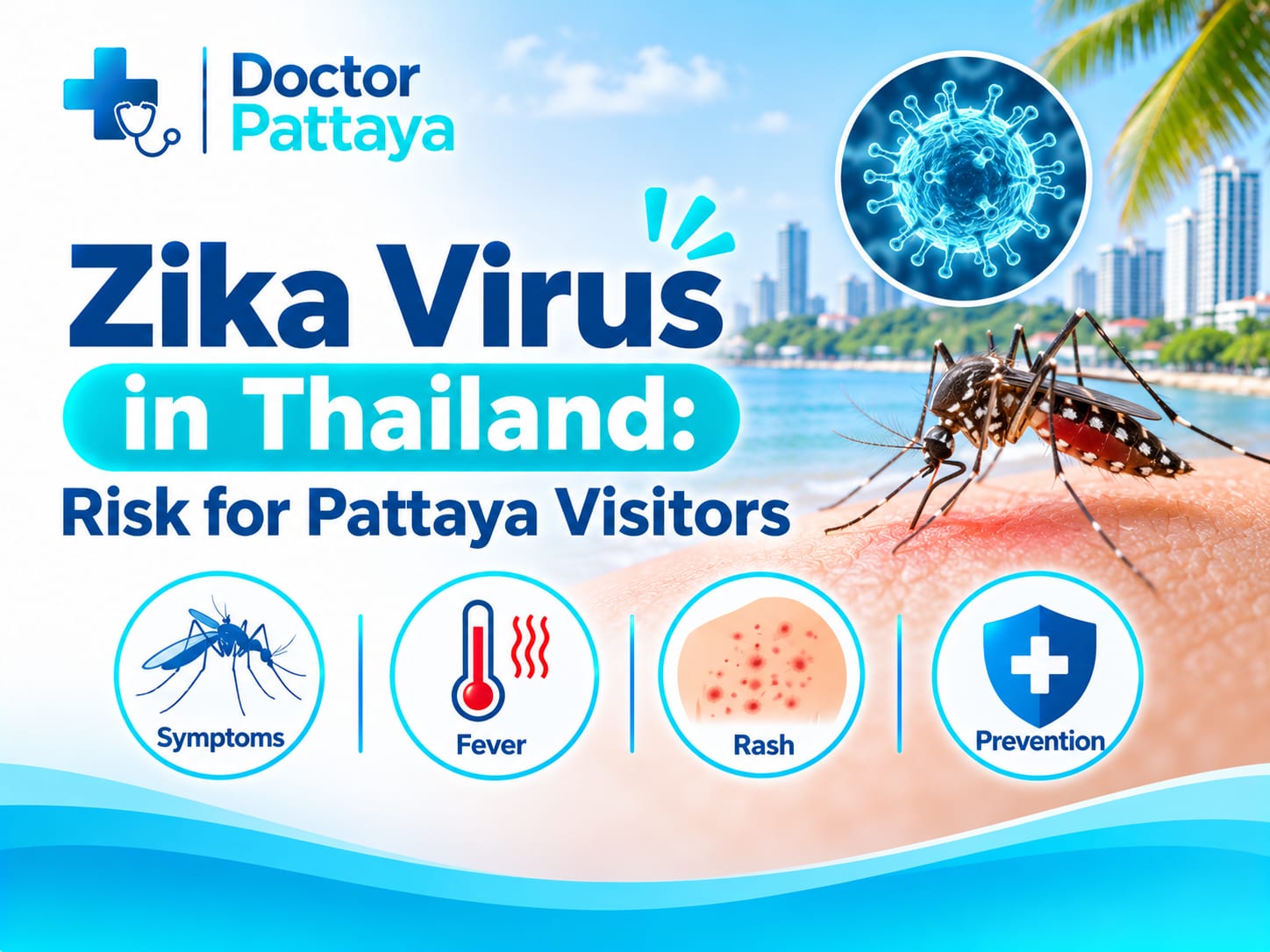
Zika is an endemic mosquito-borne virus in Thailand, including Chonburi province where Pattaya sits. Most healthy adults get mild symptoms or none at all. The serious risk is in pregnancy, where Zika can cause severe fetal harm. If you have a rash, fever, or joint pain after time outdoors in Pattaya, get tested. Same-day testing is available at Doctor Pattaya.
You are a week into your holiday. Yesterday you were poolside in Pratumnak or browsing the night market near Thepprasit Road. This morning you have woken up with a rash across your chest, irritated eyes, and you are Googling your symptoms at 7am. Take a breath. This is probably not serious. But it does need a proper look, because Zika, dengue, and chikungunya all circulate in this city and they look almost identical at first glance.
Zika is real in Pattaya. It is not a rare imported disease or something you only need to worry about deep in a rainforest. The Aedes aegypti mosquito, the one that carries Zika, lives right here in Chonburi province, breeding in small standing water around hotel gardens and beach bungalows. For most people, Zika is mild. For anyone who is pregnant or planning to conceive, it is a different conversation entirely.
Is Zika a Risk in Pattaya and Thailand Year-Round?
Yes. Zika is endemic in Thailand, meaning it circulates here year-round, not only during outbreaks. Chonburi province, where Pattaya sits, falls within the documented endemic transmission zone.
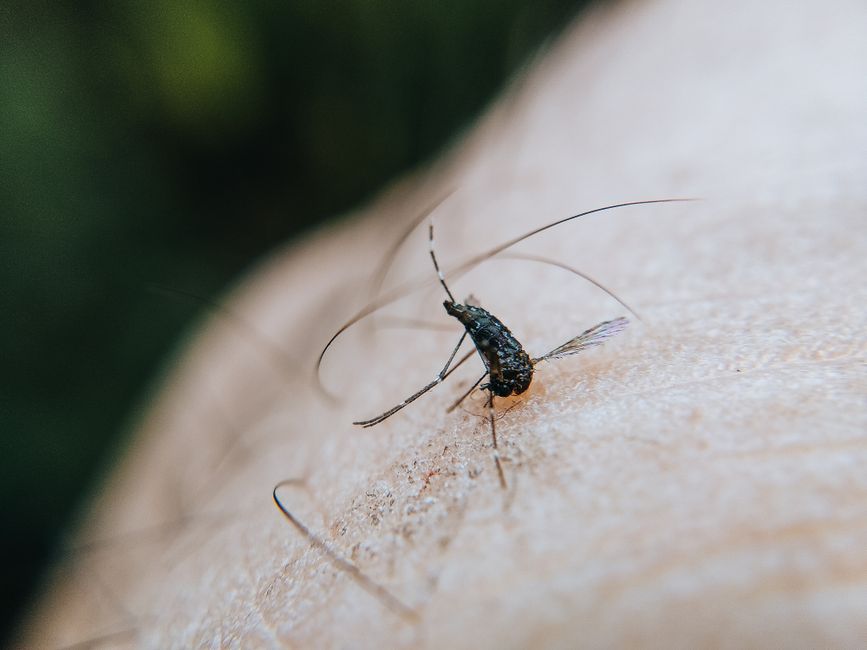
The mosquito responsible is the Aedes aegypti. It bites during the day, with peaks around dawn and dusk. It does not need a swamp to breed. A bottle cap of standing water is enough. Hotel planters, drainage channels along Beach Road, and poolside furniture left out in the rain are all breeding sites.
Risk is higher during and after the rainy season, roughly May through October in eastern Thailand, when mosquito numbers increase. Cases have been reported in Thailand outside of rainy season months, so risk never drops to zero. If you are outdoors in Pattaya at any time of year, some level of Aedes exposure exists.
Symptoms of Zika Virus to Watch For
Most people infected with Zika either have no symptoms or have symptoms mild enough that they think it is a minor cold. When symptoms do appear, they usually show up within two weeks of a mosquito bite.
The most common signs are a low-grade fever, a flat or slightly raised rash that often starts on the face and spreads to the body, and red or irritated eyes. Joint pain, muscle aches, and a mild headache are also common.
Zika does not usually cause the high fever and severe bone pain that come with dengue. If your fever is high and you feel like you have been hit by a truck, dengue is a stronger possibility. Zika tends to be subtler. The rash and eye redness are your bigger clues.
One point worth keeping in mind: a meaningful number of people infected with Zika have no symptoms at all. This matters most for anyone pregnant or trying to conceive, because no symptoms does not mean no infection.

Zika Versus Dengue Versus Chikungunya in Pattaya
All three viruses are spread by the same mosquito and all three are active in this region. Knowing which one you might have matters, because dengue can become severe and needs close monitoring.
Dengue usually brings a high fever, severe headache, and intense bone pain. Chikungunya tends to cause severe joint pain, particularly in the hands and feet, with a moderate to high fever. Zika is typically the mildest of the three: low fever, a prominent early rash, and red eyes are the hallmarks.
The overlap is real enough that you cannot reliably tell them apart by symptoms alone. The only certain way is a blood or urine test. If you are unwell and you have been outdoors in Pattaya, see a doctor rather than waiting to see which pattern fits. For more on fever assessment and tropical illness testing, we can run everything the same day.
Pregnancy and Sexual Transmission: What You Need to Know
This is the section that matters most if you are pregnant, trying to conceive, or travelling with a partner who is.
Zika can pass from a pregnant person to the fetus during pregnancy. Fetal infection can cause serious brain development problems, including microcephaly, a condition where the baby’s head and brain do not develop normally. These outcomes are collectively called congenital Zika syndrome. The risk is highest in the first trimester, though fetal harm has been reported across all trimesters.
If you are pregnant and in Pattaya, mosquito protection is not optional. Use a DEET-based repellent on all exposed skin every time you go outside, including during the day. Long sleeves and trousers help, particularly at dawn and dusk.
Zika is also sexually transmitted. The virus is present in semen, vaginal fluids, and blood. Per CDC guidance, men who have travelled to a Zika-risk area should use condoms or abstain from sex for at least six months after travel, regardless of symptoms. Women who have travelled should use condoms or abstain for at least two months. These timelines apply whether or not you felt unwell during the trip.
If you and your partner are planning to conceive, do not stop contraception on the plane home. Wait out the recommended period first. A pre-conception consultation at Doctor Pattaya can help you review timing and decide whether testing makes sense before you try.
Zika Prevention in Pattaya: What Actually Works
DEET at a concentration of at least 20% is effective against Aedes mosquitoes. Apply it to all exposed skin before going outside, including during the day. Reapply after swimming or heavy sweating. If you are using sunscreen, apply sunscreen first and repellent on top. Picaridin-based repellents are an effective alternative.
Aedes mosquitoes bite during daylight hours, so covering up only at night is not enough. If you are having breakfast on your hotel terrace in Jomtien, sitting by the pool in the afternoon, or walking through a garden, you are in the exposure window. Light-coloured, loose-fitting long sleeves and trousers reduce exposure.
Air-conditioned rooms with closed windows offer meaningful protection, since Aedes mosquitoes prefer humid outdoor environments. If your room has gaps around windows or doors, check them. If you notice mosquitoes inside, ask your hotel about residual spraying.
If an insect bite or sting is causing you concern while you are here, walk in and we will take a look.
Zika Testing in Pattaya: What to Expect
If you have symptoms that could be Zika, dengue, or chikungunya, same-day testing is the right call. Do not try to guess which one you have.
There are two main test types. RT-PCR detects the virus directly and is most accurate within the first week of symptoms. After the first week, antibody tests become more useful. If you have previously had dengue or been vaccinated against Japanese encephalitis, there can be cross-reactivity in Zika serology results, so we factor that in when reviewing your results.
At Doctor Pattaya, we run Zika testing alongside dengue and chikungunya panels the same day. We are open 24 hours in South Pattaya, and hotel visits are available across Pattaya, Jomtien, and Naklua if you cannot get to the clinic.
For most healthy, non-pregnant adults, a confirmed Zika infection means rest, fluids, and paracetamol. Do not use ibuprofen or aspirin until dengue has been ruled out, because these can increase bleeding risk if dengue is present. If you are pregnant and test positive, we coordinate with obstetric specialists for follow-up and advise on fitness to fly.
If you are staying near Pratumnak Hill or the southern end of the city, our South Pattaya clinic is the closest option for a walk-in.
Feeling unwell after time outdoors in Pattaya? Doctor Pattaya is open 24 hours a day and can test you for Zika, dengue, and chikungunya the same day. If you are pregnant or planning to conceive and have concerns about Zika exposure, come in for a consultation. Hotel visits are available across Pattaya, Jomtien, and Naklua. Walk in any time or contact us to arrange a visit.
Frequently Asked Questions
References
- World Health Organization. Zika virus fact sheet. WHO, updated November 2025.
- CDC. Update: Interim Guidance for Prevention of Sexual Transmission of Zika Virus — United States, 2016. MMWR 2016;65(39):1077-1081.
- CDC. Clinical Signs and Symptoms of Zika Virus Disease. Centers for Disease Control and Prevention.
- Phanphak N, et al. A Cluster of Zika Virus Disease in General Hospital, Chonburi, Thailand: Case Report. Journal of Preventive Medicine and Allied Health Sciences, 2025.
- Thailand Zika Virus Cases (Weekly, 2013–2024). Burapha University AIDA informatics platform.
- CDC. Zika and Pregnancy. Centers for Disease Control and Prevention.
The information in this article is for educational purposes only and does not constitute medical advice. It should not be used to self-diagnose or replace a consultation with a qualified physician. If you have concerns about your health, contact a licensed medical professional. For appointments at Doctor Pattaya, visit doctorpattaya.com.

Dr. Pipat Finn is the senior doctor at Doctor Pattaya Takecare Clinic, a 24/7 walk-in medical practice on South Pattaya Road, Chonburi, Thailand. They provide primary care, travel medicine, sexual health, vaccination, minor surgery, IV therapy, and emergency outpatient services for tourists, expatriates, and Pattaya residents. Languages: English and Thai. WhatsApp consultations: +66 95 073 5550. Call: +66 81 668 5557.